Around the world, chemicals that once kept barnacles from attaching to the hulls of ships have leached into marine sediments.
Animals have suffered brain and immune impairment. Some female mollusks have turned imposex, growing male genitalia.
The chemicals did so much damage to aquatic ecosystems that, decades ago, they were banned internationally for marine use.
But for hair products? They appear to be fair game.
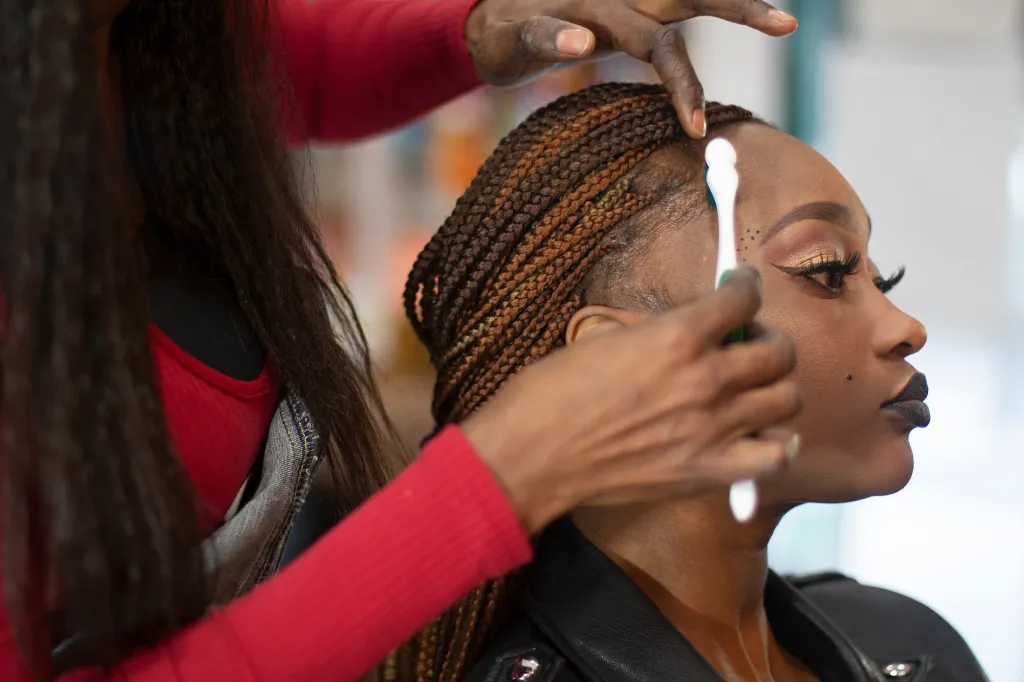
Recent testing on hair extensions and braiding products found these toxic compounds, known as organotins, hiding in plain sight.
In a February report, cancer researchers at the Silent Spring Institute slammed the industry for its lack of transparency. Their study of 44 products found nearly 170 chemicals, including known carcinogens, phthalates and organotins, across the samples.
Per their study, several popular hair extension brands “rarely disclose” the chemical composition of their products, which are made from synthetic fibers, human hair or other natural sources, and “may be treated with dyes, flame retardants, waterproofing agents, pesticides/antimicrobials and other conditioning agents.”
And it’s not even breaking news: Past research has identified heavy metals like cadmium, arsenic and lead in these products, too.
For hair entrepreneur Ciara Imani May, it’s hard to imagine what could possess a manufacturer to lace a chemical too toxic for the open ocean into a cosmetic that sits on a person’s scalp.
Clearly, she tells The Post, “the people making these suggestions weren’t actually using the products themselves.” But a growing movement is itching to change that.
“Beauty justice” — and the right to look nice without getting sick
Silent Spring had previously published multiple studies on flame retardants in household products, and even ran a furniture swap study that furnished homes with nontoxic items.
But braiding hair — which is often labeled “flame resistant” and “nonflammable” — never got the same attention until analytical chemist and exposure scientist Elissia T. Franklin, Ph.D., got on the case.
“How is it not OK to have couches that have flame retardants, but something you’re wearing in your hair for days or months at a time — how is that OK?” she wondered.
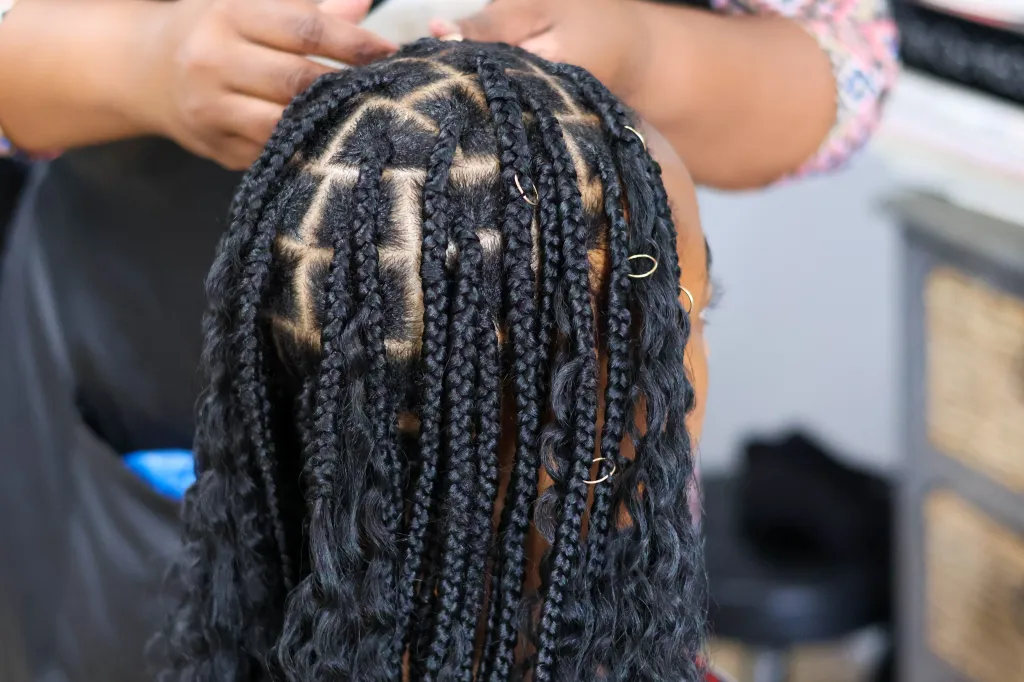
While Harvard epidemiologist Tamarra James-Todd has laid much of the groundwork, researchers like Franklin are contributing to a movement known as “beauty justice,” with aims of empowering people to “express their beauty however they see fit without being exposed to harmful chemicals,” Franklin says.
For James E. Rogers, Ph.D., it was his adult daughters motivating him to contribute.
Under his leadership as director of food safety, Consumer Reports has done multiple rounds of testing to determine whether products marketed as healthier alternatives to synthetic hair (often made with plastic fibers like rash-inducing Kanekalon) are actually safe.
“It’s a risk you take when you get braids. People talk about it, we know people get rashes.”
Elissia T. Franklin, Ph.D.
Though braids are considered “protective” hairstyles and are meant to be worn for weeks or months at a time, Rogers cites several stories of people installing Kanekalon hair and taking it out the same day because of a reaction.
But the human hair samples that they tested had high levels of lead, and some of the “safer” synthetic samples were just as toxic.
Itching, burning and other hair-raising nightmares
Frostine M. Williams, a braider in Fredericksburg, VA, is a licensed cosmetologist and cranial prosthetics specialist, meaning she makes medical-grade hairpieces.
Clients come to her with stories of “scalp irritation, redness, persistent itching, small bumps or inflammation and scabbing” from previous experiences.
Some estimates say over 70% of US black women use hair extensions, and everyone who spoke to The Post had their own horror stories of rashes, burning, itching, flaking or hair loss from braids.
And the problem can just get worse.
“Being exposed to a skin allergen over time can make the response more intense,” Raman Madan, MD, director of cosmetic dermatology at Northwell Health, told The Post.
Cadmium? Not Detected.
Exposures to allergens “sensitize” the immune system, meaning they “get your body to recognize that something is off.” The more exposure there is, the more the body is “prepared to react” with inflammation.
Ironically, Franklin says many black women have been desensitized to the effects. Like someone who’s “a little allergic to shrimp” but they eat shrimp anyway — “it doesn’t close their throat, it just itches a little,” she says.
“It’s a risk you take when you get braids. People talk about it, we know people get rashes,” she adds. “You might have a little inflammation, but the convenience of getting the braids is more enticing.”
Making “protective” styles safer
Independent studies have driven up demand for natural, safe, plant-based hair — and the industry is listening.
There’s an upswell of “nontoxic” hair brands such as Ruka, Dosso, Kynd, New Village Braid and SLAYYY.
Lillian Augusta Beauty, or LAB, uses plant-based fibers derived from corn. Founder Jannice Newson tells The Post that “even without the data, hair stylists and clients have known something was wrong for a long time.”
In 2019, entrepreneur May launched Rebundle with biodegradable “BraidBetter” hair made from banana fibers sourced from Uganda and Kenya. The fibers undergo a “rigorous intake process” to ensure they’re safe both for the skin of consumers and the workers who process them.
“Getting braids is part of the black girl experience.”
Elissa T. Franklin, Ph.D., Silent Spring Institute researcher
Still, in testing done by Consumer Reports and Silent Spring, Rebundle came back with trace amounts of lead, as well as DEHP, a phthalate that has been linked to high blood pressure and reproductive harm.
When May logged onto a call with The Post, she was in the process of interpreting fresh data from another test, trying to untangle how the DEHP gets in. She welcomes all the peer-reviewed studies she can get, adding that she’s been “advocating for this level of research since the beginning.”
But independent testing is expensive, and she wants to see better top-down regulation.
“Everyone’s doing their best to rise to the occasion,” she said of her company and its competitors, “but if there’s no standard, then everyone’s grasping at straws.”

The “regulatory black hole”
Legislators in a few states, including New York, have put forth their own bills to ban heavy metals, phthalates and PFAS in cosmetics. But federally, these products seem to have fallen into a “regulatory black hole.”
In 2022, the Modernization of Cosmetics Regulation Act (MoCRA) gave the FDA recall authority over cosmetics, which they can do if there’s “a reasonable probability that the use of or exposure to the cosmetic will cause serious adverse health consequences or death,” which might include rashes, hair loss or hospitalization.
But Rogers said he’s never seen the FDA recall hair extensions and he believes they should be taking more aggressive action.
In an email to The Post, the Press Secretary for the Department of Health and Human Services, Emily G. Hilliard, confirmed that synthetic hair, wigs and extensions fall under the FDA’s purview.
“The FDA is developing Good Manufacturing Practice (GMP) regulations for cosmetic facilities,” she added. “These rules will set baseline requirements to strengthen how cosmetics are made and help ensure product quality and safety. They will focus on reducing contamination risks and promoting consistent manufacturing practices.”
The agency “now requires companies to report serious adverse events linked to cosmetic products within 15 business days,” she said, which gives them the ability to “respond to safety concerns in real time.”
Still, last year, the FDA’s now-retired director of the office of cosmetics and colors explained to NPR that the agency won’t ban a product unless it believes there’s enough scientific evidence proving its ingredients cause harm — never mind if they’re already banned in the EU.
Independent scientists are trying to fill the research gap, but resources are limited.
“We’re just a nonprofit,” Rogers says. “The FDA should be able to test a lot more.”
“It’s a culture, it’s an art form”
As a child, Yelitsa Jean-Charles would sit between her mother’s legs in their Queens living room while her mother — hair product in one hand, comb in the other — would braid her head.
“There are so many different ways to get your hair braided,” the 31-year-old creative strategist told The Post. “I think the general public’s idea of a braid is a pigtail or a french braid, but baby, that’s not even 10% of what’s possible.”
There are corn rows, she explains, and mini twists; poodle puffs and braided baldies. Stylists can do small braids or big braids, small parts or big parts. Your appointment could take two hours, or more than six.
“It’s a culture, it’s an art form, it’s something to be respected and it’s beautiful,” Jean-Charles said. She’s so obsessed with black hair that in 2015 she founded a doll company to celebrate natural hairstyles.
Franklin, who grew up on the south side of Chicago, said “getting braids is part of the black girl experience.”
For some, hair extensions are just another strand in the knot of health hazards — like the connection between chemical hair relaxers and uterine cancer — in the everyday products they rely on to feel like themselves.
People will do a lot of things to feel beautiful, Jean-Charles said, whether it’s plastic surgery or installing plastic on their heads.
For May, hair is something she refuses to compromise on. “I don’t control where my water comes from, I can’t grow my own meat, I don’t control the chemicals I’m consuming in most cases,” she says.
But hair? “That’s something I can control.”
The post Toxic, cancer-causing chemicals are lurking in popular hair products — inside the battle for ‘beauty justice’ appeared first on New York Post.