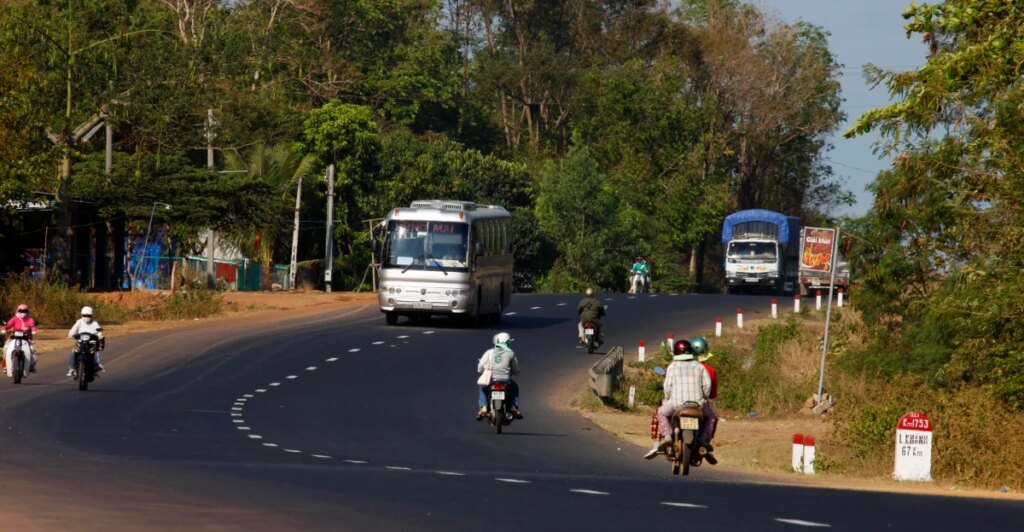
The story of global health over the last few centuries has generally been one of great progress — vastly longer lifespans, far fewer women dying in childbirth, many fewer children dying from miserable diseases like measles and smallpox. But there is one often overlooked feature of modernity that has brought a new and enormous degree of mortality and injury to everyday life, a risk that falls most heavily on the world’s poor. It kills about as many people as the world’s deadliest infectious disease — tuberculosis — and it’s the leading cause of death globally for people in the prime of their lives, aged 5 to 29. It is one of the defining technologies of modern life, one of the 20th century’s most dangerous gifts: the car.
Around 1.19 million people globally are killed by road crashes every year, according to estimates from the World Health Organization (some estimates put the number higher), and many times more — likely between 20 and 50 million — are injured, sometimes leaving them with life-altering disabilities. More than 90 percent of those deaths occur in low- and middle-income nations, although these countries contain only around 60 percent of the world’s cars.
This century, humanity has halved the mortality rate for children under five and reduced AIDS-related deaths from their peak by 70 percent. But the number of people killed by cars has remained roughly the same for the last 20 years. As motor vehicles spread around the world — the total fleet has doubled over the past 20 years — the burden of those deaths has shifted increasingly to lower-income countries. Despite all the progress we’ve made against ancient natural killers, we’re making little against a killer we engineered ourselves.
That’s not for a lack of known solutions, but rather because there’s been comparatively little attention paid to car crash deaths as a real global health issue until relatively recently. Unlike deadly maladies that are purely bad, cars do add value to society. Perhaps as a result, even though wealthy countries have brought down per capita road fatalities over the course of decades, deaths by car have still often tended to be discounted by policymakers and the general public as the price of progress and economic growth. It’s “one of the few public health problems where society and decision makers still accept death and disability on such a large scale as inevitable,” the late Dinesh Mohan of the Indian Institute of Technology wrote in 2019.
“You can become very depressed,” James Leather, director of transport at the Asian Development Bank, told me in a recent conversation at the International Transport Forum summit (an event sometimes called the Davos of transportation). “Why is no one taking this seriously?”
Of course, it’s not that literally no one is taking it seriously, but rather that cars have long been an underrated threat to human well-being. But that is, perhaps, slowly beginning to change.
Why cars kill so many people in countries with so few of them
I am sometimes known as a bit of a car hater, devoting a lot of my consciousness to thinking about how the United States got locked into car dependence. Our car-oriented development pattern is part of the reason the US has one of the highest road fatality rates of any wealthy country. (But, listen, I own a car too, and benefit greatly from it! I am American, after all.)
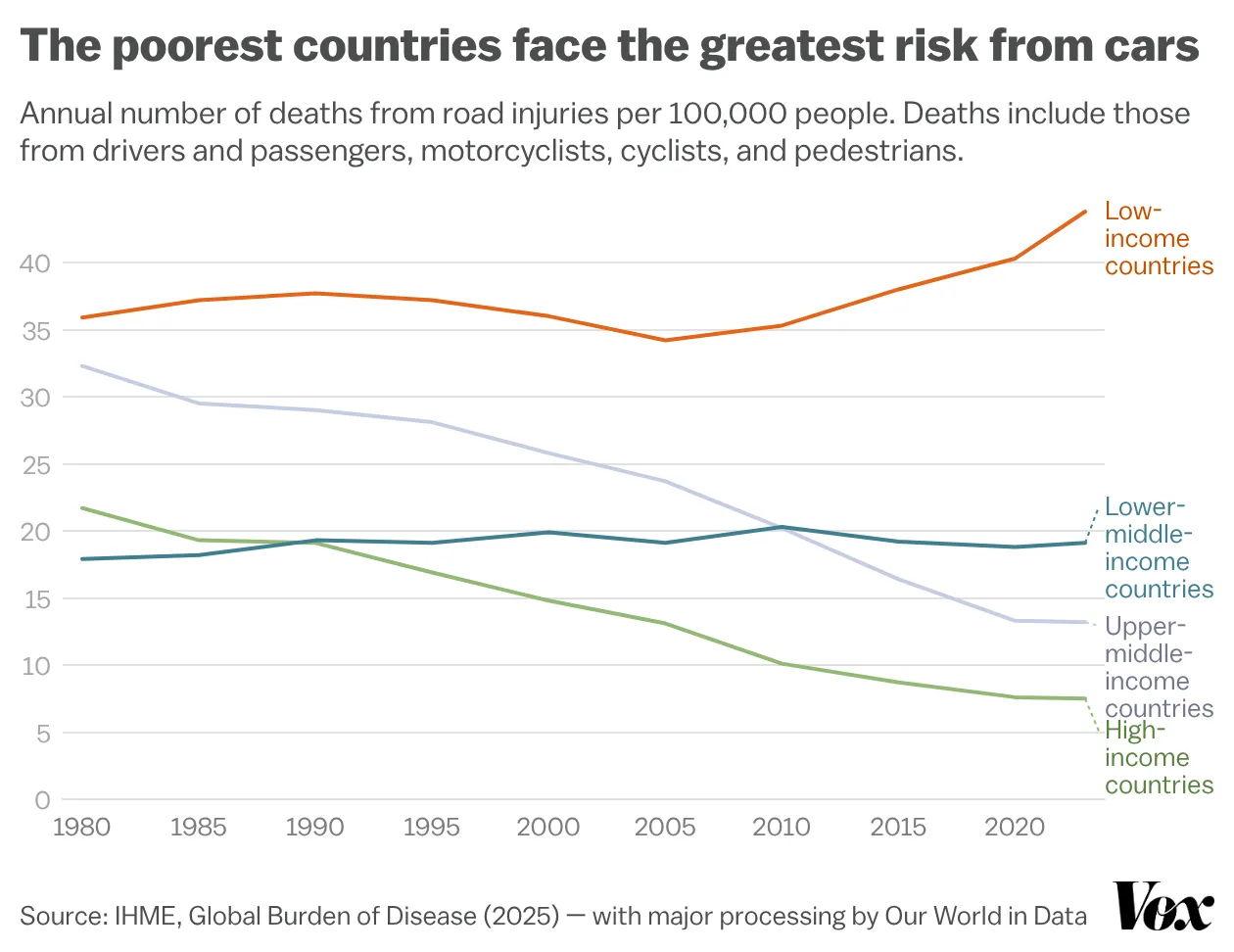
US car fatality rates may be an outlier by wealthy-country standards, but most low- and middle-income nations face far greater risk. Haitians and Ethiopians are more than three times more likely to be killed by a car than an American; Kenyans, Bolivians, and Thais are more than twice as likely.
That alone is worth dwelling on. If you live in the US, consider that you probably know at least several people who’ve been killed in a car crash or who have loved ones who have, and that this proximity to sudden, violent loss is felt even more acutely in most of the world. Road deaths account for around 1 percent of all deaths in the US; globally, that figure is about 2 percent, and in a typical middle-income country like Vietnam, it is more than 3 percent.
That might sound a bit surprising — and feels all the more unfair — in light of the fact that poorer nations do not have anywhere close to as many cars as wealthy ones do, and their residents travel fewer miles by car than people in rich countries do. If cars kill so many Americans because we simply drive so much, in the developing world, the problem is almost the inverse: A minority of people who can afford it ride in private cars, while everyone else walks, bikes, or rides a motorcycle, scooter, or three-wheeled vehicle like an auto rickshaw. And those outside of an automobile — known as “vulnerable road users” — often share space in the road with cars and are at high risk of being hit.
Cars themselves in developing nations are often more dangerous for their occupants than vehicles in rich countries are, too. Weaker car safety standards and a reliance on imported old cars mean that people sometimes travel in vehicles that lack safety features long taken for granted in rich countries, including airbags and frames designed to absorb the force from a crash.
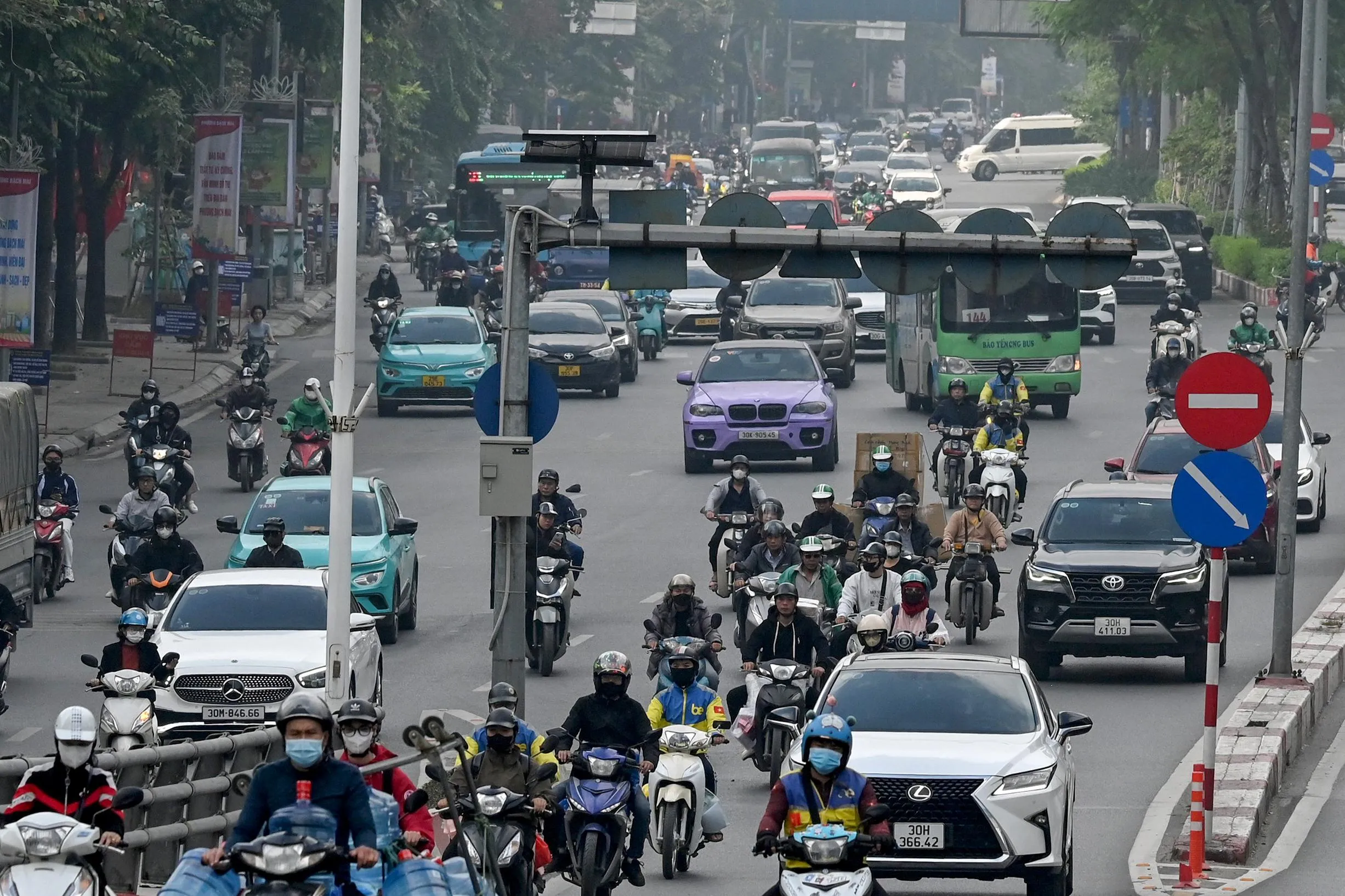
Amid all this, cars and other motorized vehicles are spreading rapidly in the Global South — much more quickly than that transition took place in North America and Europe — and doing so before governments have built safer roads, vehicle standards, adequate trauma care, or robust traffic regulations. Many nations lack comprehensive laws governing what the WHO considers the five key behaviors that shape road fatalities: high speeds, drunk driving, seatbelt use, helmet use for motorcyclists, and child restraints in cars.
In Southeast Asian countries, which have seen a massive proliferation of motorized vehicles since 2010, “maybe the infrastructure was designed when you didn’t have so many cars, and now all of a sudden you have twice the number of cars that you did before,” Nhan Tran, the WHO’s head of violence and injury prevention, told me. Road crashes are a major burden on the medical systems of these countries and exact staggering economic costs, amounting to about 5 percent of national GDP in Vietnam, for example.
Meanwhile, as the total number of global road fatalities has stayed roughly constant for the last few decades, the gap between poor and rich countries has widened. Between 2010 and 2021, high-income countries, particularly those in Europe, saw dramatic decreases in car crash deaths, while deaths in the vast majority of low-income nations (which are predominantly in sub-Saharan Africa) increased, according to the WHO’s most recent report on global road safety. Across lower-middle-income nations, like India, the aggregate number of deaths and the per capita fatality rate stayed roughly flat.
I asked Leather whether there was an easy, no-brainer intervention that could make a big dent in these deaths. He pointed, among other things, to helmets — in the Philippines, where he lives, national law now requires that helmets be made available with every new motorcycle purchase, though for that to work, people of course actually have to use them.
“If you go to New Delhi today, nearly every motorcycle rider wears a certified full-faced helmet. This was achieved through strong enforcement,” Kavi Bhalla, a professor at the University of Chicago’s department of public health sciences and an expert on global road safety, told me in an email. “In contrast, most other cities in India don’t enforce the helmet law, have very low helmet use, and this leads to many unnecessary deaths.”
Poor countries don’t need to wait their turn for safer roads
Twenty years ago, two US economists published what became one of the most influential papers in the field of global road safety, on the relationship between a nation’s wealth and its traffic fatality rate. As countries get richer, they argued, motor vehicle ownership rises, and per capita car deaths rise in tandem. Eventually, as countries become wealthier — and as safer roads, vehicles, and traffic policies catch up with motorization — fatality rates start to fall, as they did across much of the industrialized world beginning in the early 1970s. That tipping point, the authors found, comes at around $8,600 (in 1985 international dollars) of per capita GDP.
But this “economic determinism,” as Bhalla has described it, might be the wrong way of looking at the problem. It contributes to a sense that traffic carnage is inevitable until a nation becomes rich. But we would never argue that maternal mortality or malaria deaths can’t be significantly mitigated in low-income countries; in fact, we already know they have been. Although Europe, the US, and other high-income nations have steadily reduced car death rates over the last 60 years, Bhalla told me “it is a mistake to think that this has much to do with these countries being rich.”
Instead, “safety improved in these countries once they established national road safety agencies, gave them the authority to regulate what happens on the roads, and gave them a dedicated funding stream,” he wrote to me. “These agencies did what you would expect agencies to do. They identified the most common traffic safety risks in the countries, undertook investigations on how best to address these, and then made investments for large scale interventions focused on safer designs of cars and roads, coordinated enforcement programs, and emergency medical systems. Low and middle income countries can and should do this now.”
The WHO and other global organizations, along with some philanthropies, have been working to speed along such work over the last few decades, but the results have so far been somewhat underwhelming. The United Nations had aimed to halve global road deaths from the baseline of roughly 1.2 million by 2020, a goal we didn’t come anywhere close to reaching. On the other hand, world population has greatly increased in the last few decades, so holding the absolute number of traffic deaths constant is still a meaningful achievement: From 2010 to 2021, the global per capita road fatality rate decreased by about 16 percent. And in that period, Tran said, road safety has at least gained a lot more visibility among political leaders and civil society as a badly neglected public health crisis.
Having missed the 2020 target, the UN now aims to halve road deaths by 2030. But we will “definitely not” meet that goal either, Bhalla told me.
A core reason the global road fatality crisis has been so maddeningly obstinate is that the root of the problem is complicated, contested, and depends on one’s perspective. “It’s not the same as when you’re talking about Covid or HIV, where there is a virus” that we want to eradicate, said Tran. “When you talk about road safety, what is the virus?” Is it dangerous individual behaviors — speeding, drunk driving, refusing to wear a seatbelt? Is it deteriorating roads or a lack of sidewalks? Is it humanity’s growing dependence on cars themselves?
Tran, like many road safety advocates today, calls for an approach that focuses on the most upstream cause of car fatalities — the proliferation of cars — and champions good urban planning designed to prioritize transit, walking, and cycling over the movement of cars. That would make safety an inherent feature of the transportation network and obviate the need for what Tran calls “quick fixes” to poorly designed systems.
WHO director-general Tedros Adhanom Ghebreyesus echoed that message in the agency’s 2023 road safety report: “As motor vehicles proliferate, countries are doubling down on transport systems built for cars, not people, and not with safety at their core,” he wrote.
There’s a lot of wisdom to this, as the American experience over the last century well shows. The US experiment in car dependence has burdened us with a road fatality rate that rivals nations much poorer than us. Urban planners now widely agree that that car-dependent paradigm was a mistake, but now that it’s built out, it’s hard to claw our way out of.
But that lesson also requires some humility: Even a car hater like me can acknowledge that for many people in poorer nations, automobility offers a measure of freedom that rich countries have taken for granted for many years. And it would be a mistake to see simple interventions that can save tens of thousands of lives, and that were instrumental in bringing down car fatalities in rich countries, as mere Band-Aids. We need both approaches. Just as humans did with once-devastating infectious diseases, we will have to learn to see a person killed for simply trying to get somewhere not as a tragic act of God, but as the result of forces within our control.
The post The shocking death toll of cars in poor countries appeared first on Vox.