Blue Origin has secured a multimillion-dollar contract to deliver lunar rovers and other equipment to the moon, part of NASA’s efforts to construct a base at the lunar South Pole for “sustained human presence” by the 2030s, the agency said Tuesday.
NASA will pay Blue Origin at least $188 million to deliver the first lunar terrain vehicles to the moon, NASA administrators said. The agency also announced Tuesday it had awarded contracts to two separate private aeronautics companies — $219 million to California-based Astrolab and $220 million to Colorado-based Lunar Outpost — to develop the lunar terrain vehicles that Blue Origin will eventually transport.
Blue Origin is owned by Jeff Bezos, the Amazon founder who also owns The Washington Post. The Washington state-based space company was already slated to deliver NASA payloads to the moon this fall as part of the first of three phases of the Moon Base project, in which robotic missions will explore the lunar South Pole over the next three years.
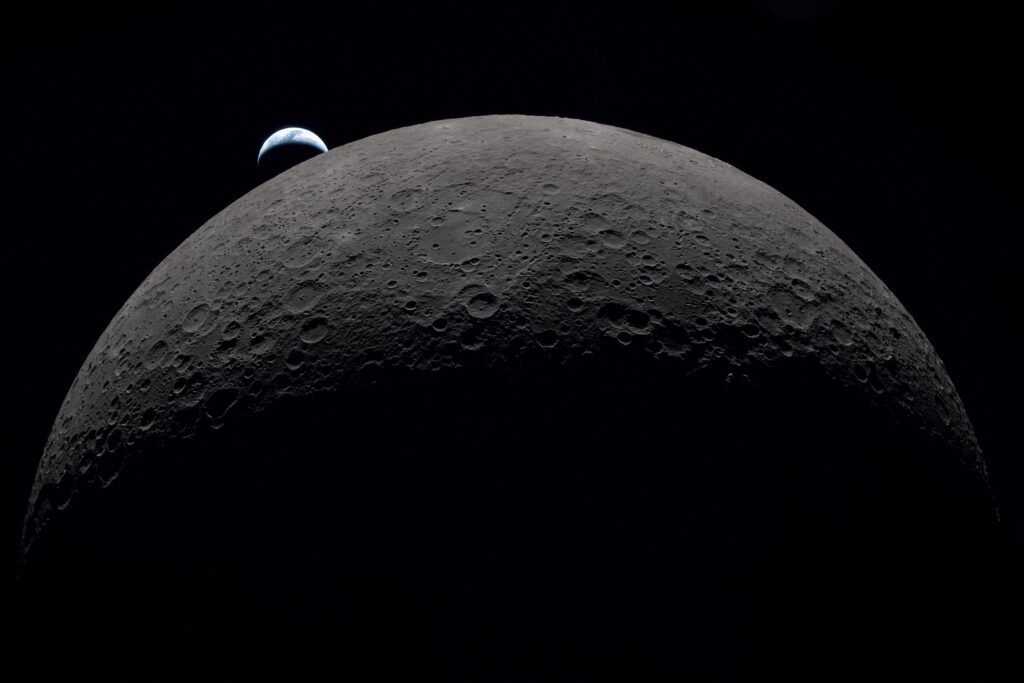
NASA leaders detailed their plans for a moon base about six weeks after the successful completion of the Artemis II mission, in which humans returned to lunar orbit for the first time since 1972. As a continuation of the Artemis program, NASA hopes to achieve a lunar landing in 2028 and conduct missions on the surface of the moon annually after that.
“With Moon Base, Artemis astronauts will stay longer, explore farther, and conduct the kinds of science that advances exploration itself,” Lori Glaze, acting associate administrator for NASA’s Exploration Systems Development Mission Directorate, said at a news conference Tuesday.
“We are building humanity’s first outpost beyond Earth,” she added. “Through Artemis, we are going. And with Moon Base, we’re going to stay.”
By 2029, NASA plans to have built more infrastructure at the lunar South Pole, including laying out a solar power grid. By 2032, as part of the Moon Base’s third phase, the agency plans to have constructed semi-permanent modules where astronauts can conduct experiments and stay for longer periods of time.
The lunar South Pole, where scientists plan to build the base, receives extended sunlight compared with other parts of the moon, making it more ideal for solar power generation. Still, it is a foreboding environment in which to plan for any human presence — “as beautiful as it is hostile,” NASA Administrator Jared Isaacman said Tuesday.
In sunlight, the surface can heat to over 250 degrees Fahrenheit, and in darkness, it can drop well below minus-200 degrees. In craters that are permanently shaded, some of which have not been touched by sunlight for millions of years, temperatures can fall well below minus-400 degrees, Isaacman added.
“There is no atmosphere to moderate these extremes, no protection from radiation and solar particle events, and the surface is exposed to meteorite impacts, including the kind of light flashes the Artemis II crew observed from orbit,“ Isaacman said, detailing the challenges the Moon Base project faces.
Still, scientists see building a base on the moon as an important step to eventually exploring Mars. The focus of the Moon Base program between now and 2029 will be to make sure that even getting to the surface of the moon is a “high-reliability endeavor,” said Carlos García-Galán, program executive for the Moon Base project.
“Permanent habitation is not just about the asset,” García-Galán said, referring to the base itself, “but it’s about the whole chain of logistics that we would need to have set up in place to enable that.”
NASA also announced Tuesday that it had awarded Firefly Aerospace a $75 million contract to build the spacecraft that will take lunar drones to the surface of the moon in 2028. The drones, which are being developed by NASA’s Jet Propulsion Laboratory, will survey the lunar surface for potential landing sites for Artemis astronauts in the future.
The Artemis II mission was not only crucial for its scientific advancements, but for rejuvenating interest in lunar exploration, NASA officials said.
“That curiosity is exactly what NASA is supposed to inspire. It means people are looking up again, believing in big things again, and paying attention as America returns to the moon again, and this time to stay,“ Isaacman said.
The post NASA picks Blue Origin to deliver lunar rovers to the moon appeared first on Washington Post.