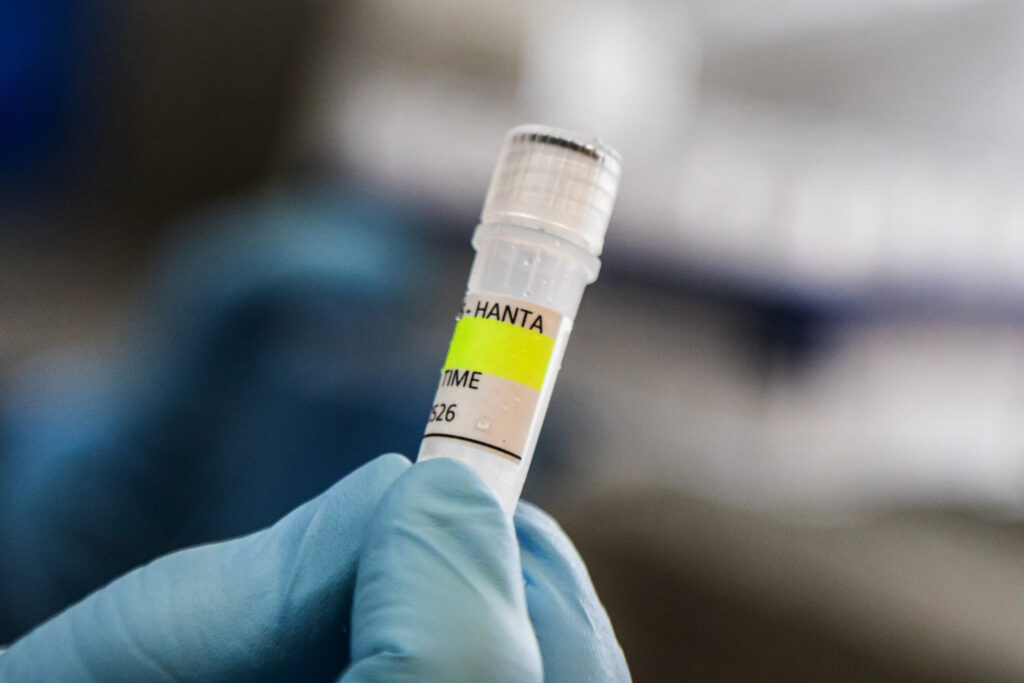
Last month, a deadly outbreak of hantavirus began spreading on a Dutch cruise ship in the Atlantic Ocean that departed from Argentina. According to the World Health Organization, a total of 11 people have been infected with hantavirus so far, and three have died from infections. No additional cases have been reported in the United States as a result of the outbreak.
To prevent additional spread of the virus, 18 American passengers, who remained on the cruise ship until May 10, are quarantined at the University of Nebraska Medical Center for 42 days — considerably longer than post-exposure quarantine guidelines for most contagious diseases. In 2020, for example, the Centers for Disease Control and Prevention issued 14-day federal quarantine orders to Americans who had traveled to Wuhan, China, where the first known covid-19 death was reported.
We spoke to infectious-disease experts about why the quarantine period is so long, and whether Americans should be concerned about hantavirus.
What is hantavirus?
Hantaviruses are a family of viruses usually carried by rodents, which shed the virus in their urine, droppings and saliva. People are typically infected by contact with rodent droppings, said Dan Shirley, medical director of infection prevention at UW Health in Madison, Wisconsin, and associate professor of medicine at the University of Wisconsin School of Medicine and Public Health. The type of hantavirus that spread on the cruise ship — Andes virus, which originates in South America — is the only kind known to transmit from human to human.
Unlike airborne viruses, including the coronavirus, the Andes virus is transmitted primarily through contact with another person’s bodily secretions. “It’s not completely known how this spreads, but it’s not so contagious that if you walk into a room with someone who has it, you’ll instantly get it,” said Shirley.
Andes virus can cause flu-like symptoms, such as fever, fatigue and muscle aches. Some people infected with Andes virus develop a more severe illness called hantavirus pulmonary syndrome, which causes lung inflammation and difficulty breathing. “That doesn’t happen all the time, but that’s how the people on the ship died from this,” Shirley said.
There aren’t enough cases, he said, to understand what increases a person’s risk of developing severe complications — but typical risk factors, such as a preexisting lung condition or compromised immune system, are probably at play.
Why is the hantavirus quarantine period so long?
All transmissible diseases have an incubation period, which is how long it takes to develop symptoms after a pathogen like a virus, bacterium or fungus enters your body. Incubation periods, according to Shirley, typically range from a few hours to several weeks. (Other infectious organisms, like prions — which are misfolded proteins that can cause mad cow disease, chronic wasting disease in deer and other fatal neurological conditions — can have incubation periods that last decades, and even up to 40 years or more in some cases.)
The Andes virus can incubate anywhere from four to 42 days before someone has symptoms. “That’s an abnormally long period compared to other viruses,” said Shirley.
Hantavirus has a long incubation period because it seems to infect and replicate in the endothelial cells that line capillaries, veins and lymphatic vessels in the body. The process is relatively slow at first, but one to two weeks after an infection, it can cause coughing, rapid fluid accumulation in the lungs and a drop in oxygen in the body.
How long a person quarantines after being exposed to an infectious disease depends on the incubation time. “We typically set quarantine periods according to the maximum incubation period,” said Luis Ostrosky, chief of infectious disease at the University of Texas Health Houston center.
Prompt quarantine — and quarantine in a medical facility — is especially important because Andes virus is thought to be transmitted right after a person develops symptoms, with an increased likelihood of transmission as symptoms grow more severe. “There’s not much time for you to realize you have symptoms and isolate yourself before spreading it,” said Shirley. “That influences what public health does to protect the community.”
How the hantavirus incubation period compares to other diseases
Will the hantavirus become a pandemic?
Experts don’t expect additional community spread of hantavirus, said Ostrosky. “This is a very defined exposure on one cruise ship, and everyone who was exposed has been identified and is under isolation and quarantine.” Additionally, Shirley said, Andes virus isn’t as transmissible as airborne viruses such as the coronavirus or measles, which spread more easily and quickly from person to person.
For that reason, Ostrosky said, few people need to change their daily routine to protect themselves from the current outbreak. According to the WHO, “the potential for human-to-human transmission should be considered in areas where Andes and potentially other South American hantaviruses are endemic.” If you travel to an area where human-to-human spread of hantavirus is more common — such as South America — it’s worth being cautious and watching for symptoms.
Assuming the authorities have identified and notified all contacts of the cruise cases, Shirley said, there’s probably a higher risk of getting hantavirus from direct contact with mouse and rat droppings than from another person. Since 1993, fewer than 1,000 cases of hantavirus have been reported in the United States; cases typically occur on the West Coast and from a strain of the virus that doesn’t spread from person to person. (Betsy Arakawa, Gene Hackman’s wife, died in New Mexico after a hantavirus infection in 2025.)
To prevent a potential hantavirus infection, try to eliminate contact with rodents — the CDC recommends sealing holes or gaps in your home to keep rodents out and, if needed, setting up traps in and around it to prevent infestation. You should also wear a mask, use a disinfectant and gloves when cleaning up rodent droppings.
Although the CDC says the overall risk to the American public is extremely low, if you think you’ve been in contact with a person with Andes virus and have symptoms, contact a medical provider right away. “[The outbreak] is a reminder that a virus from across the world could be here in a day or two,” said Ostrosky.
The post Why the quarantine for hantavirus is so long appeared first on Washington Post.