The Trump administration on Friday said that it would block entry into the country for some legal permanent residents who had been in the Democratic Republic of Congo, Uganda or South Sudan, citing a limited ability to screen and monitor people who may have been exposed to Ebola.
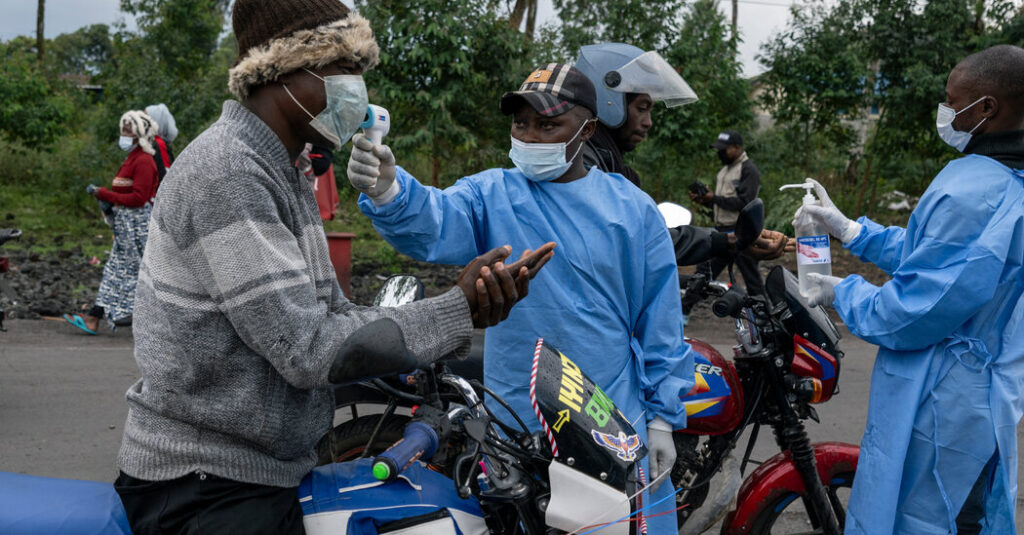
The announcement by the Centers for Disease Control and Prevention was a response to a rapidly accelerating Ebola epidemic in the Democratic Republic of Congo, which is estimated to have sickened 750 people and killed 177. Health officials think that the deadly virus may have been spreading for weeks or even months. Two cases have been reported in neighboring Uganda.
Earlier this week, the Trump administration invoked a public health law, known as Title 42, to bar entry into the United States to immigrants who had been in Congo, Uganda or South Sudan over the previous 21 days. That order, which exempted U.S. citizens and legal permanent residents, is in effect for 30 days, but the administration could decide to extend it.
The policy announced on Friday would expand the ban, giving health officials the authority to bar legal permanent residents “who originate from or have recently traveled through” Congo, Uganda and South Sudan, according to an interim final rule posted in the Federal Register. The C.D.C. said the residents would be barred “for a limited period of time.”
South Sudan has not reported confirmed cases in the current outbreak, but it is considered at high risk because of its border with Congo and Uganda, and its limited health care infrastructure, according to the document.
The rule would still allow American citizens to return to the United States from those countries. But one American doctor who developed symptoms after treating a patient with Ebola was transported to Germany for medical care, as were his wife and their four children. Another physician who is thought to have been exposed was flown to the Czech Republic.
During previous Ebola outbreaks, U.S. residents exposed to the virus were evacuated back to the United States for observation or medical treatment.
Trump Administration: Live Updates
Updated
- A lawsuit argues Trump’s $1.8 billion fund excludes those he targeted.
- White House approves $9 billion for spy agencies to catch up on A.I.
- Green card seekers must leave the U.S. to apply, the Trump administration says.
Ebola spreads through direct contact with infected bodily fluids or contaminated materials. Safely monitoring people who may have been exposed to Ebola requires specialized facilities. The United States has the capacity to isolate at least a few dozen patients.
The World Health Organization and the C.D.C. have said that the outbreak poses great risk to people in Congo and neighboring countries, but that the threat to the rest of the world is low.
During previous large Ebola outbreaks that lasted for years, citizens or permanent residents from the affected countries did not introduce Ebola into Western countries, said Dr. Boghuma K. Titanji, an infectious diseases expert at Emory University.
“There’s no precedent that suggests that for any reason the U.S. is about to be overwhelmed by a flood of citizens from the affected countries that are about to arrive at airports and seed Ebola everywhere,” she said. “This just heightens fear.”
In extending Title 42 to legal permanent residents, officials said that the residents may have deeper ties to their home countries than U.S. citizens do, potentially increasing the risk of their exposure to Ebola, according to the document detailing the decision. For the same reason, prohibiting their entry may also be less burdensome to them than it would be to U.S. citizens, the document said.
The C.D.C. and the Department of Health and Human Services, which oversees the agency, made the decision, according to the document. But experts at the C.D.C.’s emerging disease center were not consulted, according to an official with knowledge of the situation.
Title 42 is part of the Public Service Act of 1944, and allows H.H.S. to block people from entering the United States in cases of a “serious danger” posed by a communicable disease in a foreign country.
President Trump invoked the clause in his first term during the Covid-19 pandemic. Mr. Trump made his views on Ebola clear during the outbreak of 2014, which lasted for more than two years and killed more than 11,000 people.
“The U.S. cannot allow EBOLA infected people back,” Mr. Trump posted on social media at the time, adding: “People that go to far away places to help out are great — but must suffer the consequences!”
Apoorva Mandavilli reports on science and global health for The Times, with a focus on infectious diseases and pandemics and the public health agencies that try to manage them.
The post U.S. to Block Entry to More Noncitizens Who May Have Been Exposed to Ebola appeared first on New York Times.