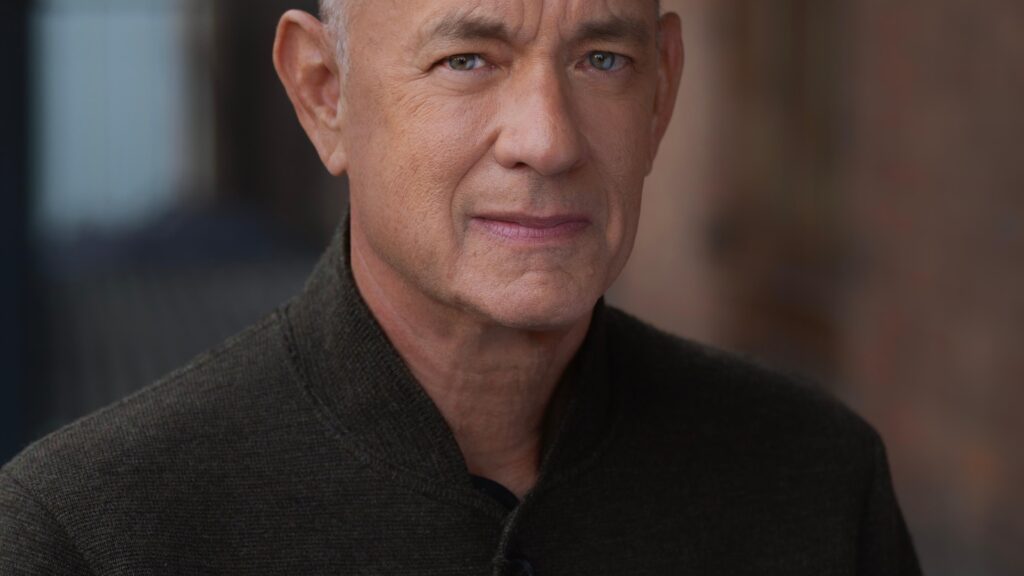
Nearly three decades after Saving Private Ryan reshaped Hollywood’s approach to modern war films—and audiences’ understanding of D-Day—Tom Hanks keeps coming back to the conflict that defined his father’s generation.
Hanks was 41 when he filmed the 1998 Steven Spielberg-directed drama, which follows U.S. Army Captain John Miller as he leads his squad of Rangers around the bloody beaches of Normandy to find a paratrooper whose three brothers have been killed in combat and deliver him safely home. Now 69, the Oscar-winning actor-writer-director still has people approach him to share how the film changed their lives.
“I’ve talked to a ton of people who have said, ‘I went to [the Naval Academy at] Annapolis because of Saving Private Ryan’ or ‘I joined Delta Force because of Saving Private Ryan,” Hanks says. The film also paved the way for other hit Hanks-and-Spielberg Second World War collaborations, including the acclaimed miniseries Band of Brothers (2001), The Pacific (2010), and Masters of the Air (2024).
Today, between playing President Abraham Lincoln in the upcoming film adaptation of George Saunders’ novel Lincoln in the Bardo, voicing Woody in Toy Story 5, and growing his nonprofit coffee brand Hanks for our Troops, which supports veterans and their families, Hanks continues to return to stories about the Greatest Generation.
His latest foray: The HISTORY Channel docuseries World War II with Tom Hanks, which he narrates and executive-produces. The 20-episode series premieres in the U.S. on Memorial Day. It will be released in 200 territories and 40 languages this summer.
Developed in collaboration with the National WWII Museum in New Orleans, the new series approaches the most deadly conflict in modern history with a wide lens. Each hour-long episode reexamines a different aspect of the war with Hanks’s humanizing narration, archival footage, and expert commentary. Think: Laurence Olivier’s British docuseries from the early 1970s, The World At War, adapted for the 21st century.
In conversation with TIME, Hanks reflects on what keeps drawing him back to World War II, what he hopes viewers will take from the series, and his hopes for America on the eve of its 250th.
This interview has been edited for length and clarity.
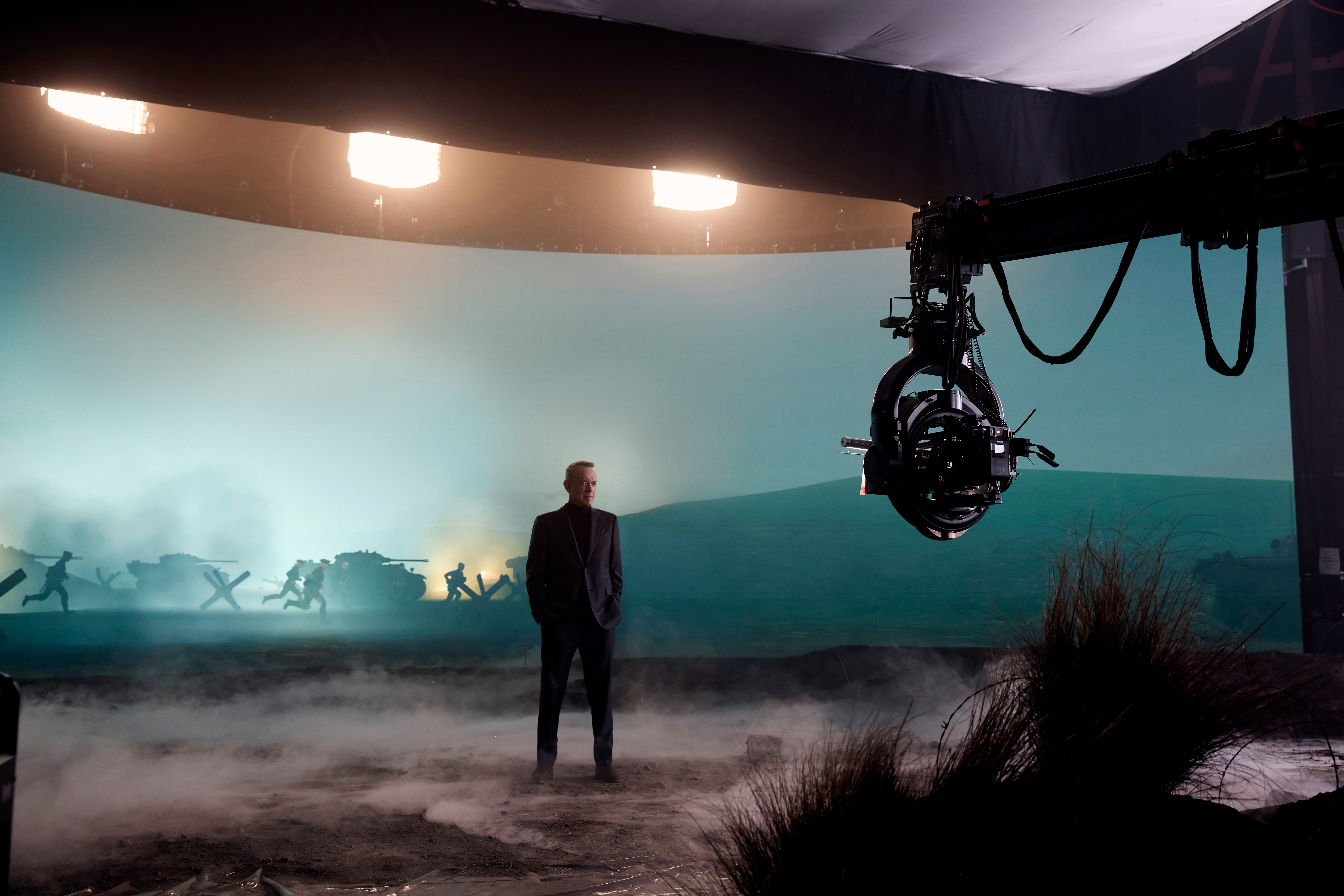
TIME: HISTORY’s World War II with Tom Hanks docuseries premieres in the U.S. on Memorial Day. Talk to us about the significance of that timing.
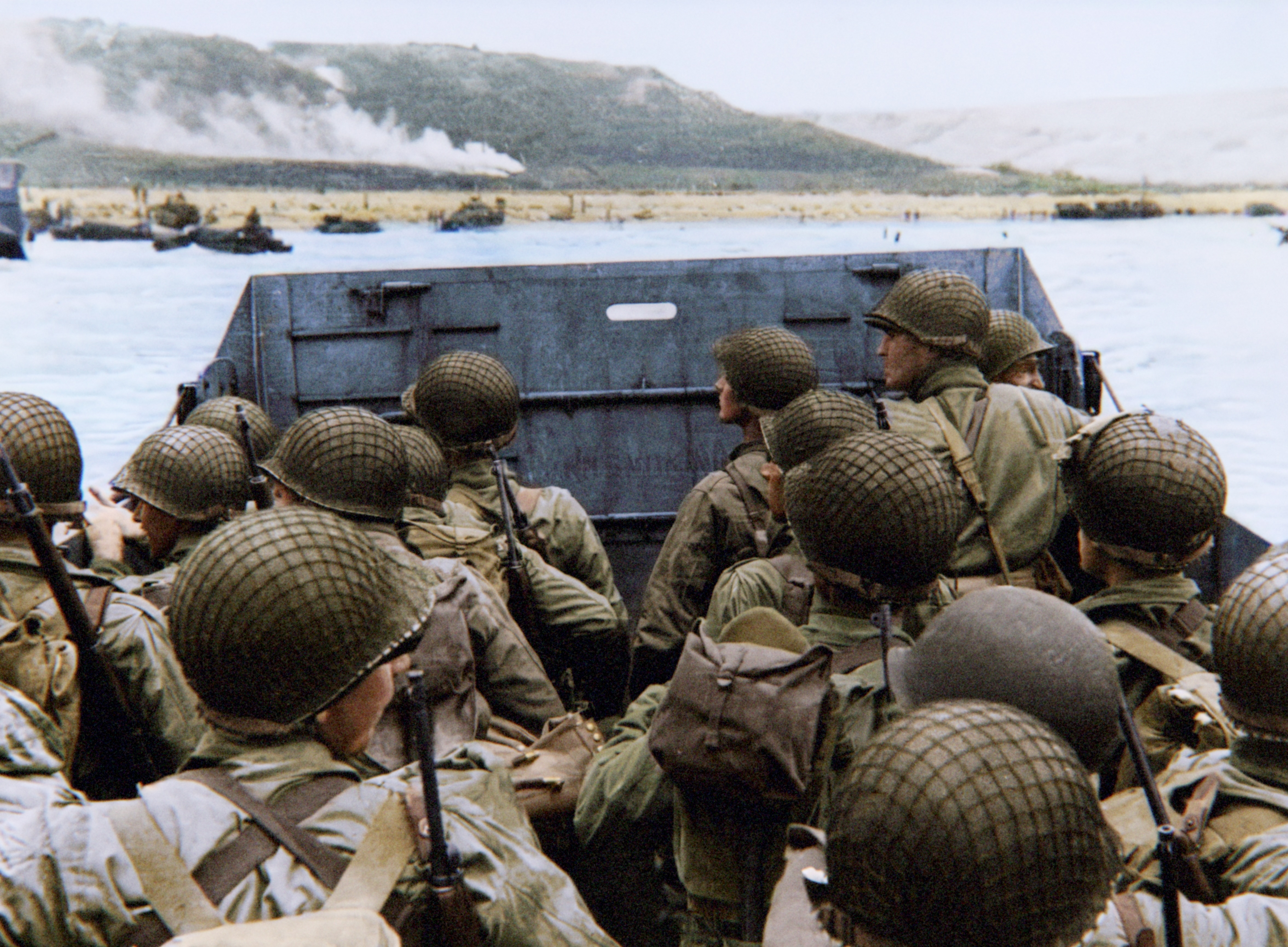
Tom Hanks: In Stephen Ambrose’s book D-Day, he talks about what could have been the very first American killed on D-Day: A paratrooper who was standing in the doorway about ready to jump. He never got out of the plane because it was hit by a shell, and he died. Memorial Day is about that guy.
How are you thinking about July 4 this year, as America celebrates its 250th?
The Fourth of July is all about the beginning of the two-steps-forward, one-step-back process of making our nation a more perfect union. We will never be a perfect union—but we’ve had 250 years to figure out how we actually get closer to that. The beginning of the Superman show when I was a kid—“truth, justice, and the American way”—that’s what the Fourth of July is about.
What keeps drawing you back to World War II?
It’s an example of probably 600,000 of the greatest stories ever told. Steven [Spielberg] and I have gone on to examine the themes and moments with [the HBO limited series] Band of Brothers and The Pacific. With Saving Private Ryan, it was so tactile, and we had so many of the survivors. Now it is more important for all of this work, including this HISTORY Channel series, to speak about: How does this reflect our behavior today?
We’re not talking about Lord of the Rings or Game of Thrones or the Star Wars universe. We are talking about what, at the core of it all, is flesh and blood and the stasis of years asked of an entire generation—plus some—to say, “Put the present on hold. Your future doesn’t mean anything right now, because there is a moral task before us.” That has not been the same since.
In the HISTORY docuseries, you narrate all 20 episodes. What was that process like?
It was the opposite of just coming in and reading the words someone came up with. None of us wanted to come in and say, “OK, here’s another haiku of narration from Hanks.” There was some stuff that, as soon as I read it for the first time, I turned to the control booth and said, “Has this been vetted? Is this true?” And they said, “Yeah.” It ended up being a constant education for myself of saying: I. Did. Not. Know. That. There were times where we all said, “if you were going to put this in a fake movie, you wouldn’t believe it.”
If American high school students could all glean one thing from the series, what might that be?
For a populace to say, “We did not really know that our neighbors were being rounded up and sent away” is just as though today we would say, “I don’t really see any signs of homelessness in America.” No. It’s obvious. And it’s happening. And it’s not pleasant. But we cannot be complicit in 2026 to this kind of thing going on. Otherwise, look what we might recreate.
If I was going to recommend a single book that would be [the docuseries’] compendium, it would be Studs Terkel’s The Good War. It’s an oral history of how people got through it. Some of it will blow your mind. And other [parts are] talking about, ‘Well, of course people were looking for those really basic creature comforts,’ because I like to wake up in the morning in a dry bed and have a nice cup of coffee before I get to it. And was that possible in 1942 in Guadalcanal? No. So let’s read about that.
AI is top of mind in so many ways right now. I’d be curious to hear your thoughts on the idea of using, for example, your AI-generated voice to create 40 hours versus 20 hours of programming—or to support the translation of the episodes into additional languages. Is there a place for AI in filmmaking in this context?
I would not trust AI for a moment outside of the—I believe there is a technical aspect of AI that could aid the visuals. However, as soon as you bring AI into it, then you’re going to be asking yourself: What’s real, and what is not? What has been editorialized? What is made bigger than it should have been made? Or what is being ignored?
What might AI work well for?
If you could use AI to go back to every oral history and say, “Find somebody talking about how cold it was at Bastogne,” that would be a good tool. But it would only be a tool that you would use if you incorporated it with a ton of finesse and authentication. And that could become a very slippery slope unless you have really great governors overseeing.
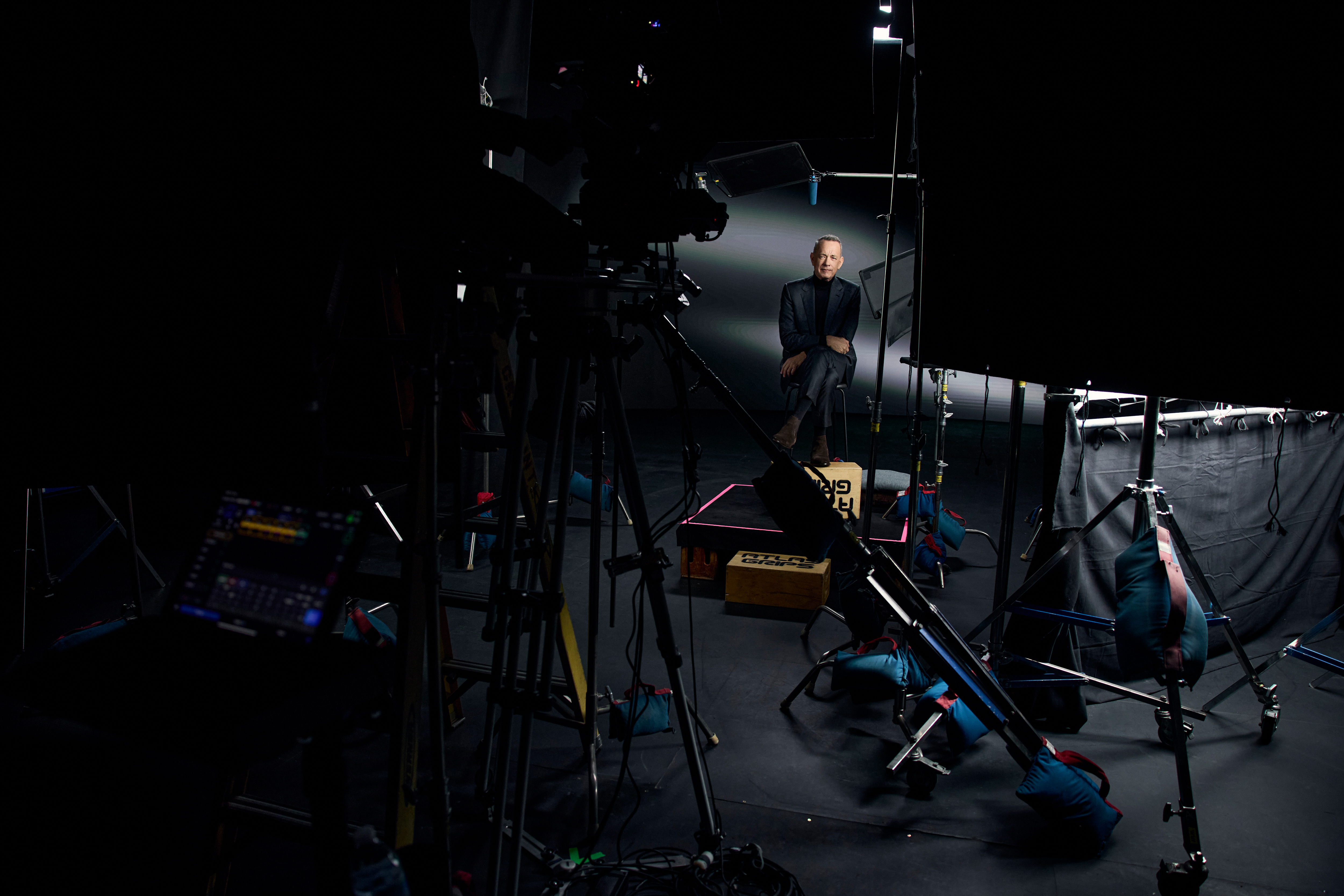
It’s hard to talk about World War II and Hollywood without talking about Saving Private Ryan, which came out in 1998.
Saving Private Ryan was the granddaddy of a number of things. The timing could not have been more ideal. When I first spoke to Steven about it, he said, “I’ll finally be able to make the movie about Omaha Beach I’ve been wanting to.” The mechanics of movie-making could finally bring the story to the screen. The only thing missing was the smell. The visuals and the sounds and the special effects put it in a manner that was so tactile that I knew of people who left [the theater] after 10 minutes—including a member of my own family—who couldn’t handle it. The other aspect was that [World War II veterans] were still alive. They were old men by that time, and they were leaving us, kind of one at a time—but none of the massive sea change that has gone on since then.
How did starring in Saving Private Ryan impact you?
We’re talking about Mr. Steven Spielberg creating these divisions in both societal history and motion-picture history: There was “Before Jaws” and there was “after Jaws.” Before Close Encounters” and “after Close Encounters. “Before Schindler’s List” and “after Schindler’s List.” Saving Private Ryan was one of those. I have since come across people who were 10 years old when they saw it, who have said, “I went to Annapolis because of Saving Private Ryan,” “I joined Delta Force because of Saving Private Ryan.” And it’s not just because it was a cool, glamorous, really exciting movie about going camping that an awful lot of war movies can turn out to be. It was a test of one’s personal morality—which comes around to all of us, perhaps, asking the question: “What would I do given the same circumstances?” And are we not in those same circumstances right now?”
What can you share about your recent experience in Australia filming the sequel to Greyhound—the 2020 film adaptation of a 1955 novel following a U.S. Navy commander during the Battle of the Atlantic—which you wrote and starred in?
The first Greyhound was all about dealing with the backbone-crushing stress of the job at hand. The second one, what we’re establishing is: What is the difference between surviving and not surviving? We based much of the second film on a true story about a ship that, completely by itself, somehow survived 19 different bombings within the course of an early morning. What is survival? Survival is perseverance. Survival is behavior and procedure and an all-encompassing faith in the ability to solve one damn thing after another. Isn’t that kind of like life itself?
What does moral courage look like today?
The best petri dish for tyranny is indifference, and we have a choice every single day to do something or not based on what we think is right. Now, for some of us, it’s showing up and raising our fist and saying, “not on my watch.” For others, it’s giving money to those who fight the good fight. For many others of us, it just comes down to not ignoring what’s going on and continuing to tell the stories that matter.
What stories are you trying to tell with Hanks for Our Troops, the brand you launched in 2022 to offer “good coffee for a good cause”—inspired by Paul Newman’s Newman’s Own, but with 100% of net profits going to organizations supporting veterans and their families?
[My CAA agent Richard Lovett] came to me one day and said, “What would you like to do?” And I said, “I’d like to sell something as ubiquitous as coffee—a legal, addictive stimulant—and have every penny of profit go to well-vetted veterans organizations in the veterans community.” It couldn’t be more basic: Buy a cup of coffee and give a nickel to a veterans’ organization.
What excited you about playing Abraham Lincoln in Lincoln in the Bardo, the upcoming part-live-action, part-stop-motion film based on the George Saunders novel?
I just read the book because it’s George Saunders. He’s a genius. It took me about 80 pages until I finally figured out what was going on, but oh my God! When the time came to do it with [director] Duke Johnson, who is an animator par excellence, the thing that struck me was: I do not play so much this grand historical figure on the $5 bill. I play a grieving father that has lost his son. There is nobody on the Earth, I think, that will not be moved by some aspect of that. Abraham Lincoln’s son died in 1861. There was no hint of the end of the Civil War coming along. But he lost his boy. What does that do to anybody? And how do you continue on with the task at hand? That’s a beautiful question.
You also happen to be distantly related to Honest Abe, yes?
Yeah. His mother was Nancy Hanks. His cousin was Dennis Hanks. They were from Kentucky, as are my ancestors. It’s a nice claim to fame to have in fifth grade.
What makes you say “yes” to a project these days? Look, I’m almost 70 years old. On one hand, it has to be fun. On one hand, it has to be good. But the final analysis is: it’s got to be worth telling the story. Unless you’re somehow illuminating the human condition, I’d rather reorganize my notebook closet. Any job that comes down the pike, it’s like: Why in the world would you spend your time doing this? And that might sound weird when talking about Toy Story 5, but I’m gonna tell you something right now: Toy Story 5 is beautiful.
The post For Tom Hanks, World War II Will Never Be Over appeared first on TIME.