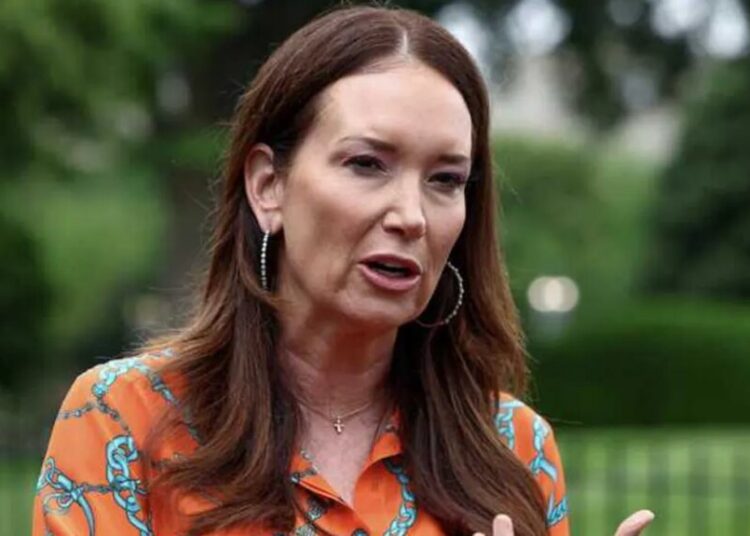
It was a Goldilocks job, one that demanded somebody not too agreeable and not too contrarian. That was essentially what Lina Khan, darling of the antitrust world, realized as she began trying to help hire the chief counsel for Mayor Zohran Mamdani of New York City.
She needed a person who wouldn’t turn the legal team into an “Office of No,” a place where Mr. Mamdani’s ambitious agenda items — free child care, city-run grocery stores — went to die. But she also needed somebody who wasn’t a pushover.
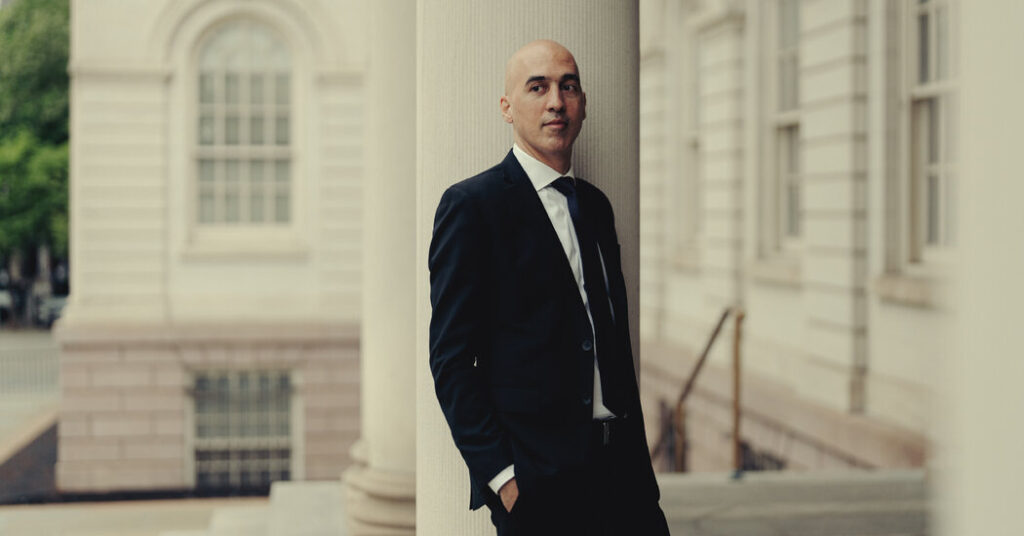
What about Ramzi Kassem? He had worked for the Biden administration, where Ms. Khan had led the Federal Trade Commission, and his name kept surfacing in conversations with colleagues, Ms. Khan said.
His appointment, though, given his résumé, would alarm some New Yorkers.
Just over a decade ago, Mr. Kassem, a Columbia Law School graduate, sued the Police Department over surveillance of Muslim New Yorkers. He represented more than a dozen clients detained at Guantánamo Bay and other sites.
He founded a clinic that represented Muslims being targeted under counterterrorism laws and represented Mahmoud Khalil, the Columbia graduate who became the face of President Trump’s crackdown on pro-Palestinian protesters, in his fight to stay in the country.
Mr. Kassem, 48, alluded to potential blowback during his job interview, accurately predicting a New York Post headline that was close to what was later published: “Zohran Mamdani eyeing lawyer who defended Al Qaeda terrorist.”
If there’s one thing to know about the mayor’s top legal adviser, it’s that he’s not going to skip over the inconveniences; like the blunt relative at the family function, he seems to view himself as the resident truth teller.
“If I mute myself, then I’m really not doing the thing that the mayor, I think, brought me in to do, which is to speak my mind,” said Mr. Kassem. “It doesn’t mean he’s going to agree with me all the time, or most of the time.”
In interviews with more than 30 people who have worked with him, a clear image of Mr. Kassem emerges. He is almost allergic to palatability, unwilling to swallow opinions that might make higher-ups unsettled — qualities that he sometimes seems to share with Mr. Mamdani, though the mayor has proved willing to moderate his views.
As Mr. Mamdani’s chief counsel, Mr. Kassem has weighed in on a near daily basis on the mayor’s decisions. His team has drafted each of the mayor’s more than 60 executive orders. He offered strategic advice before the mayor met with President Trump and has joined crisis briefings between the mayor and his commissioners — raising pointed queries that, at times, have caused the mayor to bristle, according to a source familiar with the interactions.
Inside and outside City Hall, Mr. Kassem has vocal detractors. Members of the Police Department have complained about what they see as his antagonism toward the department, according to one city official. Some Jewish leaders said they worry he is not adequately focused on protecting the Jewish community in New York. Officials have made bets about how long Mr. Kassem will last as chief counsel.
“Their legal compass is now pointed in an activist direction,” said Mark Goldfeder, a lawyer and chief executive of the National Jewish Advocacy Center. “That does send a signal, especially to Jews who need protection.”
Because of Mr. Kassem’s reputation for challenging authority, even some of his friends were surprised to hear he was going to City Hall. But Mr. Kassem said he carries a piece of advice that he believes applies both to serving the president and the mayor and seems to steer his approach to surviving in a politician’s world.
“When you walk into a place like that for work, you have to walk in with the attitude that it’s going to be the last time you walk in there,” Mr. Kassem said, over dinner near his Harlem home at a Senegalese restaurant, where staff members all know his orders. “You have to be willing to leave it all there.”
What Nobody Wanted to Say
Taking the City Hall job was a straightforward choice for Mr. Kassem, who knew he and Mr. Mamdani shared a lot, including a commitment to police reform and a devotion to the Palestinian cause. Many of Mr. Mamdani’s campaign promises hewed closely to Mr. Kassem’s beliefs.
Yet in his first few months, the mayor has often skewed more toward pragmatism than ideological purity. His willingness to cede ground has proved strategically useful, though sometimes disappointing to his left-wing base. Mr. Mamdani has filled out corners of his administration with politically savvy figures: people like Dean Fuleihan, an elder statesman of New York politics, and Police Commissioner Jessica Tisch, a concession to moderate supporters who is a star in her own right. Mr. Kassem appears to some City Hall observers as more of an activist.
“There’s a huge difference between being a fierce advocate in the courtroom and being a trusted counselor in the confines of City Hall,” said Randy Mastro, a well-known lawyer who served as a deputy mayor under two mayors, Eric Adams and Rudolph W. Giuliani.
Some of Mr. Kassem’s political fingerprints are already visible. The morning that Mr. Mamdani flew to Washington to meet with President Trump, it was largely Mr. Kassem’s idea to present the president with a list of five Columbia students who had been detained by immigration authorities. That afternoon, ICE released one of them, Ellie Aghayeva.
About a week later, Mr. Kassem helped arrange a dinner at Gracie Mansion for the mayor and Mahmoud Khalil, along with Mr. Khalil’s wife and baby. It was a tense moment in the city, exactly one day since a teenager inspired by ISIS had thrown a homemade bomb outside the mayor’s residence.
It had also been exactly one year since Mr. Khalil was arrested in his Columbia University building. After 104 days in detention, Mr. Khalil was getting a tour of the mansion’s garden and trading Columbia memories with the mayor and his lawyer over plates of salmon.
In a photo that the mayor later posted on Instagram, Mr. Kassem almost appeared to be floating in the background, the scene forming connective tissue between his current New York life and previous ones.
Idealists like to talk about New York City as a refuge, the world’s sponge, absorbing the flow of people who have not been able to make long-term homes anywhere else. For Mr. Kassem, that view of the city was literal.
He spent his childhood living in Beirut, Baghdad, Damascus and Amman, fleeing wartime violence so often that his siblings joked the region’s conflicts were following them. He recalled that when bombs fell in Beirut, his father used to take him and his sisters far from the windows, into the hallway, where he read aloud “The Count of Monte Cristo.”
In Baghdad, as a teenager, Mr. Kassem saw a different kind of shadow from war. When his family talked about politics, they did so cautiously, knowing informants could be listening. When they returned from family vacations, they saw cigarette ashes in their ashtrays, a sign someone had been in their home, which they interpreted to mean they were being tracked.
New York was the first place Mr. Kassem put down roots. He was drawn in by the worldliness of the city, the hole-in-the-wall restaurants in Harlem and Afropunk shows in Fort Greene.
At Columbia Law School, Mr. Kassem became known for unsparing candor. In a legal philosophy class, a classmate recalled that Mr. Kassem emailed the professor to argue that the amount of reading assigned was excessive. He copied the entire class on the email, his classmate said.
“My mouth literally dropped,” recalled the classmate, Gyasi Ross. “All of us thought it, but we weren’t going to say it.”
He was still at Columbia in 2001 when planes struck the World Trade Center on Sept. 11. In the weeks that followed, with the city shellshocked from the terror attacks, Mr. Kassem heard casually Islamophobic remarks on campus. His friend, Mr. Ross, was taken aback when a classmate suggested Mr. Kassem was connected to the attacks, because Mr. Kassem was an outspoken Muslim student on campus.
Mr. Kassem began to feel that his Muslim and Arab classmates were taking one of two paths. “You had to either keep a low profile and avoid anything political and go the corporate route,” Mr. Kassem said. “Or you had folks wrap themselves in the flag and make it their job to prove just how American they were.”
Neither option felt right to Mr. Kassem. He soon pledged himself to an emerging field of law, hoping to represent Muslims who were being targeted because national security concerns had been raised, or held without charges at Guantánamo Bay.
Even in the small, idealistic community of lawyers at Guantánamo, Mr. Kassem stuck out. One morning on the ferry ride to the detention facility, a lawyer asked why Mr. Kassem always wore a suit. Most of the others wore polos in the sticky heat. Another lawyer said that perhaps Mr. Kassem was concerned the guards would mistake him for a detainee.
Mr. Kassem, typically restrained, didn’t launch into a long explanation. The truth was that he wanted the detainees to know he was taking their cases seriously, that this facility wasn’t as far from the dictates of U.S. law as it could feel to people there. He had also learned, in conversation with clients, that they only got two jumpsuits, one of which they kept cleaner for special occasions. The other lawyers, he said, didn’t realize that their clients were dressing up for them, too.
The Outsider Goes to Washington
In 2016, the creator of the show “Homeland” took notice of Mr. Kassem’s work in defending Guantánamo detainees and leading a clinic at the City University of New York that defended Muslims in New York. The show hired him as a consultant to weed out inaccuracies and racist depictions, and Mr. Kassem also became the inspiration for a character on the show, the straight-talking activist lawyer Reda Hashem.
Mr. Kassem was open to being not just a critic but an insider — a stance that took him to Washington in 2022, when he joined the Biden administration as a senior policy adviser for immigration.
Once he was at the White House, Mr. Kassem didn’t hide his outspokenness, as his colleagues discovered in the weeks after Oct. 7, 2023, when Hamas militants crossed into Israel and killed some 1,200 people.
Shortly after the war in Gaza began, Mr. Kassem helped gather a group of more than 30 staff members who were particularly interested in the Middle East but had unrelated portfolios for a discussion about the administration’s response. They met in a gold-plated conference room in the executive office building. Surrounded by portraits of U.S. secretaries of state, they talked about grieving over the war and fearing for Gaza’s future.
Mr. Kassem volunteered to request a meeting with the White House’s higher-ups. He wrote an email to Jeff Zients, the White House chief of staff, and Jon Finer, the deputy national security adviser, who happened to be a former student at a Yale Law School clinic taught by Mr. Kassem.
In November, Mr. Kassem, along with more than a dozen staff members, sat for a meeting with Mr. Finer, Mr. Zients and Anita Dunn, a senior adviser to Mr. Biden.
Mr. Kassem and his colleagues each came prepared with a suggestion about the White House’s Israel-Gaza policy, such as a proposal to condition support to Israel on curbing the number of civilian deaths in Gaza. Mr. Kassem and Mr. Finer got into a tense exchange, according to two people who were in the room.
It was unusual for Mr. Kassem, an adviser with no focus on Middle East policy, to be rounding up impassioned staff members to share their views about the war with the chief of staff.
“He wasn’t a flamethrower. I don’t think he did it in a confrontational way,” said Susan Rice, the former director of the Domestic Policy Council and national security adviser, who hired Mr. Kassem but had left the White House by then.
Because of Mr. Kassem’s history of advocacy for Palestinians, some on the right viewed his appointment as the mayor’s chief counsel as an ideological move — surprising, some noted, for a role that is supposed to be lawyering, not policymaking.
“The mayor has called the Palestinian cause the core of his politics,” said Reihan Salam, the president of the Manhattan Institute, a conservative think tank. “The selection as chief counsel of a lawyer for whom opposition to Israel has been a defining commitment — from his college writings through his legal career, including his representation of Mahmoud Khalil — fits that pattern, and New Yorkers who are uneasy about where this administration is heading have good reason to read it as a statement of priorities.”
The Ear Whisperer
Mr. Kassem’s friends joke that at some point, he will have represented every prominent Muslim in New York. He not only is counsel to Mr. Mamdani, but his client list includes Mr. Khalil and Asad Dandia, who, with Mr. Kassem’s help, sued the Police Department after an informant infiltrated his nonprofit, Muslims Giving Back.
Mr. Mamdani expressed admiration for his chief counsel’s history as an advocate. “He has fought to ensure that justice is extended to everyone and not simply reserved for the powerful,” the mayor said.
For now, Mr. Kassem’s City Hall role means that his days are filled with policy dilemmas ranging beyond those on which he built his career. (Those days are long; he is not married and does not have children.)
On a Friday in April, Mr. Kassem was at Gracie Mansion around 7 a.m., meeting with the mayor to discuss Mr. Mamdani’s first City Council veto. The Council had passed two bills, spearheaded by Speaker Julie Menin, that would potentially limit protests close to houses of worship and educational facilities. Many Jewish leaders supported the legislation, after a volatile protest outside Park East Synagogue in the fall.
The mayor planned to veto the bill related to schools — though in the days and nights before, numerous city officials had encouraged him not to do so. They suggested a veto could further inflame tensions with the Jewish community, according to a city official.
Mr. Mamdani supported the bill restricting protests outside houses of worship, recognizing the constitutional right to pray. But he opposed the schools bill, since he saw no right in tension with the right to free speech.
He wanted to make his thinking clear for ordinary New Yorkers. So, early in the morning at the mayor’s residence, Mr. Mamdani and Mr. Kassem reviewed the script for a video where the mayor would explain his veto.
Mr. Kassem has also waded into policing conversations. Weeks into the new administration, a 22-year-old schizophrenic man in Queens, Jabez Chakraborty, was shot by a police officer responding to a 911 call from the family. Mr. Kassem joined a tense briefing among Mr. Mamdani, Ms. Tisch and a few other key advisers.
The focus was understandably centered on the actions of the responding officers, but the group also discussed what the family had said in the aftermath of the shooting.
The police wanted to know what family members were saying to one another, but Mr. Kassem had questions, according to two people familiar with the interaction: Why did police officials find it relevant to bring up translations of the conversations among the victims’ family members, captured on the officers’ body-worn cameras?
Mr. Kassem’s public appearances, so far, are sparing. He works for a mayor who doubles as an influencer, in an administration adept at using vertical video, yet Mr. Kassem doesn’t use social media.
Recently, at a news conference, Mr. Mamdani called Mr. Kassem up to the podium to answer a question about whether City Hall had been served with search warrants in a federal investigation of New York’s migrant shelter contracts. “I’m going to pass it over to my chief counsel,” Mr. Mamdani said.
Mr. Kassem stepped forward and said: “Not at the moment.” The response was so terse that the crowd burst out laughing, as did the mayor. Mr. Kassem, pointing at the spot off to the side where he’d been standing, added: “Can I go back now?”
Emma Goldberg is a Times reporter who writes about New York City and the Mamdani administration.
The post He Sued the N.Y.P.D. He Advised ‘Homeland.’ Now He’s Mamdani’s Lawyer. appeared first on New York Times.