Imagine for a moment that you are an intelligence analyst at China’s Ministry of State Security. Your boss, Minister Chen Yixin, has just given you a potential career-killer of an assignment: Assess the relative strengths of the United States and China after last week’s summit between Presidents Donald Trump and Xi Jinping.
As a good intelligence analyst, you know all the upbeat metrics that are pumped out by Beijing and increasingly accepted by Western observers. China is first in power generation, first in steel production, first in military construction and many defense technologies, first in university rankings, first in top research papers. A new Australian study confirms China’s lead in 66 of 74 critical technologies.
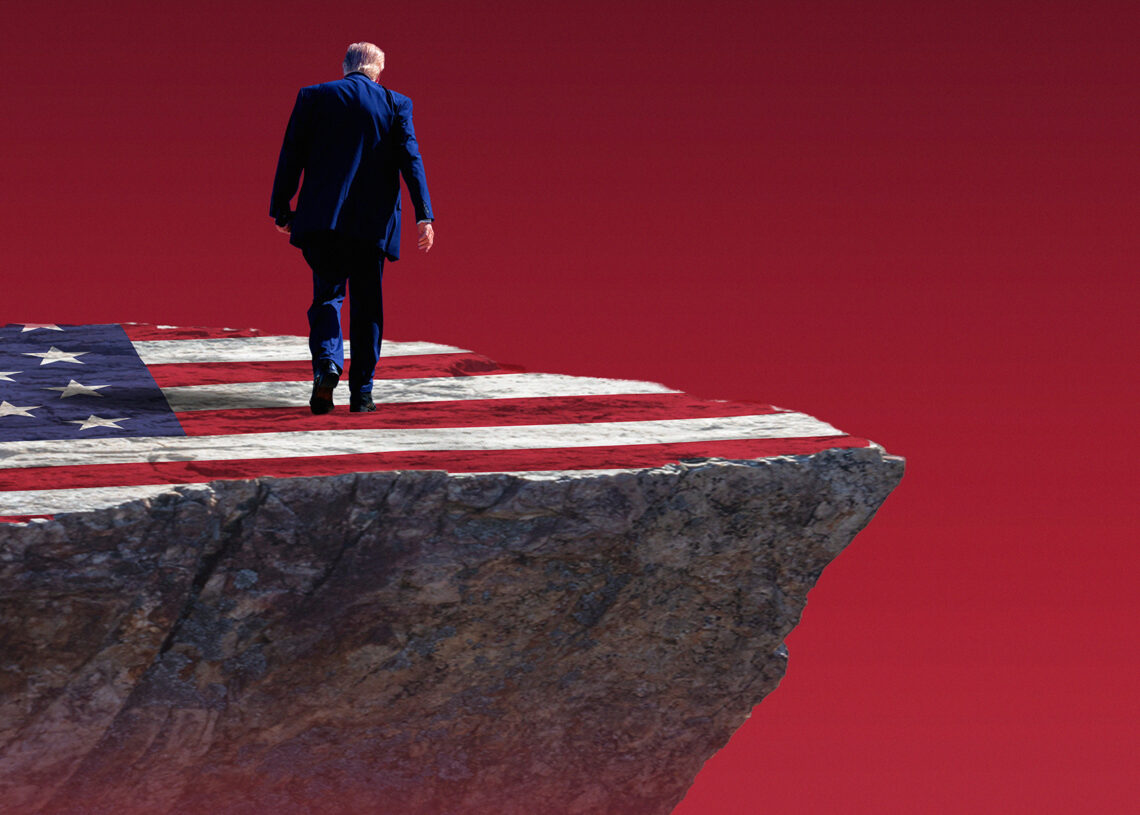
Xi, your leader, is so confident that he needles Trump openly about China’s rise and America’s decline, telling him at the summit that “transformation not seen in a century is accelerating across the globe.” Trump amazingly endorsed the message, posting later that Xi’s description of America as “a declining nation … was 100 percent correct.” Trump blamed his predecessor, President Joe Biden, but you’re an intelligence analyst; you know better.
So what do you tell the top spies at their headquarters in northwest Beijing, near the Summer Palace? The safe bet is to embrace the consensus at home and abroad that China is rising and America is falling. That’s certainly what the numbers suggest. And Trump’s flattery of Xi, offered in a spirit of cooperation, also conveyed notes of weakness and uncertainty. But your boss at the ministry assigned you to make a skeptical “red team” analysis to challenge the conventional wisdom about China’s emerging dominance. So, you try to think of ways in which the pro-Beijing narrative might be wrong.
The first problem that worries you, as you’re drafting the assessment, is that America keeps falling uphill. The 2008 financial crash appeared to be a deep crisis for capitalism, but U.S. financial markets bounced back and are as dominant as ever. America’s two decades of wasteful, no-win wars in the Middle East were corrosive, but the U.S. military is now innovating.
America is weirdly resilient. Covid-19 looked like a crippling problem, but China took a harder hit than the United States. Border policy was a mess under Biden, but the public now seems unhappier about Trump’s crackdown than about illegal immigration. And finally, there’s the ever-expanding balloon of the U.S. economy. Despite inflationary tax and tariff policies, it keeps rolling along. The AI companies are so advanced they scare themselves.
All the harbingers of American decline are present, to be sure. Trump himself is a walking symbol of arrogance and corruption that people once would have called “un-American.” But there’s a mysterious self-correcting mechanism at work. Every poll you read says that despite Trump’s electoral machinations, he’s still likely to lose the House of Representatives in November. Trump continues to try to undermine the Federal Reserve’s independence (which would truly be a gift to China), but he keeps failing. And even a Supreme Court packed with Trump appointees has rejected his arguments on tariffs and other big issues.
Trump makes wild statements every day, denouncing journalists and former presidents and intelligence chiefs as “traitors.” But increasingly people are tuning him out. There will be another president in less than three years, and no successor is likely to help China and Russia as much as Trump has by bashing America’s allies and partners. The “Trump Bump” for China won’t last.
You want to be an honest intelligence analyst, but you don’t want to get fired. So you decide to title the section on America’s decline: “Hopeful signs of U.S. demise, but too soon to tell.”
What about China’s rise? That part is even harder. Signs of China’s prosperity and modernization are everywhere — not just in the metropolises of Beijing and Shanghai, but in second-tier cities such as Yinchuan, Kunming and Nanning, which are dotted with new skyscrapers. Unfortunately, some of those gleaming towers are half empty, and the real estate sector has been shaken by a generation of overspending, debt and corruption.
China is the world’s factory, seemingly able to manufacture everything faster and cheaper than anyone else. But this immense scale creates its own problems. It’s like trying to stuff an elephant into a Volkswagen. Trump’s anger about trade imbalances is shared by millions of resentful Americans, and by Europeans and Asians, too. For all its masterful planning, the Communist Party still hasn’t figured out how to share China’s wealth with its people. They don’t get to consume the vast surplus they produce.
And finally, as an analyst, you know that China has a demographic problem eerily similar to what Europe, Japan and South Korea are facing. There aren’t enough young workers to create the income and wealth needed to sustain an aging population.
Is this the Chinese century? Here, too, you want to hedge to avoid being sent to the MSS office in Chengdu. So you decide on a headline: “China’s rise: Inexorable but still some question marks.”
Your boss doesn’t like all the waffling. He says your net assessment reads like it was written by a graduate of the CIA’s Sherman Kent School of Intelligence Analysis: all caveats and no bold conclusions. So he asks you the bottom-line question: Are you willing to risk China’s stability and security on the confidence that China is becoming the dominant partner in its relationship with the United States?
And your honest answer, on careful reflection, is simple: No. China isn’t as strong as it appeared in Beijing, and America isn’t as weak.
The post Don’t believe Trump and Xi’s narrative. America keeps falling uphill. appeared first on Washington Post.