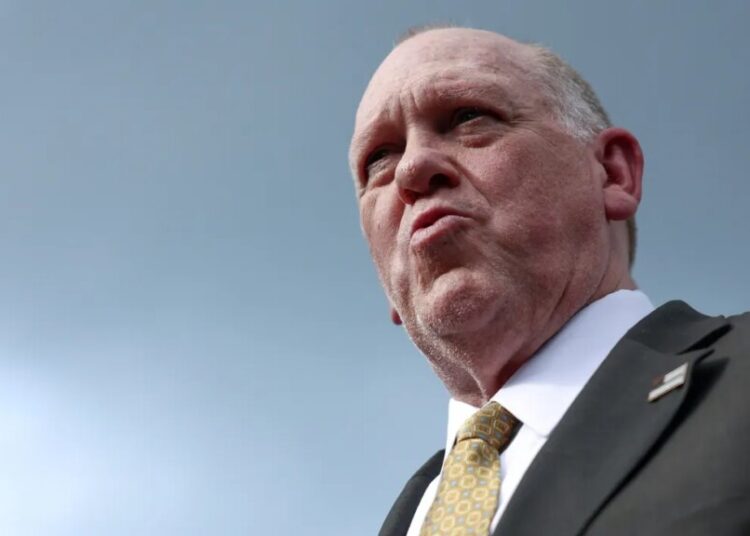
Thirty years after Cuban MiG-29 fighter jets shot down two Cessnas operated by the Miami-based humanitarian group Brothers to the Rescue, killing four people, including three U.S. citizens, flying in international airspace over the Florida Straits, U.S. federal prosecutors have issued an indictment against Raúl Castro for his alleged role in authorizing the attack.
For the families of the dead, the announcement brings a measure of justice, regardless of whether the 94-year-old former head of state, who was minister of defense at the time, ever sees a day in court. It is impossible, though, to separate the move from the Trump administration’s escalating pressure campaign against Havana over the past several months.
Since January, the United States has imposed a de facto oil blockade with punishing humanitarian consequences, threatened sweeping new sanctions on foreign companies doing business with the island and issued direct ultimatums to Cuban officials to reform their political and economic system — or else. If the Trump administration lacked a pretext for pushing its confrontation with Havana toward military action, with the ultimate goal of regime change, the indictment may clear the way.
But the threat of a Castro prosecution in the United States also opens a window onto a larger problem that Cubans will confront in any future transition from the revolutionary government established in 1959 — especially if political change arrives through Washington’s intervention.
How should Cubans reckon with the many injustices accumulated over nearly seven decades of revolution, exile, and, yes, geopolitical conflict with their northern neighbor? How can they reconcile competing attitudes in Cuban communities toward the role of the United States in their national identity and life? Can the country afford to reopen the past if it hopes to move forward? Can it afford not to?
The choreography around this week’s indictment highlights the stakes. The announcement, presented on May 20, Cuba’s original independence day, was calibrated to conjure larger battles over Cubans’ collective memory. The date marked the end of four years of U.S. military occupation in 1902 after the United States intervened in the midst of Cuba’s final war for independence against Spain. Washington thereafter imposed strict limitations on the island’s sovereignty as a condition for allowing Cubans to govern themselves.
For the Trump administration, the date neatly resonates with its pursuit of renewed hemispheric dominance. For many Cuban Americans, it still represents the birth of a republic they romanticize as a kind of paradise lost to the revolution. But Fidel Castro’s government stopped celebrating the holiday after 1959, seeing it as a symbol of incomplete liberation.
While his first goal was to end the authoritarian rule of the dictator Fulgencio Batista in the 1950s, Mr. Castro and other activists also portrayed the revolution as the delayed realization of the island’s original independence struggle, promising to deliver Cubans from the dependence on the United States that had haunted the Cuban Republic since its birth.
Revolutions, though, are not simply the culmination of history. They create histories of their own. Cuba’s transformation into a one-party Communist state in the early 1960s generated new layers of trauma and injustice: political imprisonment, labor camps, counterinsurgency campaigns, property confiscations, exile, surveillance and censorship. Over the following 30 years, Cuba became as tethered to Soviet subsidies and trade as it had once been to the United States. When that support collapsed, economic precarity and a stubborn resistance to liberalizing reform helped drive new waves of migration that further fractured Cuban families.
Still, the Cuban state was hardly the only actor to leave scars. Anti-Castro militancy produced its own victims, too. Take another aerial tragedy: Cuban exiles’ 1976 bombing of Cubana Airlines Flight 455, which killed all 73 people aboard, in one of the largest acts of airborne terrorism in the Western Hemisphere. Do these innocent dead matter any less than the individuals on the Brothers to the Rescue planes, brought down by the Cuban Air Force? Despite living mostly openly in the United States in their later years, the presumed architects of the Cubana attack never faced justice before an American — let alone a Cuban — jury.
Nor is the U.S. government some distant participant in this saga. For more than 60 years, Washington has shaped Cuban life through covert operations, shifting immigration policies and comprehensive sanctions that have constrained the island’s economy and reinforced the Cuban government’s political paranoia. Even in 1996, the Brothers to the Rescue tragedy unfolded amid repeated Cuban complaints to the Federal Aviation Administration, and the group’s own admission, that their flights had evolved, beyond humanitarian operations assisting migrants at sea, into provocative incursions into Cuban airspace.
That does not absolve Cuban authorities of responsibility for their brazen and, according to the International Civil Aviation Organization, illegal attack, nor do U.S. actions excuse the Cuban government’s other legacies of repression or abuse. But broader historical justice cannot be brought to bear through the American court system alone.
It’s true that any Cuban-led effort to deal with the past, should a new government eventually take shape, would face enormous questions of legitimacy on and off the island. The impulse in a transition scenario would most likely be to prioritize the claims of those most visibly persecuted by the previous regime. But any attempt to selectively adjudicate the past would risk reproducing the same zero-sum logic that has divided Cubans for decades.
What of the victims of Batista-era repression before 1959? What of the many migrants that died in the Caribbean Sea in the 1990s, pushed out by socialism’s failures but drawn by the enticement of the United States’ past preferential treatment of Cuban refugees? What of families and hospital patients experiencing the effects of the United States’ economic coercion of the island today, not as a necessary prelude to liberation, but as collective punishment?
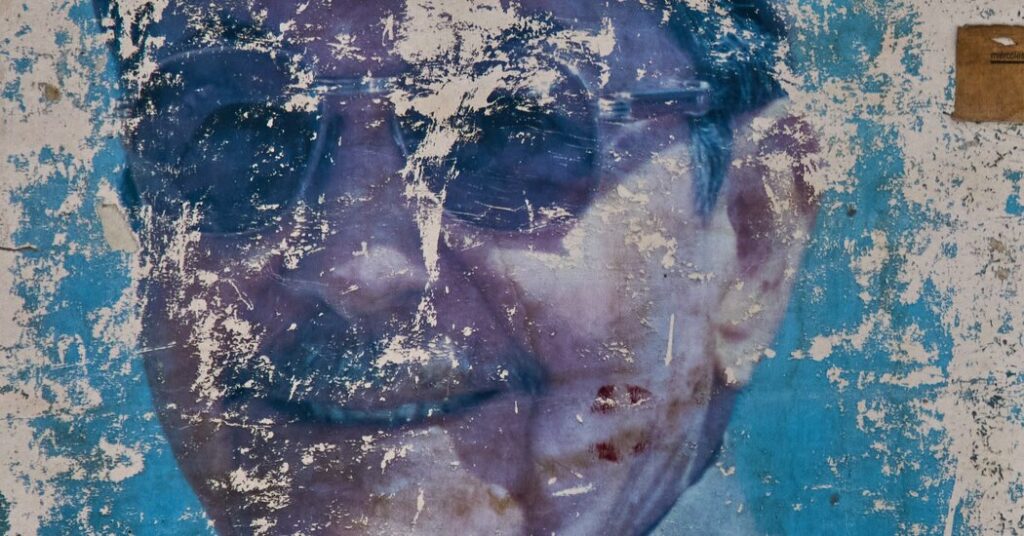
It might be tempting to conclude Cuba would be better off leaving old traumas alone. But troubled pasts tend to resist suppression. That has proved true in Spain, where the post-Franco “pact of forgetting,” or deliberate silence about the crimes of the dictatorship, has been under great strain in recent decades. In the Cuban context, old accusations resurface constantly in government billboards, social media campaigns and political rituals on both sides of the Florida Straits.
Any future Cuban political transition will require something more difficult than high-profile prosecutions or a rewriting of school textbooks to suit the narrative of the victor. Cubans will have to find a way to acknowledge the harms they have endured and inflicted on one another without making the nation permanently captive to them. The United States, too, should be willing to account for its own role in Cuba’s long and tortured trajectory.
Cubans and Cuban Americans deserve more than endless historical war, or symbolic indictments in a U.S. court. They deserve the possibility of a new national story — one that is all their own.
Michael J. Bustamante is a professor of Cuban and Cuban American studies at the University of Miami and the author of “Cuban Memory Wars: Retrospective Politics in Revolution and Exile.”
The Times is committed to publishing a diversity of letters to the editor. We’d like to hear what you think about this or any of our articles. Here are some tips. And here’s our email: [email protected].
Follow the New York Times Opinion section on Facebook, Instagram, TikTok, Bluesky, WhatsApp and Threads.
The post Cuba Needs a New Story appeared first on New York Times.