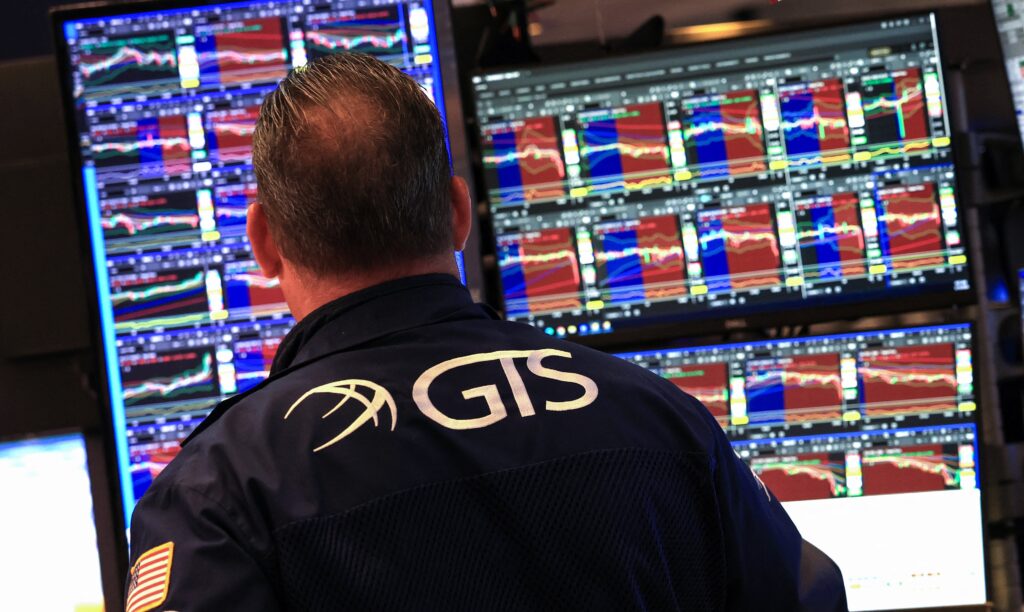
Borrowing costs for everyday Americans are climbing as a global bond sell-off drives up the price the United States pays to borrow money, reflecting investor fears about surging inflation and the nation’s growing debt burden.
On Tuesday, Treasury yields on the 30-year bond climbed to the highest point since 2007, before settling around 5.18 percent.
Perhaps more significantly for cash-strapped Americans, the 10-year Treasury note, which serves as a benchmark that influences mortgage rates, auto loans and credit card borrowing costs, rose to its highest level since January 2025, about 4.68 percent, before declining slightly.
The U.S. government sells bonds to a global pool of investors to finance its enormous debt burden. But as concerns about inflation and the nation’s fiscal trajectory have grown, investors have begun demanding higher returns before lending to Washington. When bond yields rise, interest rates on consumer loans tend to follow — because banks and lenders use Treasury yields as a baseline for setting the rates they charge borrowers.
For would-be home buyers, the pain is already arriving. The average rate on a 30-year fixed-rate mortgage climbed to 6.75 percent on Tuesday, its highest level since late July, according to Mortgage News Daily. Rates have risen nearly half of a percentage point since mid-April.
Car buyers are feeling the squeeze, too. The average interest rate on a new-auto loan hit 9.45 percent in April, according to Cox Automotive, pushing the typical monthly payment on a new vehicle to $757.
The recent bond sell-off reflects a range of concerns, including fears that inflation — stoked by oil prices stuck above $100 a barrel amid the war in Iran — could force the Federal Reserve to raise interest rates. When rates rise, the value of bonds that investors already hold falls, because newly issued bonds offer higher yields, making older ones less attractive.
Olumide Owolabi, a senior portfolio manager and head of U.S. rates at Neuberger, said the U.S. government’s borrowing needs have been one of the drivers of rising yields in recent weeks.
“If the U.S. is borrowing a lot in a deficit environment, you can imagine the holders of the U.S. bonds are going to ask for more premium,” he said. “If this continues, mortgage rates are going to move higher in tandem.”
Concerns about inflation pose an early test for Kevin Warsh, President Donald Trump’s pick to lead the Fed, who is set to be sworn in Friday at aWhite House ceremony hosted by Trump.
Rising costs also present a political challenge for the Trump administration, which has promised to bring down prices while pressing the Fed to cut rates. .
Asked about the administration’s commitment to lower prices, Vice President JD Vance told reporters Tuesday that the administration has delivered “great wins for the American people” and that the increase in prices, particularly at the pump, will be temporary.
“We are very aware that because of what’s going on in the Middle East, gas prices have gone up and a lot of Americans are struggling because of that,” he said.
On Wall Street, professional investors are making a big bet: dump bonds, buy stocks. In May, more fund managers were effectively betting against bonds than at any point in nearly four years while pouring money into stocks at the fastest pace ever, according to a Bank of America survey of fund managers released Tuesday. The upshot is that Wall Street expects stocks to keep delivering and don’t want to be caught holding bonds while they wait.
The post Why mortgages and car loans are getting more expensive appeared first on Washington Post.