The White House resisted allowing an American doctor exposed to Ebola while working in the Democratic Republic of Congo to return to the United States, according to five people familiar with the Ebola response who spoke on the condition of anonymity to share internal discussions, delaying the evacuation and care of Peter Stafford, who was ultimately transported to Germany.
Infectious-disease physicians who have cared for Ebola patients say the mainstay of treatment is early recognition of infection coupled with effective isolation and advanced supportive care because an infection can progress within days to multi-organ failure.
Around the time that Stafford was transported, the wife and children of another missionary doctor from the same group returned to the United States, according to the head of the missionary group and a CDC official.
Centers for Disease Control and Prevention medical experts assessed the family twice before clearing the family of physician Patrick LaRochelle to return. Authorities at the U.S. port of entry and state health department officials’ risk assessment also determined they had not been exposed to a high-risk patient with Ebola symptoms, according to a CDC official and an individual familiar with the situation who spoke on the condition of anonymity to discuss the response.
LaRochelle is asymptomatic, according to a statement from the missionary group.
The administration’s reluctance to bring an infected American back to U.S. soil marked a sharp contrast with the 2014 West Africa Ebola outbreak, when the first two American patients were evacuated to Atlanta for treatment. Donald Trump harshly criticized the move at the time, and individuals familiar with the current response say the optics of bringing a possible Ebola patient into the country remain major concerns inside the White House.
“How incompetent are our leaders allowing these Ebola infected people to come into our country with all of the problems and danger entailed!” Trump posted on Twitter in 2014.
White House spokesperson Kush Desai pushed back on the assertion that the White House did not want Stafford in the United States.
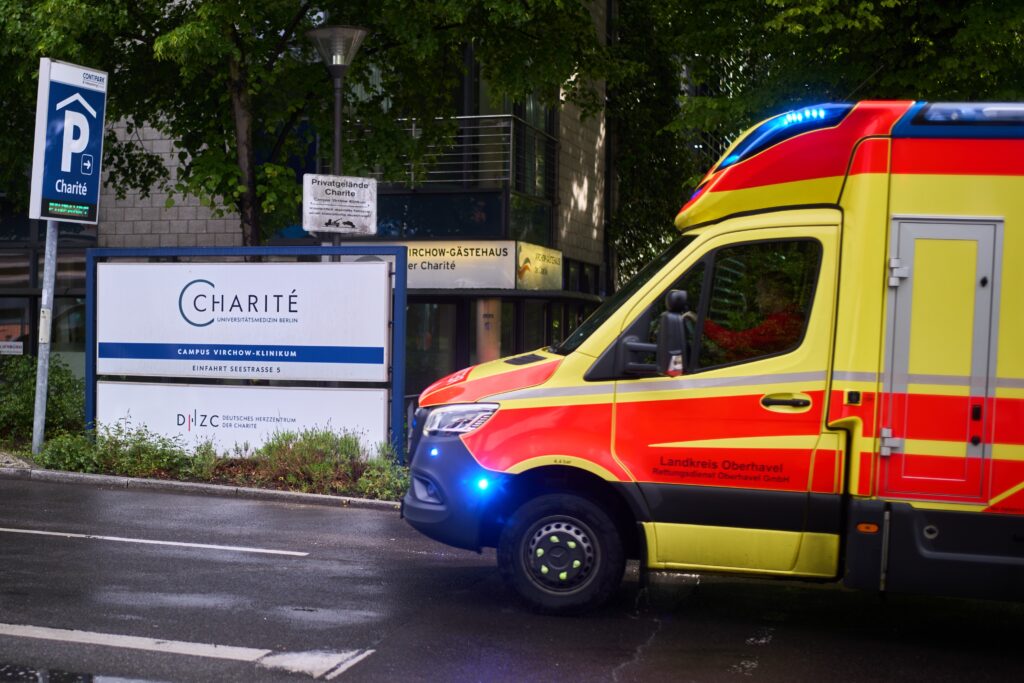
“This is absolutely false and another reason why the Washington Post is no longer worth the paper it’s printed on. The Trump administration’s top and only concern is ensuring the health and safety of American citizens. The Charite Hospital of Germany is internationally recognized as one of the best facilities in the world for the treatment and containment of viral diseases like Ebola, on par with leading facilities here in the United States.”
Satish Pillai, the CDC official managing the agency’s Ebola response, told reporters Tuesday that “the key issue here is ensuring the treatment is initiated rapidly and appropriately, and the initial location being Germany given the proximity and the access to the highest levels of care.”
Nahid Bhadelia, an infectious-disease physician who has cared for Ebola patients in multiple deployments to outbreaks, said early treatment is vital.
“Ebola virus disease is a severe infection which can within a matter of days progress to shock, multi-organ failure and require advanced supportive care, which includes support for your kidneys, for your heart, for your lungs, and, in addition to that, to be able to access promising medical countermeasures, which there aren’t many for this [strain],” said Bhadelia, director of Boston University’s Center on Emerging Infectious Diseases.
“Those will be the reasons to bring someone who has a confirmed infection to care quickly,” said Bhadelia, who was not involved in the decision.
The Ebola outbreak has been linked to nearly 600 suspected cases and 139 deaths in the Democratic Republic of Congo, and cases are expected to continue to rise.
Ebola is spread only when a person has symptoms, through contact with infected blood or bodily fluids or contaminated items such as clothing or bedding. It does not spread before symptoms appear or through water or air, according to the World Health Organization and the CDC.
‘Did not want him back’
Stafford, a 39-year-old physician working in Congo for Serge Global Inc., a Christian missionary nonprofit, had been working as the only surgeon at a hospital serving a remote area of Congo when he began feeling sick Saturday, according to the group’s executive director. By the time he was transported out, he could not walk without assistance and was suffering from a fever and nausea.
U.S. officials said Friday they were closely monitoring reports of the Ebola outbreak in Congo. On Sunday, after a news briefing for the media, the CDC learned that Stafford had tested positive for the Bundibugyo virus. That Ebola strain has no approved vaccine or treatment, and has a fatality rate of 25 to 50 percent.
On Sunday evening, the CDC issued a statement saying it was “supporting interagency partners who are actively coordinating the safe withdrawal of a small number of Americans who are directly affected by this outbreak.”
It’s unclear when U.S. officials first learned Stafford had been exposed. As discussions took place among U.S. officials about how to evacuate him, the CDC and the Administration for Strategic Preparedness and Response advocated that he be evacuated to the United States, according to individuals familiar with the response.
They said Stafford could receive the highest standard of care at special facilities with biocontainment units, such as at the Nebraska Biocontainment Unit, run by Nebraska Medicine and the University of Nebraska Medical Center, or Emory University Hospital’s Serious Communicable Diseases Unit, the individuals said. Both have been involved with handling patients from the hantavirus outbreak tied to a cruise ship.
The resulting back-and-forth delayed Stafford’s evacuation and treatment because “they would not allow him to be transported to the United States,” said one individual familiar with the response.
“The president and his people did not want him back in the United States,” another individual said.
Desai contested the assertions. He said Trump “has consistently taken great risks to ensure Americans exposed to deadly and contagious diseases are safely brought back home, from quickly evacuating diplomats from China at the outset of the COVID-19 pandemic to more recently repatriating the Americans who were exposed to the recent Andes virus outbreak.”
He added, “The idea that the White House was concerned that bringing a sick American back home to receive the best standard of care would somehow be poor optics is not only false, but nonsensical.”
The most appropriate location for Stafford would have been the Nebraska Biocontainment Unit, according to two people familiar with the response. But officials did not want to separate Stafford from his wife and children, who would also need to be quarantined at the separate facility at the University of Nebraska Medical Center.
The quarantine facility only has 20 beds. Eighteen of them are occupied by passengers who were potentially exposed to the hantavirus outbreak linked to the expedition ship. (Two passengers who had previously been at Emory have been transferred to Nebraska, according to a person familiar with the response.)
Stafford could not be immediately evacuated from eastern Congo. He was in a remote area, at least two hours away from the airport in Bunia, the capital of Ituri province, the epicenter of the outbreak, according to one person. Matt Allison, the executive director for Serge, told The Post on Tuesday that Stafford had to take multiple flights, including at one point being transferred in a specialized containment tube.
‘As long as God wills’
Serge also said that the physician LaRochelle, 46, was determined to have a potential Ebola exposure to a patient who later died. His wife, Anna, works as a nurse practitioner in the area but was determined by authorities to not have come into contact with any suspected Ebola cases, two federal officials familiar with the response told The Post.
Allison said the CDC concluded “Anna [LaRochelle] and her kids were not around patients with Ebola or people that had any symptoms of Ebola, and so out of an abundance of caution, we will ask you to actively monitor from your departure, but we are not concerned about any exposure.”
He noted they are undergoing daily monitoring for symptoms.
The LaRochelles had been working for the group in the area as team leads since 2018, according to a post on the Serge website.
“They hope to work in the Congo as long as God wills, and love being part of a Serge team, on mission for God’s glory,” Serge’s website says.
Stafford’s wife, Rebekah, who is also a physician, was separately exposed to Ebola by a pregnant woman getting an ultrasound who later died. Allison said the 38-year-old was isolating with her four children, ages 1 to 7.
Rebekah Stafford, her four children, and Patrick LaRochelle have left Congo and are “en route to other locations where they can be monitored in close proximity to expert care if needed,” Serge said in a statement Wednesday.
The organization did not immediately respond to a request for comment regarding the Staffords’ care.
The post White House resisted letting doctor with Ebola return to U.S. appeared first on Washington Post.