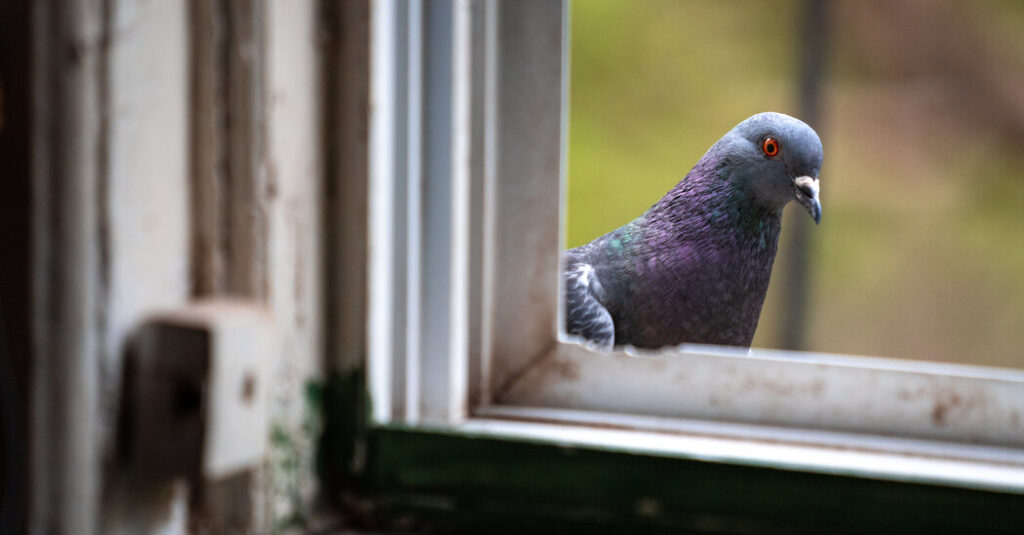
People did not always look down their noses at pigeons. Over the centuries, the domesticated birds played important roles as sources of food and fertilizer, as messengers and even as beloved companions.
Exactly when humans and pigeons first became entwined is an open question, and research published on Wednesday in the journal Antiquity does not provide a definitive answer. But it does push back the date by some 1,000 years, to as early as 1400 B.C.
The findings, based on an analysis of pigeon bones recovered from a Late Bronze Age site in Cyprus, also suggest that people may have raised the birds for ritual feasts.
“Pigeons have been with humans for a very, very long time,” said the lead study author, Anderson Carter, who conducted the research as a graduate student at the University of Groningen in the Netherlands.
“We’ve shaped their whole species, and they’ve shaped many of our stories and histories,” Ms. Carter said.
Cyprus is a fitting location for the new discovery. The Mediterranean island was said to be the birthplace of Aphrodite, the Greek goddess of love and beauty, who had a special fondness for pigeons and doves. Aphrodite is often depicted with the birds perched on her hand or shoulder.
The researchers recovered 157 pigeon bones from Hala Sultan Tekke, an ancient seaside settlement that was a major hub for trade with Egypt, the Levant and Turkey.
“It was a cultural melting pot and one of the big port cities of Cyprus,” Ms. Carter said. Some of the bones were from nestlings, indicating that residents may have bred the birds.
The team analyzed the nitrogen and carbon content of bones from 37 pigeons. Variants of these elements, called isotopes, are directly tied to what an animal ate.
The researchers compared the pigeon findings with previous analyses of human bones from other Late Bronze Age sites around Cyprus. They found a striking overlap: Both pigeons and people seemed to rely on a diet heavy on grains and vegetables, with limited meat.
The presence of animal protein signatures in the birds’ bones suggests that they were picking off scraps left behind by humans, Ms. Carter said, or that humans were feeding them.
Most of the bones were discovered in a sacred ritual space where “feasting deposits” of ceramics, cookware and other animal bones were also recovered, Ms. Carter said. Many of the pigeon bones were burned, suggesting they were part of the ritual feasting, too.
“It may be linked to Aphrodite,” Ms. Carter said. “But there were also other cults active on the island at this point, so we can’t make a determination about that yet.”
The findings add to knowledge about the human-pigeon relationship and provide strong evidence that domestication might have begun far earlier than supposed, said Angelos Hadjikoumis, a zooarchaeologist at the Cyprus Institute, who was not involved in the work.
The paper also raises many questions that “are begging for answers,” he continued. Did people purposefully set out to domesticate pigeons, or did the process occur naturally as pigeons “colonized” human environments? What other roles did the birds play in ancient society that scientists might have overlooked?
“Even more broadly,” Dr. Hadjikoumis added, “a better understanding of the past can help us find creative and productive ways to share environments with animals, as our ancestors did.”
Ms. Carter said she also hoped that the findings inspire people to reconsider negative views they might hold regarding the misunderstood birds. Pigeons are everywhere today because we brought them around the world and bred them to be dependent on us, she said.
It was only after the Industrial Revolution that humans began viewing pigeons as a nuisance, and then “just kind of abandoned them,” she said.
“We changed the whole ecological niche of this species,” she said. “So I think we do owe them at least some respect.”
The post Pigeons and People Have Been Frenemies for Longer Than You Think appeared first on New York Times.