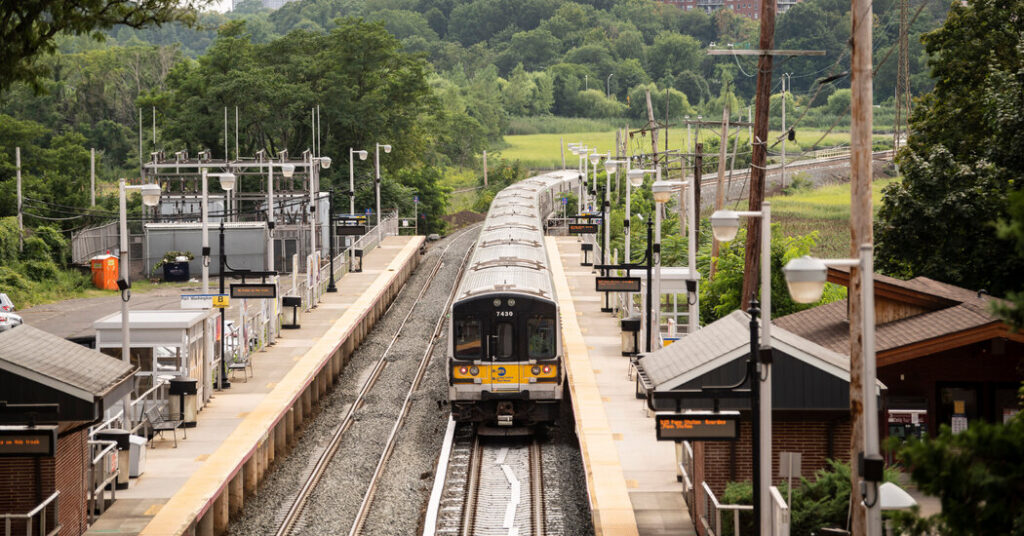
The Long Island Rail Road strike is not just disruptive for Long Islanders. A growing number of passengers live within New York City limits in Queens, especially in neighborhoods with limited subway and bus service.
The rising popularity of the rail service among Queens residents is partly because of a program called CityTicket, which charges a flat fare for trips within New York City. A one-way ticket costs $5.25 for off-peak trains and $7.25 for peak trains, considerably less than tickets between Manhattan and most Long Island stations.
Many of those residents work in service industries in Manhattan and other boroughs and do not have the option to work remotely. During the strike, they will have to rely on subway lines that may not stop anywhere near their homes, and compete for space on the subways with Long Island-based commuters who were also rerouted.
“They are going to be heavily impacted,” said Tom Wright, the president of the Regional Plan Association, an urban planning think tank.
Queens is home to some busy L.I.R.R. stations, including the hub at Jamaica, where many train lines converge and where riders can connect to the subway and the AirTrain to Kennedy Airport.
Donovan Richards, the Queens borough president, said in a statement that he was concerned for the tens of thousands of Queens residents who relied on the rail system, especially in eastern neighborhoods where subway service is scarce.
He called the strike “detrimental to the daily lives of our neighbors and the economy of our borough in numerous ways.”
But he also said he supported the decision of the workers, many of whom live in Queens, to strike for better wages.
“Queens is proud to ride with them until the end of the line in their fight for fair pay,” he said.
City officials said they had been planning with the M.T.A. and other agencies for weeks for a possible strike.
Mayor Zohran Mamdani on Monday declined to get into the middle of the labor dispute between the M.T.A. and its striking railroad workers. At an unrelated news conference, he called for a “fair deal” for everyone and said that New Yorkers should be planning for “heavier congestion” and longer travel times.
In addition to the Queens residents who take the L.I.R.R. to jobs elsewhere in the city, many rely on it to get to work on Long Island.
Mandy Ramzan, 50, who lives in Long Island City, Queens, joined a long line of rerouted commuters at a bus stop on Roosevelt Avenue in Flushing.
She was transferring from the No. 7 train in the hopes of getting to her job in Great Neck, Long Island, where she is the director of an assisted living center.
With L.I.R.R. service suspended, her detour was adding an hour to her morning commute, she said.
Standing on line with a melting iced coffee, Ms. Ramzan said she had mixed feelings about the labor dispute.
“Listen, people deserve to be paid. I get it,” she said. “But there are also a lot of commuters who are really feeling it this morning.”
Stefanos Chen is a Times reporter covering New York City’s transit system.
The post The L.I.R.R. Strike Affects Many Commuters in Queens, Too appeared first on New York Times.