Stocks, bonds and oil prices seesawed on Monday as investors parsed the signals coming from Washington and Tehran about the future of their tenuous cease-fire.
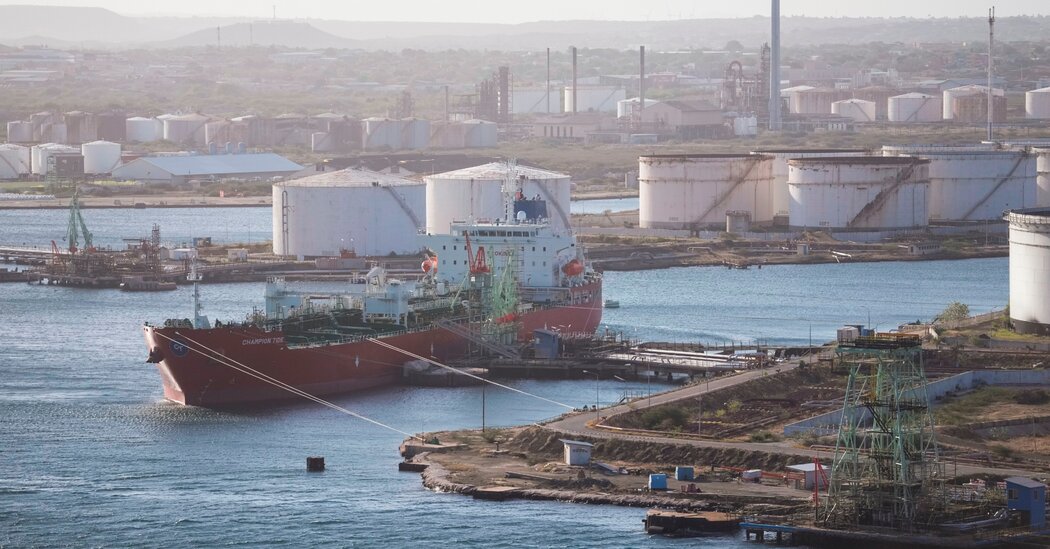
A peace deal has remained elusive, as has the reopening of the Strait of Hormuz, a vital passageway in the Persian Gulf for shipments of a significant portion of the world’s oil and gas.
On Sunday, President Trump posted a new threat on social media: “For Iran, the Clock is Ticking, and they better get moving, FAST, or there won’t be anything left of them.”. On Monday, Tasnim, the semiofficial Iranian news agency, suggested that U.S. sanctions on Iran’s oil would be temporarily relaxed.
Oil slips, reversing early jump.
-
The price of Brent crude, the global benchmark for oil, fell more than 1 percent on Monday, to about $108 a barrel, erasing a similarly sized rise in earlier trading.
-
West Texas Intermediate crude, the U.S. benchmark, slipped almost 2 percent, to roughly $103 a barrel.
Stocks are mixed.
-
Choppy overnight trading continued on Monday morning, with the S&P 500 moving between small gains and losses. The index recorded its seventh straight week of gains on Friday.
-
Stocks in Asia, where countries import vast quantities of oil and gas, were broadly lower. Markets in mainland China, Japan and Taiwan were all down, while South Korea’s benchmark KOSPI rose slightly.
-
In Europe, stocks were volatile. The Stoxx 600, a broad index that tracks the region’s largest companies, rose more than half a percent, reversing earlier losses.
The bond market sell-off takes a breather.
-
Bond yields stabilized somewhat on Monday, as investors reassess the outlook for inflation and government borrowing. A sharp sell-off last week reflected deepening worries about the effects of higher energy prices on the global economy, which could force central banks to raise interest rates to stem inflation and governments to spend more to cushion the blow from surging fuel costs. (Bond yields move inversely to prices.)
-
The sharpest moves on Monday were in Japan, where a spike in government bond yields rattled investors. Although yields moderated later in the day, they remain elevated, making Japanese debt relatively more attractive to U.S. and European alternatives. Japanese investors are a major force in the global bond market, and if they shift their money home it could have a major effect.
-
The yield on the U.S. 10-year bond, traded down slightly to just under 4.6 percent on Monday, but remains near its highest level since early 2025. French and German government yields also edged lower.
Gasoline prices barely move.
-
Gas prices were little changed on Monday, creeping up to a national average of $4.52 for a gallon of regular, according to the AAA motor club. But the cost of the fuel for drivers is up by more than 50 percent since the war began.
-
Gas prices don’t move in lock step with crude, usually trailing increases or drops by a few days.
-
The average price of diesel fell slightly, to just under $5.63 a gallon on Monday, also up more than 50 percent since the start of the war.
What they are saying: There’s a rising risk of ‘a physical shortage of oil.’
-
Strong corporate earnings and a de-escalation of the war in Iran have been the main drivers of the stock market rally since April, but neither seem likely to provide continued support, analysts at Deutsche Bank wrote in a research note. The longer the Strait of Hormuz remains closed, the greater the risk to the global economy. “If the closure were to last even longer, we could move from tight oil markets and elevated energy prices to a physical shortage of oil,” they noted.
-
Ryanair, the low-cost airline that carries the most passengers in Europe, said on Monday that it had “zero” visibility into the second half of the year, with airfares under pressure because of “economic uncertainty caused by higher oil prices, the fear of fuel shortages and the risk of inflation adversely impacting consumer spending.” But travel demand has held up and Europe remained “relatively well supplied” with jet fuel, it said. Rising fuel costs and fears of shortages has led some other European airlines to cut flights recently.
The post Stocks, Bonds and Oil Zigzag Amid Mixed Signals on Cease-Fire appeared first on New York Times.