Life imitates AI art.
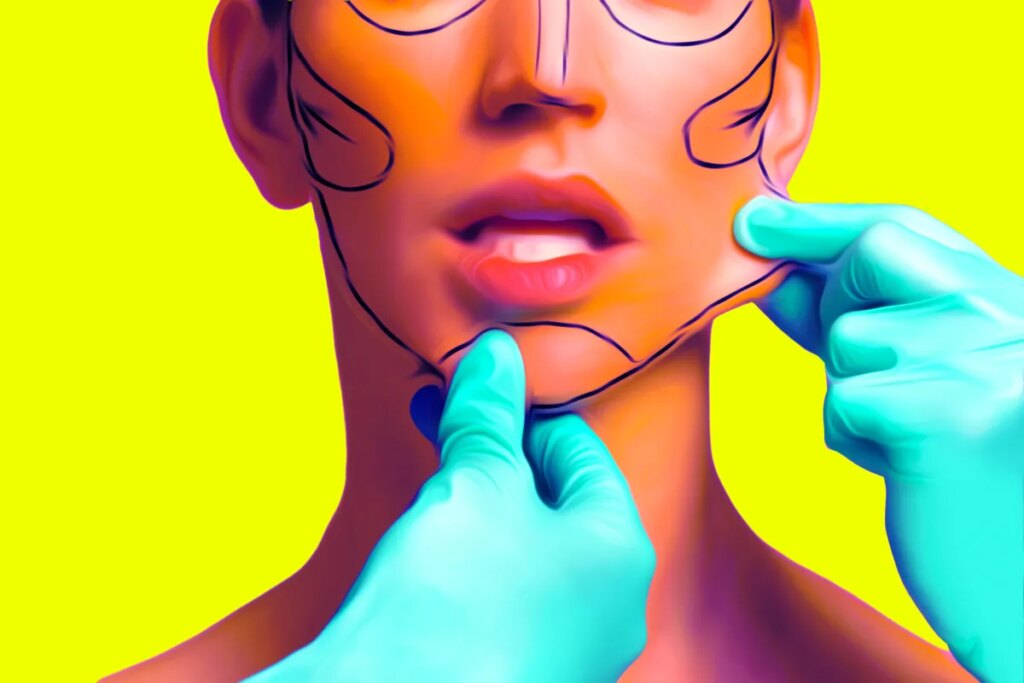
Plastic surgeons say that more patients are coming in and asking to look like an AI-generated version of themselves with cartoonishly unrealistic features, in the latest grim sign of how the tech preys on our insecurities and even shapes beauty standards.
Rachel Westbay, a cosmetic dermatologist in New York, described how one woman brought in a caricature-like image with huge doll-like eyes generated by ChatGPT.
“It’s like saying I want to look like Ariel from ‘The Little Mermaid,’” Westbay told Business Insider. “I was shocked.” She called the AI aesthetic a “Bratz doll” look, with huge lips, even bigger eyes, and a chiseled jaw.
AI isn’t the first digital technology to twist people’s perception of themselves and reinforce unhealthy beauty standards. Think Snapchat filters and our current influencer-driven social media environment.
But as the disturbing rise of AI psychosis shows, AI’s power to distort our thinking and feed on our insecurities is unmatched. And unlike typical filters, an AI image tool provides more customization, and an accompanying chatbot could gas up someone into thinking that their AI-laden lineaments are not only an upgrade, but achievable. The very term “AI” brings a certain heft to the table that a beauty filter doesn’t. A filter doesn’t understand anything, but your flattering chatbot does — or so it might seem that way to someone who doesn’t know better.
That puts plastic surgeons in a tough spot; their authority is now being challenged by sycophantic AIs. A survey published last year by Beth Israel Deaconess Medical Center and cited by BI found that patents who used AI to touch up their photos had “significantly higher” expectations for their plastic surgery.
Sachin Shridharani, a plastic surgeon in Manhattan, recalled how a woman in her 70s came in with an AI-generated photo of herself asking for a “surgical time machine” and to look like her forty years-young granddaughter.
“I explained that we can’t recreate what she looked like when she was younger, but she remained insistent,” Shridharani told BI.
Some in the field think they can use AI to reinforce their authority. Patients have always had unrealistic expectations and have clashed with surgeons. In theory, a specialized AI tool could help simulate procedures realistically, according to Justin Sacks, a reconstructive plastic surgeon at Washington University.
“Do you realize the conversation that you would have and the expectations that you would have after that clinic visit? It would be astounding,” Sacks told BI.
Of course, this introduces its own risks. No one wants a doctor who’s too dependent on AI, a still error-prone technology.
More on cosmetics: Plastic Surgeons Are Using Material From Dead People on New Patients
The post People Are Getting Plastic Surgery to Look More AI-Generated appeared first on Futurism.