The average pay of housekeepers in New York City hotels will increase to more than $100,000 a year as part of a contract settlement between an industry trade group and a powerful union. The deal, which the group ratified on Monday, averts a threatened strike this summer that could have disrupted the influx of tourists expected for the World Cup and America 250 festivities.
The owners of nearly 250 hotels in the city reached agreement with the union, the Hotel and Gaming Trades Council, on an eight-year contract that would increase wages by more than 50 percent for workers, union officials said. The hotel owners will continue to pay the full cost of providing health-care benefits for 27,000 union members and their families.
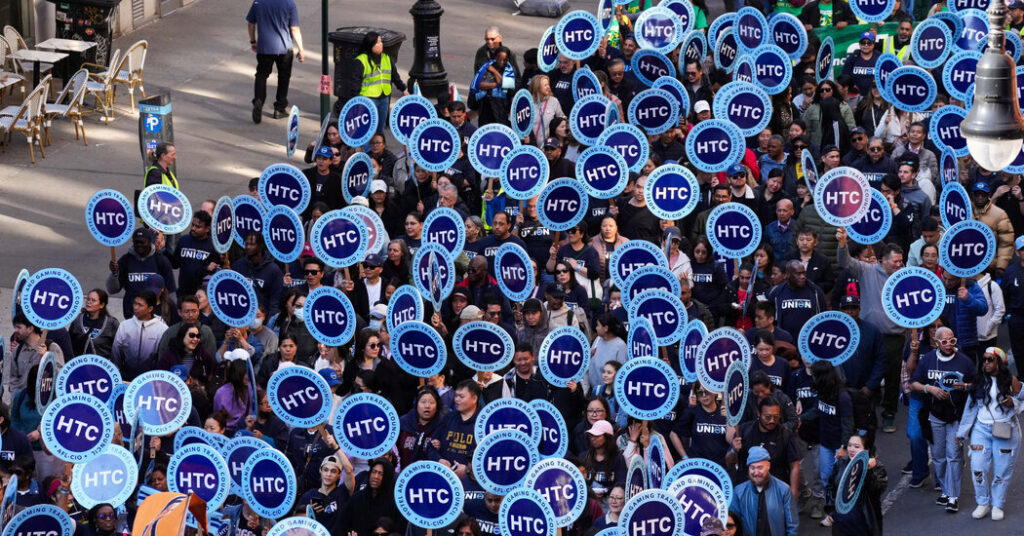
The unusually generous terms were ratified by the board of the Hotel Association of New York City, which represents the hotel owners, and is scheduled for a vote Thursday by the members of the hotel workers’ union, who have a history of moving in lock step with their leaders. The hotel workers’ union said that its new contract would raise the pay of housekeepers from slightly below $40 an hour to more than $61 an hour by 2034.
“Wage increases were our primary focus in this contract cycle because the cost of living for our members has been increasing so dramatically,” said Rich Maroko, the union’s president.
Labor unions in New York City have been notably restive this year, with failed negotiations having led to strikes by the main nurses union, faculty members at New York University and, this past weekend, by engineers and other employees of the Long Island Rail Road. Last month, a strike by the city’s doormen and other workers in unionized apartment buildings was avoided with an agreement that would raise average wages by $4.50 an hour over four years.
Vijay Dandapani, the president of the hotel association, and Mr. Maroko issued a joint statement saying that the agreement “includes wage increases that workers deserve, while preserving and improving benefits long term, establishing employer-funded housing and child care funds, and guaranteeing labor peace until 2034.”
Steadily rising labor expenses are likely to translate into higher costs for visitors to the city, said Didio Pequeno, a director of hospitality market analytics for CoStar Group, a research firm. “They’re going to try to offset that by raising rates,” he said.
But how successful they would be is unclear, given that New York City already has the highest average room rates of any big city in the United States, at about $335 a night, Mr. Pequeno said. In the past year, New York hotels have also had the nation’s highest occupancy rate, at about 84 percent, he said.
The agreement between the hotel workers and the industry comes about six weeks before the expiration of the current 14-year contract. For more than a year, union officials had been preparing for a strike in early July, just before the celebration of the 250th birthday of the United States and the final of FIFA’s World Cup tournament at MetLife Stadium in New Jersey.
Their salvos included creating a website, fifahotelstrike.org, that warned of a “distinct possibility that there will be strikes, pickets and lockouts” during the World Cup. Union leaders also successfully pushed for an increase in the maximum weekly unemployment benefit in New York State to $869 a week, from $504, which would make a strike less costly for their members.
In the past few years, hotel workers had gone on strike in several cities, including Boston, Los Angeles and San Francisco. But there had not been a citywide strike by hotel workers in New York since a 1985 walkout that lasted nearly a month.
Several elected officials, including Mayor Zohran Mamdani, had expressed support for the nurses and doormen amid their contract negotiations. Mr. Mamdani said he was “proud to stand shoulder to shoulder with our hotel workers” through their campaign for higher pay and better benefits.
“This contract is a win for our hospitality industry, our economy and for a city that works best when the people who keep it running can afford to live here too,” Mr. Mamdani said in a statement.
The Hotel and Gaming Trades Council had endorsed Andrew M. Cuomo, the former governor, in his campaign for mayor last year. But after Mr. Cuomo lost in the Democratic primary, union leaders endorsed Mr. Mamdani.
The expiration of union contracts in New York is coinciding with a sharp rise in the cost of living in the metropolitan region, spurring unions to seek raises that will exceed the rate of inflation. In the past year, consumer prices in the region rose 4.6 percent, according to the federal Bureau of Labor Statistics. That was significantly higher than the national inflation rate of 3.8 percent, the bureau reported.
By the sixth year of the hotel workers’ contract, they would earn more than $100,000 annually, the union said. That would amount to an increase of about 52 percent, or a compounded growth rate of more than 5 percent annually.
By the end of the proposed contract, in 2034, union housekeepers could be earning about $110,000 a year.
Mr. Maroko said that the deal included the largest wage increases and benefits in the union’s history, which spans nearly 100 years.
“This contract will deliver life-changing financial stability to the 30,000 hotel workers who are the backbone of the hospitality industry,” he said.
The proposed contract is longer and offers better financial terms than the union’s last contract, which started in 2012 as a seven-year deal that included annual pay raises of 3.5 to 4 percent. Although that contract was already substantially longer than most labor pacts, the union and the hotel association extended it a few years later for an additional seven years.
New York’s hotel industry has been complaining about being squeezed by inflation, taxes, “unnecessary construction and operation regulations.” In April, it launched a $500,000 ad campaign titled “Save NYC Hotels.”
Patrick McGeehan is a Times reporter who covers the economy of New York City and its airports and other transportation hubs.
The post N.Y.C. Hotel Housekeepers Will Earn Over $100,000 Under New Contract appeared first on New York Times.