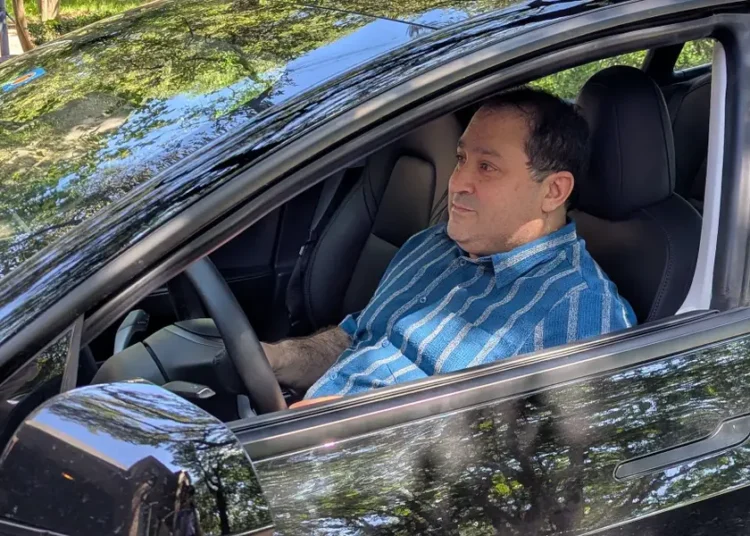
He restricted alcohol sales to two hours on workdays and effectively banned abortions in the region’s private clinics. He erected statues of Stalin and Ivan the Terrible, and his government tried to name a youth group after the medieval czar’s dreaded secret police. He emblazoned nearly every bus and even the local airline’s four Soviet-era jets with nationalistic slogans and repainted them ruby red.
Georgy Y. Filimonov, the governor of the northern region of Vologda, is an especially keen reader of Russia’s political winds. He has vigorously embraced the sort of “traditional Russian values” espoused by the Kremlin, asserting Vologda as an undistilled bastion of “Russianness.”
His campaign to make his region “the powerhouse of the Russian world,” which began in late 2023, melds imperial and Soviet nostalgia with some of modern Russia’s strictest social laws.
As he pushes his region’s citizens to carry out what he sees as their patriotic duties, high on his list is having more babies.
“Preserving Russian civilization is our main priority,” Mr. Filimonov, who often wears high-collared, Stalin-style tunics, said last year in a speech outlining his vision. “The problem is that we are dying at a gigantic pace.”
Mr. Filimonov, 46, bears little resemblance to the colorless technocrats who preside over most Russian regions. In the 2024 election, he won with 62 percent of the vote. But during my two recent visits to Vologda, many locals told me they were puzzled by the governor’s crusade, saying his ideas clash with the region’s culture.
Some people in Vologda represent a distinct phenomenon in today’s Russia: citizens who support the central government in Moscow and the war in Ukraine but oppose their local authorities.
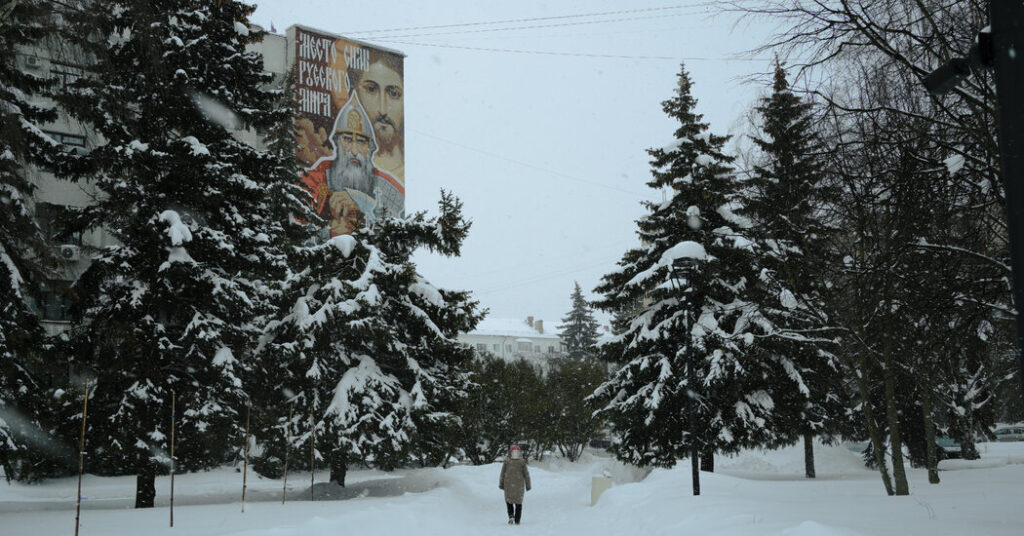
Vologda is a place of austere white churches and two-story wooden houses with ornamental fretwork. The region is famous for the radiant medieval frescoes at the Ferapontov Monastery, a UNESCO World Heritage site, as well as for its intricate lace and creamy butter.
“We were a very pleasant, inconspicuous north,” said Katya Khobotova, a local historian who works to popularize the area’s architectural heritage.
“There is fundamentally no need to shout about being a ‘powerhouse,’” she said. “If a place has that kind of power, it becomes known on its own.”
Mr. Filimonov, a former kickboxing champion who is married and has two children, declined my requests for an interview or responses to written questions, citing a busy schedule.
But in February, during a presentation of his achievements in Moscow, he said his policies were bearing fruit. The total fertility rate in the region rose by about 4 percent last year, he said, and abortions declined by more than 80 percent. While abortion is legal across Russia, access has been virtually blocked in Vologda because of aggressive restrictions.
As the governor pursues his demographic campaign, he has taken his cues from the Kremlin. While the war in Ukraine claims hundreds of Russian lives every day, President Vladimir V. Putin and other top government officials have become preoccupied with the country’s declining birthrate.
Russia’s fertility rate has fallen steadily since 2015, by more than 20 percent in all. While the rate remains in line with the European average, Russia risks a population decline of tens of millions of people in the coming decades. The threat is made more acute by the country’s vast, sparsely populated geography.
Mr. Putin has described improving the birthrate as a “national priority” and a “long-term historical task.” In late 2024, Russia banned what it termed “child-free propaganda.” State media have begun to frame large families as a duty to the motherland, and Mr. Putin made fertility rates a key performance indicator for governors.
Mr. Filimonov has jumped into action, offering expectant mothers from other parts of Russia bonuses if they choose to give birth in Vologda. He has also offered to pay for IVF procedures for those struggling to conceive.
But while the number of abortions in Vologda has plummeted, women have gone to other regions for the procedure, including a group that sent an angry petition to local officials.
Anna Minina, 40, a cook and a mother of four, was refused an abortion at the maternity hospital in the region’s main city, also called Vologda, which has a population of about 300,000. A doctor cited a “verbal” order banning the procedure, Ms. Minina said in an official complaint.
“Why does no one care about a woman’s mental well-being?” she told a local news channel. Referring to Russia’s slowing economy, she added that “raising a child is not easy, and the material situation is so difficult right now — it’s impossible to even buy an apartment.”
Ms. Minina went to the neighboring Yaroslavl region for the abortion. She later sued the maternity ward that had turned her away, and it compensated her for her travel and other expenses, according to Feminitiv, a Russian feminist group.
A court in Vologda fined the doctor about $200, while acknowledging her account that she had refused to perform the abortion under instruction from her superiors. Responding to a written request for an interview, Ms. Minina confirmed her story but declined to answer further questions.
In the governor’s February report on his achievements, he also said alcohol sales had fallen by 16 percent last year, pushing the overall mortality rate from alcohol-related diseases down by 53 percent. Reducing such deaths has been a Kremlin priority.
Some residents told me that they did not believe Mr. Filimonov’s numbers. They pointed to statistics from the Russian Health Ministry indicating that consumption of alcohol in the region actually peaked in late 2025 before beginning a steady contraction in November.
Vasily Shamin, 53, a construction entrepreneur, said that many people now bought alcohol in neighboring regions, and that the sale of bootleg alcohol had spiked.
Bootleg alcohol is readily available, Mr. Shamin said. Not only that, people “come to your house and say, ‘Don’t you need five liters of alcohol?’”
As more people buy vodka in bulk, they are drinking more as a result, Mr. Shamin said. “Since the vodka is there, why not have a drink?” he said.
The governor used his powers to shut all 610 dedicated liquor stores, though alcohol remains available in grocery stores. In late April, he moved to close all vape shops and small bars.
On his Telegram channel, he posts videos of his morning exercise routines, including push-ups with local residents, alongside a sticker that reads: “Sports, not spirits.”
The closure of liquor stores has had economic ramifications, pushing many people out of their jobs. Some have migrated to neighboring regions to find work, Mr. Shamin said.
When residents or business leaders have pushed back or been seen as insufficiently supportive of Mr. Filimonov, the authorities have responded forcefully.
The governor challenged the billionaire owner of a Russian steel maker — a major rival to his influence — to a physical fight. Vologda opposition groups on social media have been shut down by the Russian communications watchdog.
Aleksei A. Yermakov, who services equipment for banks, said masked men came to his house. Together with other activists, Mr. Yermakov, 53, had recorded a video statement to Mr. Putin complaining about Mr. Filimonov’s policies. A police interrogation followed.
For Mr. Yermakov, Vologda’s governor is “a boy who didn’t play enough in his childhood.”
“For him, everything that is happening is like playing with toy soldiers,” he said.
Mr. Filimonov’s effort to remake the region has come at a time when Vologda is experiencing a surge of interest in its history and culture. Many grass-root initiatives aim to cultivate local heritage projects.
Unlike many of her peers who grew up in the region but moved to Moscow or St. Petersburg, Svetlana Popova-Znamenskaya stayed in Vologda to establish an architecture practice where she restores wooden houses and builds furniture. She operates a showroom with a specialty coffee shop opposite the local Kremlin and the new monument to Ivan the Terrible.
She sees positives in Mr. Filimonov’s rule.
“Maybe such freaks should come to power — those who aren’t afraid of anything, who just do things — at least there are visible changes,” she said.
As I walked through the city center, the signs of change were inescapable. New granite pavements and exquisite lampposts had been installed en masse, and the town’s austere buildings were brightly lit as it got ready to celebrate its 880th anniversary next year.
But some residents told me that they found this frantic makeover at odds with the town’s quiet character.
Misha Priyemyshev, a designer who worked on branding for the city before Mr. Filimonov’s arrival, said that despite the governor’s efforts to energize Vologda, it will remain a slow-paced region — a “gateway” between central Russia and the “harsh Russian north.”
“Everything is very slow here, like in a true swamp,” Mr. Priyemyshev said. “That swamp has a lot of power — the more you move in it, the more it sucks you in.”
Ivan Nechepurenko covers Russia, Ukraine, Belarus, the countries of the Caucasus, and Central Asia.
The post He Shut Liquor Stores and Banned Abortion, All for the Glory of Russia appeared first on New York Times.