
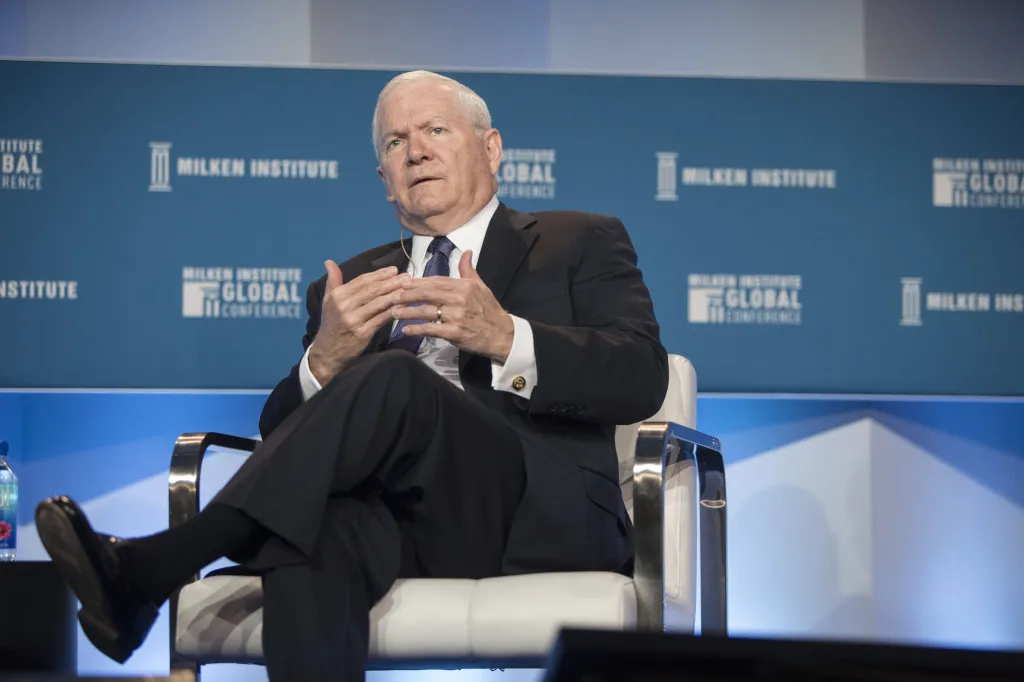
Former CIA Director and Defense Secretary Robert Gates predicted Sunday that the chances of China invading Taiwan were “pretty low, particularly over the next several years,” despite Chinese President Xi Jinping’s bellicose rhetoric toward the self-governing island.
“I don’t think they want to go in and attack Taiwan. They don’t want to destroy the very chip factories they want to take over,” Gates, now the chancellor of the College of William & Mary in Virginia, told CBS News’ “Face The Nation,” adding that he thought China would prefer to exercise control via “a Hong Kong-style transition over a period of time.”
Successive US administrations have named 2027 as the year when the People’s Republic of China would have built up enough military resources to potential launch a massive attack on Taiwan, and a Pentagon report released in December of last year found that Beijing’s People’s Liberation Army “continues to refine multiple military options to force Taiwan unification by brute force.”

“Those options include, most dangerously, an amphibious invasion, firepower strike, and possibly a maritime blockade.”
Gates said Sunday he was less sure of China’s military capabilities.
“There isn’t one single Chinese general or admiral today that has one day of combat experience,” he told host Margaret Brennan. “The last time these guys fought was 1979 and the North Vietnamese, the Vietnamese gave them a bloody nose. Xi has fired all these generals. There are now no generals left on the Central Military Commission, that kind of oversees the whole thing. He’s fired — and they’re slated for execution — his last two defense ministers.
“So this is not an outfit that I think he has enormous confidence in right now, and he’s been fighting against corruption in their military ever since he became president of China [in 2013]. So I’m not sure that he thinks his military is the greatest in the world.”
Despite his skepticism, Gates warned that China is an adversary unlike any the US has dealt with before.
“We have never faced a country, at least since the British Empire, that had greater manufacturing and industrial capacity than the United States,” he said. “We have not faced a country that was as technologically advanced as we are — ahead of us in a few areas, behind us in a few areas, pretty much even with us in a few others. So we face an adversary that is more powerful, and has more non-military instruments of power, than any adversary we’ve faced, certainly than the Soviet Union.”
China has claimed sovereignty over Taiwan since Chiang Kai-shek’s defeated Nationalists fled there following the Chinese Civil War in 1949. The US “One China” policy, in effect since the late 1970s, acknowledges, but takes no stance on, Beijing’s claims while avoiding advocacy of Taiwan’s independence.
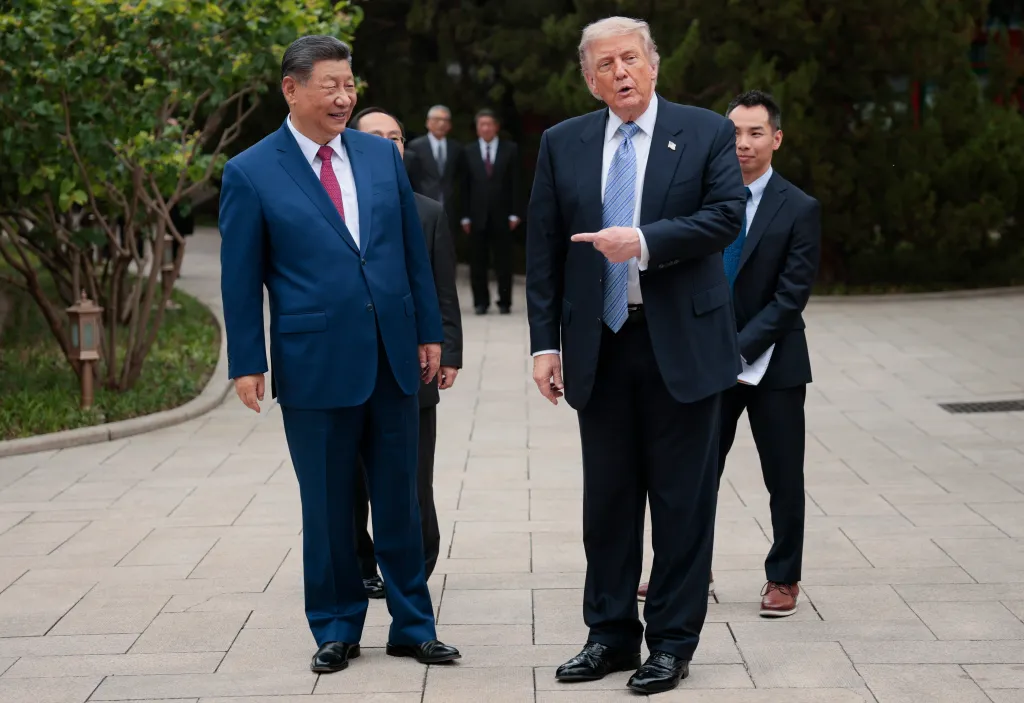
The issue took center stage at President Trump’s summit with Chinese President Xi Jinping last week, with the Beijing boss warning that “the Taiwan question is the most important issue in China-US relations. If it is handled properly, the bilateral relationship will enjoy overall stability. Otherwise, the two countries will have clashes and even conflicts, putting the entire relationship in great jeopardy.”
Secretary of State Marco Rubio shrugged off the rhetoric, telling “NBC Nightly News with Tom Llamas” Thursday that the Taiwan issue “was raised. They always raise it on their side. We always make clear our position and we move on to the other topics.”
President Trump is currently deciding whether to move forward with a $14 billion arms sale to Taipei, a transaction Gates said should go forward, though he warned: “There is a huge backlog of weapons that we have sold to Taiwan that we have not been able to deliver because we don’t have the supplies, and so if you’re offering another $14 billion, is that just going to be added to the backlog, or is there a way forward in terms of actually getting these weapons to the Taiwanese?”
The post Ex-CIA chief, Defense Secretary Robert Gates predicts China won’t invade Taiwan anytime soon: ‘Don’t think they want to go in’ appeared first on New York Post.