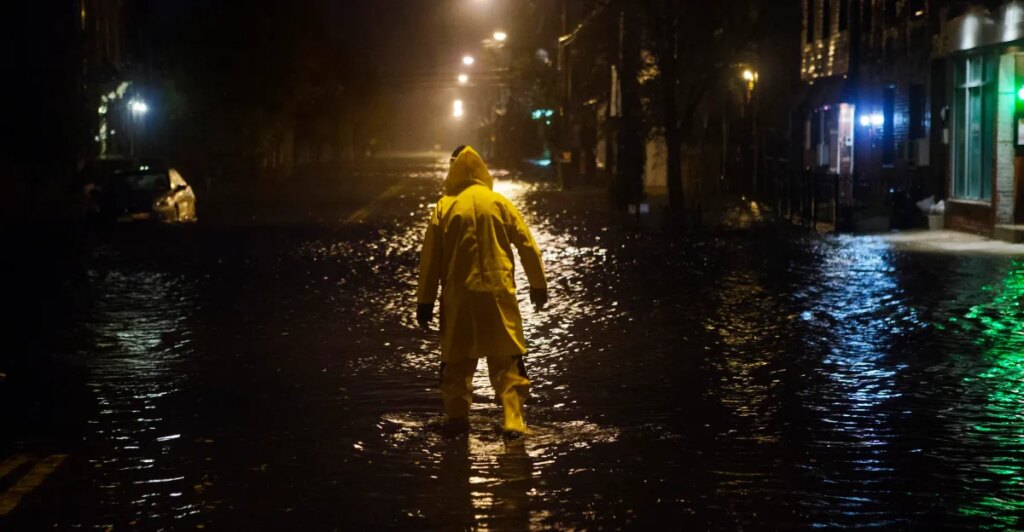
It often feels like we’re on the brink of disaster: Diseases lurk behind every corner and global instability threatens the economy. But beyond the doomsday scenarios, it’s important to be prepared for more practical reasons: Extreme weather events, for example, have become a fact of life. It can all be a lot to worry about — but how do you actually prepare for something to happen?
Chris Ellis asks himself this question a lot. He’s a disaster resilience expert and author of the book Resilient Citizens: The People, Perils, and Politics of Modern Preparedness.
According to Ellis, it’s a good idea to have your bases covered.
If “the power gets knocked out because of a winter storm or tornado, how can I be resilient within my house without publicly provided water, power, or transportation? That’s usually your largest prep,” he told Explain It to Me, Vox’s weekly call-in podcast.
Ellis also suggests thinking about how to be prepared when you’re away from home, whether that’s in your car or at work. And he recommends preparing a “bug-out bag”: “You should keep it in your mudroom or right by your garage so if there is a disaster, you can grab it,” he said. “The things that would be in that would be at least three days of water and food for everyone in your family, pets included. I would have $500 to $1,000 in cash just in case you go to a hotel and the system is down. I would have your emergency documents. Also, some sort of emergency communication device, [and] medical supplies as well.”
But what if you don’t have a garage or mudroom? What if you’re prepping in a small apartment? Anna Maria Bounds is a sociology professor at Queens College in New York. After embedding with the local prepping community, she wrote Bracing for the Apocalypse: An Ethnographic Study of New York’s ‘Prepper’ Subculture. “During the pandemic, we all became preppers,” she said. “We had to figure out how to protect ourselves with limited means and limited resources.”
So how do you make the most of those limited resources? Bounds tells us on the latest episode of Explain It to Me.
Below is an excerpt of our conversation, edited for length and clarity. You can listen to the full episode, including more with Franklin and other experts, on Apple Podcasts, Spotify, or wherever you get your podcasts. If you’d like to submit a question, send an email to [email protected] or call 1-800-618-8545.
How different is prepping in an urban environment from prepping in, say, the suburbs or out in the country?
With all due respect to suburban and rural preppers, urban preppers — particularly in the city of New York — are dealing with reality. They’ve been through terrorist attacks, they’ve been through natural disasters, they’ve been through technological failures, and they’ve been through near economic collapse with the Great Recession. They’re used to having street smarts. Now they’re developing what I call survival smarts.
I am talking with you from my apartment. I actually refer to it as the babe cave, my little bachelorette pad. I have all these comforts, but I am zero percent prepared for a disaster. Where should I start? What do I need to do?
One of the things about living in the city is we’re used to having what we want when we want it. But the idea of prepping — things slow down. People realize that they have to rely on themselves.
If you’re interested in prepping, one of the first things that you need to do is you need to take a look at how you eat, and how you can store it in your apartment. Prepping makes you realize, “Well, what happens if I don’t have any water? What can I do?” Maybe I should store a little water. Maybe I need to make some extra space underneath my bed, or under my couch. There are all sorts of creative things that preppers do that I’ve seen.
I understand you’ve become a bit of a prepper yourself. Can you walk me through your setup? Prepping isn’t always aesthetically pleasing, which maybe isn’t the most important thing during a disaster.
It’s important. Another myth about prepping is that people think that that means that you have to have a whole room dedicated to stacks of toilet paper and rice and spaghetti sauce. Absolutely not. You just need to think carefully about how you live in order to learn how to manage your space.
In the living room in the corner, I had a white freezer, which looked absolutely ridiculous. So I applied wallpaper to it, and I think it looks really cute. The things that I keep in there are varied. I keep several different types of meat. I have some uncooked, and then I have some that are cooked and sliced and that I’ve cooked and ready to go, and I’ve packaged them. We have vegetables, we have pasta, and we have soup. We have pot pies and extra bottles of water because in the event of a blackout, our food will stay colder longer because we have the frozen bottles of water in there. If we get an injury and I need to place something cold on our leg or on our back, we could use that.
Are there things I need to be prepared to do in a disaster?
If you’re someone who says in the event of an emergency you’re going to leave, and you put together a bug-out bag, you need to be sure that you can actually carry that. Edit what you have in there carefully and you walk and you practice with it. That was the really important part of my experience as an ethnographer spending time with preppers: They would do exercises where they would bug out, and you would spend the weekend outdoors.
Whatever it is that you decide is going to be best for you in an emergency, don’t try it out during the emergency. You need to practice it. You have to be confident. You have to be calm. Will you be perfect? No. But the idea is that you’ll have your bearings and this won’t be something new to you.
What have you found to be the most important thing to have on hand?
My husband. Seriously. You know what? We went through the pandemic together, and we’ve been through September 11, we’ve been through the blackout. It’s not just having supplies. It’s about having a good system of support; having people that you can work with, people you can depend on, that you can learn from during easy times and difficult times — your ride or dies.
The post How to prepare for a huge disaster when you live in a tiny apartment appeared first on Vox.