President Trump had a blunt message for Gov. Jared Polis of Colorado when the two men talked on the phone last fall: Free Tina Peters.
Mr. Trump had already publicly demanded freedom for Ms. Peters, a former county clerk jailed for her role in a plot to try to substantiate false claims that the 2020 election had been rigged against Mr. Trump. But he also pushed his case in private with Mr. Polis.
“What the president has told me privately is the same as what he’s expressed publicly — he wants her pardoned, I did let him know I was not going to pardon her,” Mr. Polis, a Democrat, said in a recent interview.
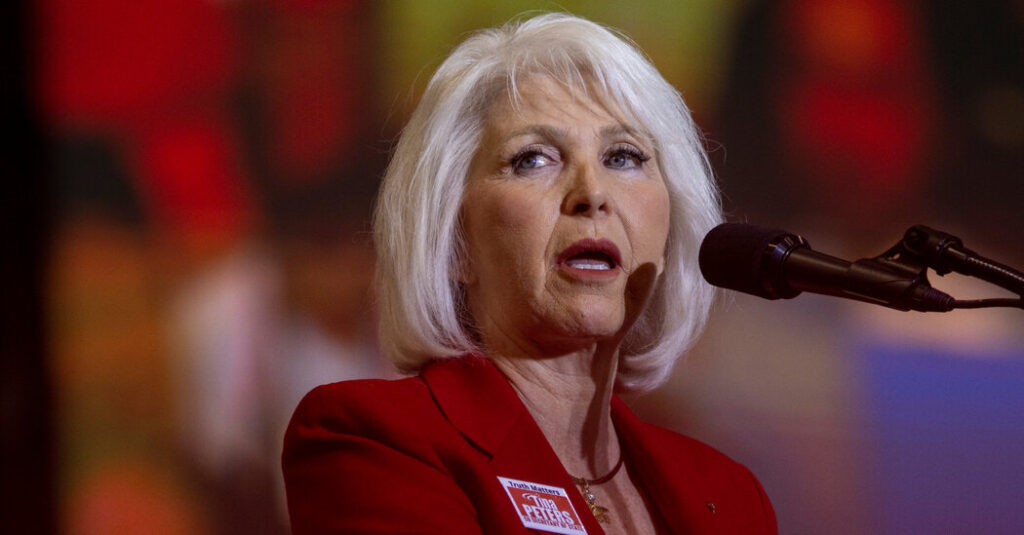
The direct pressure from Mr. Trump underscored the heated yearlong battle over Ms. Peters’s fate that culminated Friday when Mr. Polis commuted Ms. Peters’s nine-year sentence. The action clears the way for her to be freed on parole on June 1 after serving fewer than two years.
The governor’s decision capped a showdown that battered Colorado with federal cuts and placed Mr. Polis in a political vise, between a president willing to punish his state and Democratic allies who implored Mr. Polis not to cave to Mr. Trump’s demands.
It all comes at another tense moment for the nation’s election systems. Election officials continue to face threats. Mr. Trump has installed election deniers in the federal government. And the president and his allies started a coast-to-coast battle with Democrats over redistricting Congressional maps ahead of the midterms.
Mr. Polis said he made his decision with no expectation that Colorado would be rewarded in return. His controversial move will likely help shape his legacy and political future when his second term as governor ends next year.
Democratic leaders tore into Mr. Polis, accusing him of forsaking democracy and justice to appease a bully. There was no immediate indication that Mr. Trump would undo a series of funding cuts and other actions aimed at Colorado, including killing a water pipeline for rural ranchers, moving the U.S. Space Command headquarters from Colorado Springs to Alabama and dismantling a leading federal climate center in Boulder. Those actions came while Ms. Peters was in prison and amid repeated public calls by Mr. Trump for her to be freed.
When asked for comment, the White House pointed reporters to a social media post by Mr. Trump on Friday that declared, “Free Tina!”
Mr. Polis defended his decision.
In the interview, he said that neither pressure from Mr. Trump nor warnings from his fellow Democrats had swayed him. He stressed that Ms. Peters was not receiving a pardon and that her felony convictions would remain on her record. But he said she was a nonviolent first-time offender, and that he believed she had received too long a sentence, which he called “disparately harsh.”
Ms. Peters had embraced “dangerously incorrect” conspiracy theories about election fraud, Mr. Polis said. But, he added, those beliefs should not have had any bearing on her sentence. A Colorado appeals court threw out Ms. Peters’ sentence last month and ordered a resentencing, finding that the judge in her case had violated her free speech rights.
“It’s not a crime in our country to believe the earth is flat,” Mr. Polis said. “It’s not a crime to believe voting machines are flawed.”
While Mr. Polis rejected the request to pardon Ms. Peters, he began a monthslong, behind-the-scenes exploration of an early release — and what kind of political retribution it could elicit, according to more than a dozen current and former state officials.
In November, the Trump administration attempted to free Ms. Peters through a circuitous route, asking that she be transferred to federal prison custody, where Mr. Trump might have had an easier time securing her release.
Local Colorado officials were applying pressure to keep Ms. Peters behind bars. Jena Griswold, the Democratic secretary of state, wrote a letter to the governor pleading with him to reject the transfer request.
The Colorado Clerks Association held a rare virtual news conference featuring every county official. Each shared stories of the violent threats and harassment they had faced from supporters of Ms. Peters over the belief that elections were rigged, and similarly begged Mr. Polis to reject the request.
Mr. Polis affirmed the state prison system’s rejection of the transfer request in December.
Soon after, though, he began meeting with local and state officials and got a sense of how they might feel if he were to shorten Ms. Peters’s sentence.
In December, according to county calendar records, he met with Dan Rubinstein, the Republican county district attorney who led the prosecution of Ms. Peters. Mr. Rubinstein said in an interview that he had recommended against releasing Ms. Peters, and that he had encouraged the governor to talk to the county commissioners who had to directly confront the fallout of Ms. Peters’s actions.
In late December, Mr. Polis spoke to Senator Michael Bennet, a Democrat running for governor, according to a person familiar with the conversation. Mr. Bennet cautioned the governor against a commutation, according to this person, who like some others spoke on the condition of anonymity to describe private talks.
Mr. Polis also discussed the case with Van Jones, a liberal cable news commentator and a supporter of overhauling criminal justice policies. In an interview before the commutation was announced, Mr. Jones said that Mr. Polis was in a “Hamlet posture,” to commute or not to commute, but said that he felt that the governor was coming to a decision based on the facts and the law, not potential political fallout.
“Most blue-state governors would use this as an opportunity to give a middle finger to Trump and keep an election denier in jail,” Mr. Jones said. “I think he would not be able to sleep at night if he made the decision for political reasons.”
Eric Maruyama, a spokesman for Mr. Polis, said that the governor often talks to those involved before a clemency decision.
“Hearing from victims and prosecutors is a normal part of every pardon and commutation decision, both at the staff level and often including the governor,” he said.
At a State Senate Democratic caucus retreat in January, Mr. Polis joined lawmakers for a late-morning discussion that quickly descended into vocal condemnation of the prospect of clemency from the lawmakers, according to one who was present.
While he sought advice from associates, Mr. Polis did not directly consult some of the officials most directly invested in the case. He did not speak to Ms. Griswold, despite requests from her office to discuss Ms. Peters, until 45 minutes before his commutation announcement on Friday, Ms. Griswold said. Mr. Polis met with local election officials from the Colorado Clerks Association once, in December, about the federal prison transfer.
In January, Ms. Peters and her team filed a clemency application with the governor’s office that expressed some regret. She acknowledged misleading the secretary of state when she allowed an outsider to gain access to voting equipment.
“That was wrong,” Ms. Peters said in her application, according to Mr. Polis, who read from it on Friday while discussing the case. “Going forward, I will make sure that my actions always follow the law, and I will avoid the mistakes of the past.”
Her application did not appear to persuade Mr. Polis’ own clemency advisory board, which did not recommend clemency for Ms. Peters, according to two people familiar with its deliberations who were not authorized to speak publicly.
The board’s recommendations, though, are not binding.
“There’s a number of times where they recommend a commutation, we don’t do it,” Mr. Polis said of the clemency board. “There’s other times they don’t, that we do.”
John Case, a lawyer for Ms. Peters, said on Friday that her legal team planned to appeal her conviction to the Colorado Supreme Court.
“The deadline for appealing her convictions is the 21st of May, and that’s when it will be filed,” Mr. Case said.
Nick Corasaniti is a Times reporter covering national politics, with a focus on voting and elections.
The post How a Democratic Governor Came to Release an Election Denier From Prison appeared first on New York Times.