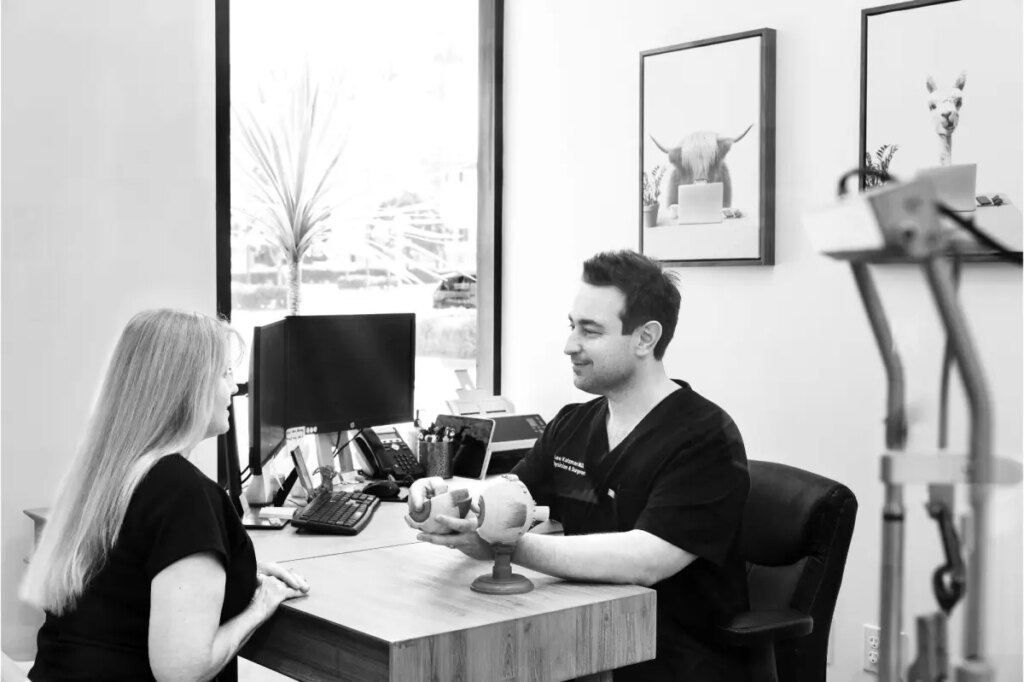

Many people treat vision changes like background noise until daily life starts pushing back. They buy another pair of progressives, add readers to the kitchen drawer, keep a backup pair in the car, and then realize the backups have multiplied into a small, expensive collection. By the time someone finally books an appointment, they often arrive with a single assumption: that the best or only surgical option will be LASIK. Lee Katzman, MD, a board-certified ophthalmologist and refractive surgeon, spends a surprising amount of time undoing that assumption.
San Diego patients often seek his expertise through Alvarado Eye Associates, an NVISION Eye Center. In Dr. Katzman’s view, many people over 45 have never been told there’s a lens-based option that fits their stage of life, even though they’ve been cycling through workarounds for years.
The age-40 hinge most people never hear explained
Bodies change, and popular conversations lag behind. In Dr. Katzman’s case, the hinge is the eye’s natural lens. As people move through their 40s, the lens gradually stiffens. That stiffening sits behind the familiar experience of holding menus farther away and needing more help up close, often labeled as presbyopia in treatment discussions.
Dr. Katzman’s point is simple. Many patients have heard plenty about cornea-based procedures, yet far fewer have heard about lens-based procedures that align with how age-related vision changes tend to show up.
Refractive lens exchange, explained in plain language
The procedure that the San Diego eye surgeon keeps bringing up is refractive lensexchange, often shortened to RLE and also referred to as clear lens exchange. It’s frequently described as a cataract surgery alternative because it uses a similar core approach, with timing that happens earlier in the arc for some patients.
Rather than reshaping the cornea, the procedure focuses on replacing the eye’s natural lens with an intraocular lens, or IOL. Dr. Katzman has built a high-volume practice around this lens-based path and has been an early adopter of newer IOL technology, including being among the first surgeons in the country to use a recently released lens from Johnson & Johnson.
The goal, as he frames it, is straightforward: offer people over 40 vision correction that addresses the underlying vision problem , rather than asking them to keep stacking temporary fixes.
The information gap that keeps patients in one lane
Dr. Katzman’s frustration is less about patient hesitation and more about the education pipeline. He regularly sees people between 48 and 62 who have been told to wait, monitor, and return later. Some show up with years of progressive-lens fatigue and a sense that their only choices are minor adjustments to their prescriptions until cataracts reach a certain threshold.
He also sees the cultural footprint of LASIK everywhere. Dr. Katzman describes meeting 90-year-old patients who still ask for LASIK, which tells him the public conversation has stayed narrow for decades. When people only know one term, they ask for that single option.
The real cost of the conversation patients rarely total up
RLE is commonly treated as elective before a cataract diagnosis, which means insurance coverage often works differently than people expect. Dr. Katzman describes out-of-pocket ranges that may fall around $6,000 to $8,000 per eye, depending on the plan and lens selection.
He also points to the quieter math many households carry without noticing: glasses, contacts, contact lens solutions, prescription updates, and replacements that keep adding up year after year. Some patients spend over $600 annually just to keep up with the basics, and they rarely view it as a long-term budget line until they’ve already paid it for a decade.
The typical journey into proactive vision correction
The patients Dr. Katzman describes tend to arrive at the same moment. They feel capable in most areas of life, yet their eyes keep asking for little accommodations that pile up. They hold phones at arm’s length, keep swapping between pairs, and feel the day narrowing around what they can see clearly.
That’s where Dr. Katzman pushes for proactive vision correction. He wants people to ask earlier, especially if their appointments have stayed focused on quick fixes. Dr. Katzman believes that if you’re over 45, and no one has mentioned refractive lens exchange, it may be worth asking whether a lens-based plan fits your goals for glasses-free vision.
This article is for informational purposes only and does not substitute for professional medical advice. If you are seeking medical advice, diagnosis or treatment, please consult a medical professional or healthcare provider.
The post The vision conversation most people don’t have until it’s too late appeared first on New York Post.