ROME — It was just about lunch time in one of Katie Parla’s favorite neighborhoods, Trastevere, and restaurants were filling up.
“We just walked past some truly horrific places for food,” said Parla, an author and tour guide who has lived in Rome for more than two decades.
But look up those restaurants on an online review site, and you’d find thousands of ratings that might convince you otherwise. Why the disparity?
“I am constantly hearing people walking around being like: ‘Oh my God, this place has like literally 63,000 reviews on Tripadvisor. Let’s go here,’ and I’m like, that is a giant red flag,” Parla said.
To Parla, high-volume reviews scream a high-volume restaurant that caters to tourists, maybe even one that serves “a lot of prepared nonsense and low-quality stuff,” she warned.
A good meal in the Eternal City is not a given. These days, it’s easier to get stuck in a chain restaurant and tourist trap than a memorable trattoria, particularly in popular areas.
If you find yourself hungry in one of Rome’s charming piazzas or a near a major sightseeing attraction, do not let the dazzling views distract you. Rick Steves rule: When picking a restaurant, be wary of “high rent” areas. The more expensive it is for a business to operate, the more likely you’ll be disappointed by the experience.
But in Rome, much of the historic center is considered high rent — and as tourism continues to take over the city, so too have restaurants that cater to visitors.
“There are obviously some great restaurants, but it’s harder [to find them] than it used to be,” said Sophie Minchilli, a tour company owner was born and raised in Rome.
Some are hiding in plain sight. For example, Parla recommends the restaurant Armando al Pantheon, just outside one of the most famous landmarks in the city. Others take more detective work.
Take a food tour
Instead of relying on online reviews for restaurant advice, “go to a place that someone with good taste likes,” Parla said. That might be following local writers or guides, picking up a guidebook or taking a food tour with a locally run company.
On Minchilli’s day tour of the historic center, which starts in the famous Campo de’ Fiori farmers market, the group stops to taste pizzas, sandwiches, cheeses and pastries while Minchilli dispenses restaurant tips and dining advice you can apply through the rest of your trip.
For example, she prefers restaurants with menus that list the producers of their ingredients, like who makes the olive oil or where the pasta is from.
Don’t overthink breakfast
When visitors ask Minchilli where to go for their first meal of the day, she recommends a few places — but with a caveat. “Breakfast for Romans isn’t really a big deal,” she said. “Throughout most of Italy, breakfast is tiny, quick and sweet, so we just go to the coffee bar that’s nearest to our house or our work.”
Parla says if you’re looking for a heartier American-style breakfast, “I don’t recommend any places that focus on that,” and instead sends people to cafes with artisanal pastries and well-sourced coffee, like Barnum and Roscioli Caffè.
Beware of gimmicks
Parla said the more simple a restaurant — simple menu, simple decor — the more likely she is to trust it. A good restaurant does not need a gimmick to get you in the door.
So a staged sampler platter of snacks and spritzes next to a gigantic menu? That’s a bad sign. A huge TV screen playing ads for the restaurant by the front door? Keep walking. A woman making fresh pasta in the window? More for marketing than for authentic meal prep.
“It might taste good, but it’s not a Roman thing,” Minchilli said of the latter, explaining that the city has a stronger tradition of using dried pasta versus fresh.
One marketing tool Parla does trust is when a restaurant displays a sticker or sign for the app Raisin, a database of establishments that serve natural wine. If they’re showing an extra level of care for how they source their wine, she feels more confident in how they source the rest of their ingredients.
Look for restaurants with limited service
Maybe you’ve been walking all day. Maybe you’re jet lagged. All you know is it’s 4 p.m. and you want a plate of cacio e pepe and some braised oxtail. “Forget it,” Parla said. Any worthwhile restaurant will close in the afternoon to prepare for dinner service, she said, and the ones that don’t cater to tourists.
“A good spot is like a cafeteria that’s open from 1 to 1:45 and then totally emptied out because that kind of indicates the food is high-quality and for locals and not a touristic audience,” Parla said.
There are exceptions. “There are places that are open all day, like a cafe or pizza-by-the-slice joints,” Parla said. “But a trattoria has really, really short hours.”
For good gelato, the flatter and duller the better
When Simone Amorico, CEO of tour operator Access Italy, goes for gelato, he looks for small purveyors, like Gelateria del Teatro near Piazza Navona.
“All the ingredients are 100 percent natural,” he said. “All of the flavors are in season, so you won’t find watermelon granita in the winter. … And they produce it every morning.”
But terms like “naturale” (natural) or “artigianale” (artisinal) are not legally enforced in Italy, so just because a place advertises using “natural ingredients” doesn’t mean it really does.
Parla said you can suss out bad gelato — the kind made from industrial mixes and synthetic duplicates — by assessing three easy markers: presentation, color and flavor offerings.
First, you don’t want gelato heaped up or overflowing from its container; a voluminous consistency comes from chemical additives and stabilizers. Second, you want a gelato that looks like the color of its ingredients. If it’s mint, it can be slightly green, but not neon.
The third is very specific. Parla says if you see the flavor “Puffo” (Italian for Smurf) on offer, keep walking. This is usually bubblegum, and a place that serves gum flavor is usually not going for high-quality, she said.
Never wait in line, except for fast food
In Rome, a long line does not signify a hot restaurant; it’s usually a red flag.
“There is no concept culturally here to wait in line to sit down at a restaurant to eat,” Minchilli said. “So that’s maybe a good indicator that it’s a touristy spot.”
However, Romans will queue for casual dining (versus a multicourse meal), like pizza. “You show up, you wait in line — it usually goes quick,” Minchilli said.
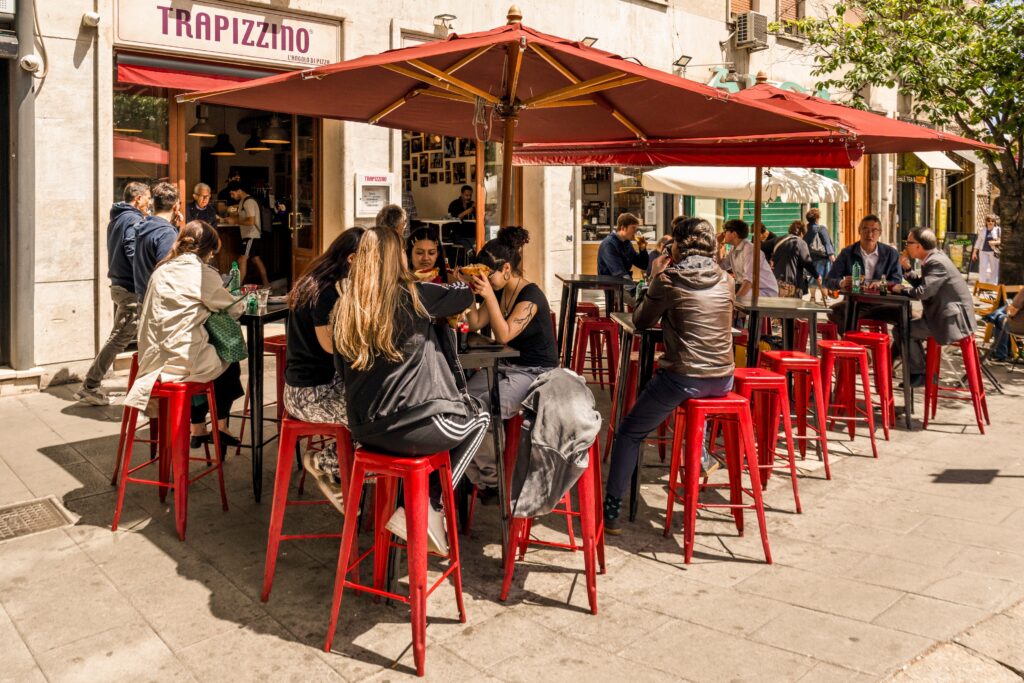
The same goes for places serving fast-food favorites like supplì (deep-fried rice balls) or trapizzino, a kind of stuffed pizza cone.
But the majority of respected restaurants require a reservation. Parla recommends doing some homework and making a wish list of ones you’d like to visit, then booking at least a few dinners or sit-down lunches ahead of your trip.
Be flexible on lunches, and use them for grazing on pizza by the slice, Parla said. “Or, if you really want to eat like a Roman, you need to go to a cafe in the afternoon and have, like, tomatoes stuffed with rice.”
As you’re making those reservations, opt for later slots (think 9 p.m.) if you’d like to eat with locals.
“They eat late and go to bed,” Minchilli said.
The post How to avoid a terrible restaurant in Rome appeared first on Washington Post.