Early one morning behind the airport in La Lima, Honduras, before the first planeload of deportees landed, Sister Idalina Bordignon was meeting with her staff about an unsettling situation. Every day, parents were arriving without their children, and they were asking questions like What do I do if I don’t know where my child is? and Do I lose my rights as a parent if I’m deported? An American aid worker suggested a quick analysis of each case to determine which agencies or nonprofits might help the families. We’ll never have time for all this, Idalina thought. The Trump administration was sending too many people to Honduras too quickly, and soon the reception center that she oversees would be packed with more than 100 people who were exhausted, hungry, and in shock. They would need to be processed into the country as quickly as possible to make room for the next planeload.
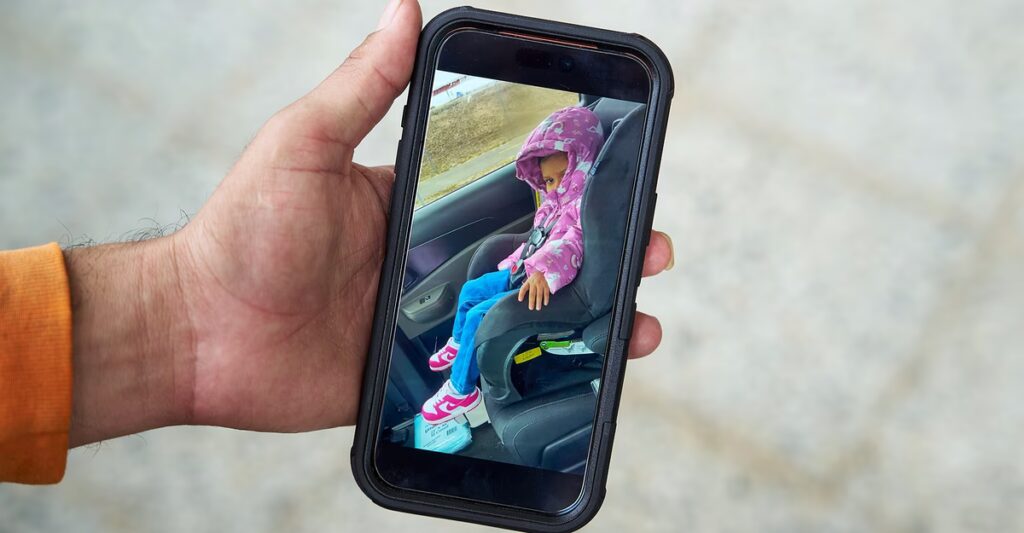
Shackled to a seat on one of those planes was a 39-year-old single mother named Claudia. After she emerged from the reception center in a detainee sweatsuit, looking teary and depleted, she told me her story in the parking lot. She’d fled Honduras in 2023 because her ex-partner’s girlfriend was stalking her and had physically attacked her, and she’d settled in Atlanta with her 11-year-old son. In December she was arrested for driving without a license and spent three and a half months in ICE detention, where she pleaded to be reunited with her son, but was ignored. “I really wanted to bring him with me,” Claudia said. “Being with him is my top priority.” A cousin said he would start saving money to get her son a passport and bring him to Honduras, but it was unclear when that would happen.
Since retaking office, Donald Trump has sent hundreds of thousands of immigrants like Claudia into the deportation pipeline, where many are transferred from facility to facility—losing access to their families, lawyers, and journalists—before being sent abroad. ICE was holding 60,000 people in custody as of early April; 71 percent have no criminal convictions. The agency is detaining people who are in the middle of applying for legal status, and the Justice Department has directed hard-line immigration judges to deny bail and ICE attorneys to pursue deportations as vigorously as possible. “The only process invaders are due is deportation,” Stephen Miller, Trump’s chief immigration adviser, said in November.
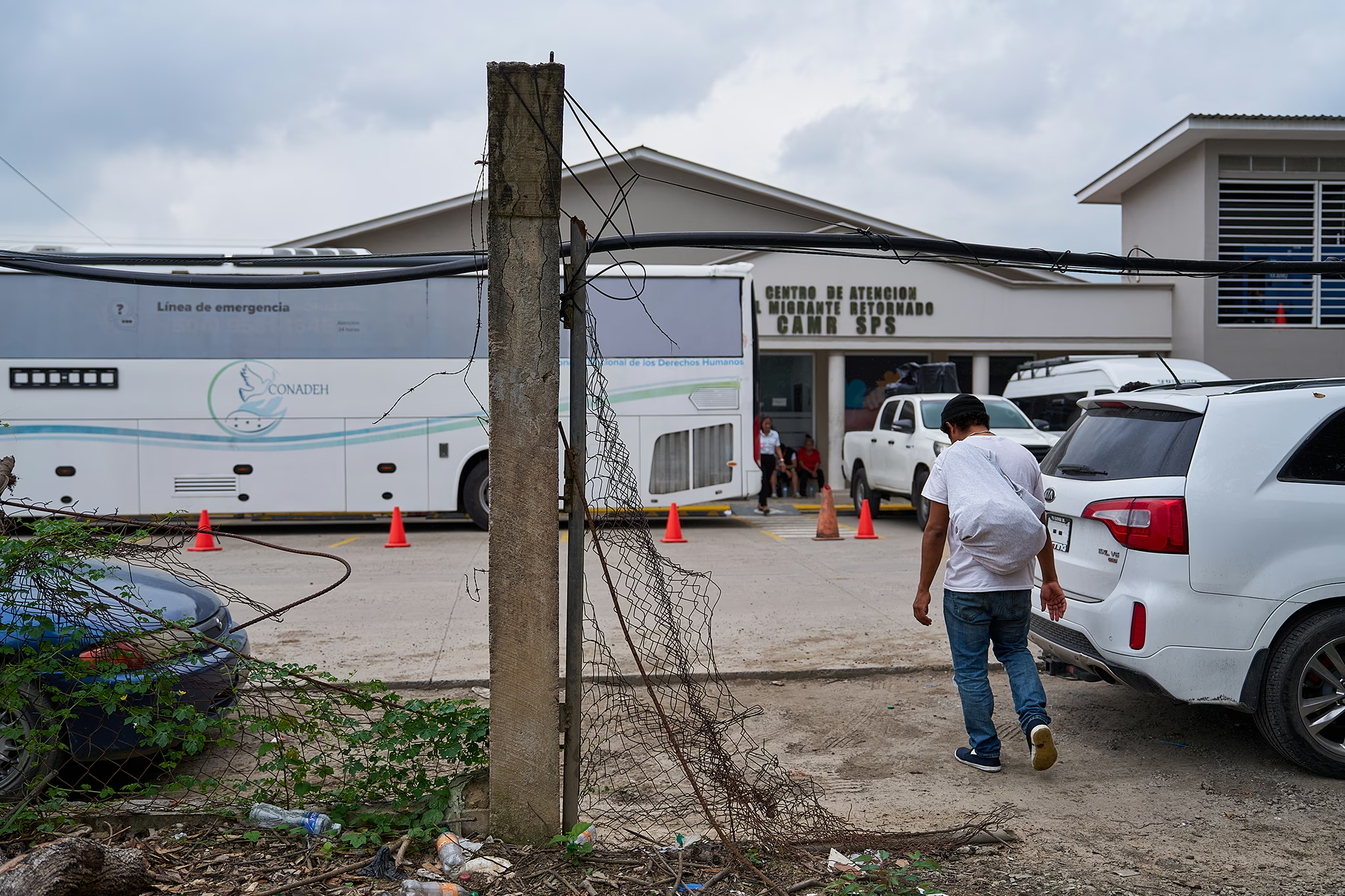
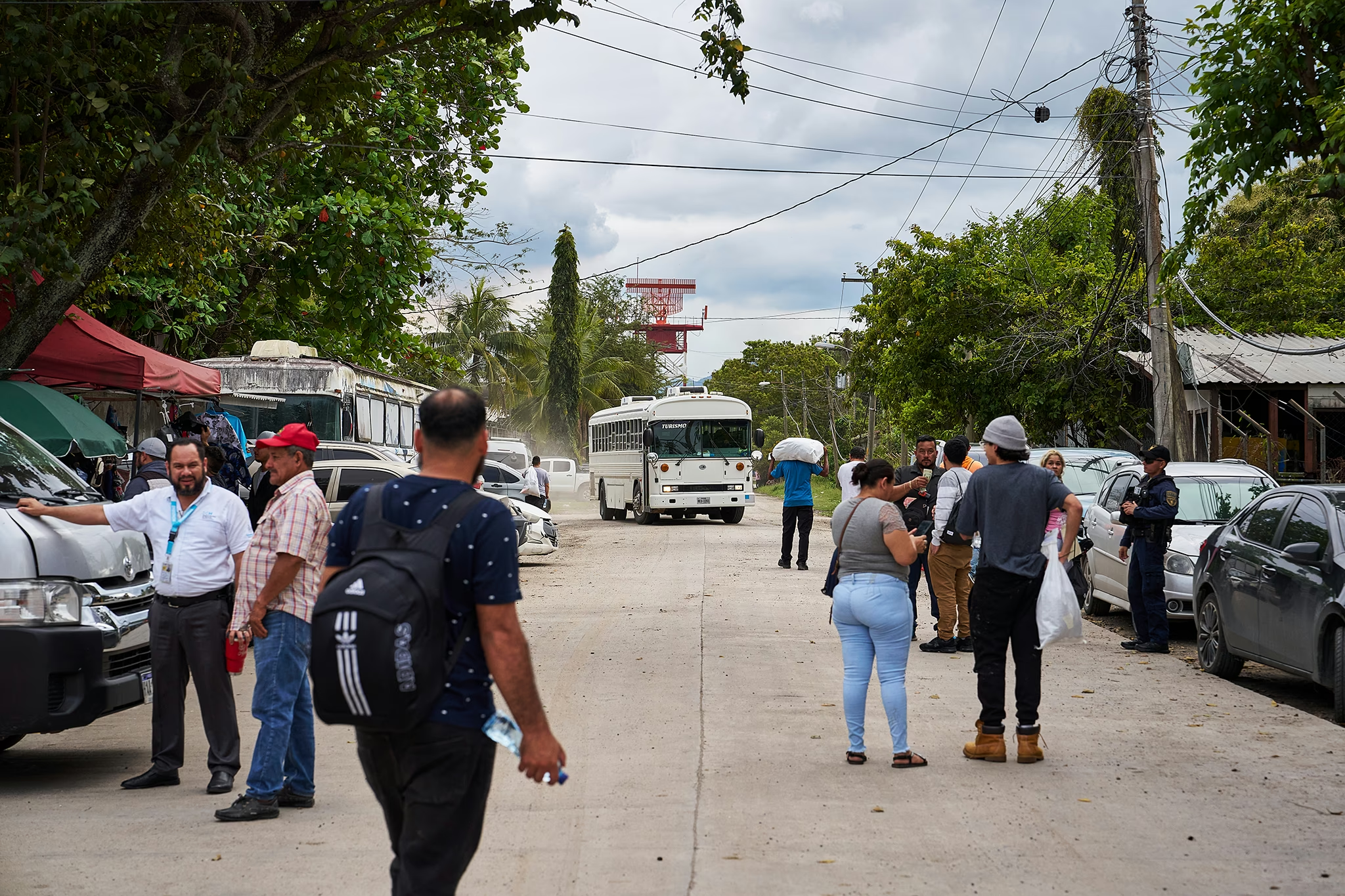
I went to Honduras in late March to see the consequences of this mass expulsion. For more than 20 years, deportation flights arrived in La Lima five days a week; now they arrive every day, often more than once. Over the three days I was there, five planes delivered 479 people in shackles to a private airstrip. They were loaded into an old school bus and driven to the reception center, at the end of a dirt road.
The scene every day is chaotic. New arrivals are handed a cup of coffee, a burrito, and a bag with their personal belongings, then rushed through a series of cubicles where the Honduran government records their return. Volunteer doctors examine those who are visibly ill, injured, or pregnant. In between flights, the staff tries to advise people on common crises: ICE has separated them from their children or spouse, or they have no home to return to in Honduras, or a gang or ex-partner wants them dead. Idalina takes calls from families who are trying to track down lost relatives, and searches for their names on flight manifests.
Eight years after Trump backed away from the most controversial project of his first presidency—separating children from their parents at the border—I saw a new kind of separation crisis playing out. This time, the administration is dividing more families by greater distances than before, by expelling parents without their children, en masse. ICE policy requires officers to ask detainees, in each interaction, if they are the parent of a minor child, and to reunite families before deportation, or obtain a sworn statement from parents who choose to leave their child with a designated guardian. But Congress hasn’t codified these rules into law. And the policy is sprinkled with caveats such as “when operationally feasible” and “ICE reserves its right to make case-by-case removal decisions.” DHS officials have told me that the White House’s guidance has been clear: Nothing should slow down deportations.
[Read: They never thought Trump would have them deported]
In response to questions about this story, an ICE spokesperson said that the agency doesn’t separate families, that parents are given the option of being deported with their children, and that officers are following policies in a way that is consistent with previous administrations.
Of the 40 people I interviewed outside the reception center in La Lima, 24 said they had to leave children behind in the United States. Most said they were never asked about being a parent. One single mother said that when she was detained, an officer wrote on her documents that she was childless, and told her it “doesn’t matter” that she was being separated from her 3-year-old.
Most of these children were now with their other parent; some were with other relatives or friends, and some were in U.S.-government custody. Fifteen of them were younger than 5 years old, and four were infants. Almost all of the parents had no idea when they would see their children again.
A few days before I arrived in Honduras, a young man with a machete broke into the gated compound where Sister Idalina lives, a 10-minute ride from the airport, in a ramshackle neighborhood divided by a center road. A gang called Barrio 18 controls one half, MS-13 the other. The intruder tied a rope around Idalina’s wrists and ankles. As she resisted, he cut a slice down the side of one of her hands. He demanded American dollars but she didn’t have any, so he took her cellphone, shoes, clothing, a gas tank, and a blender.
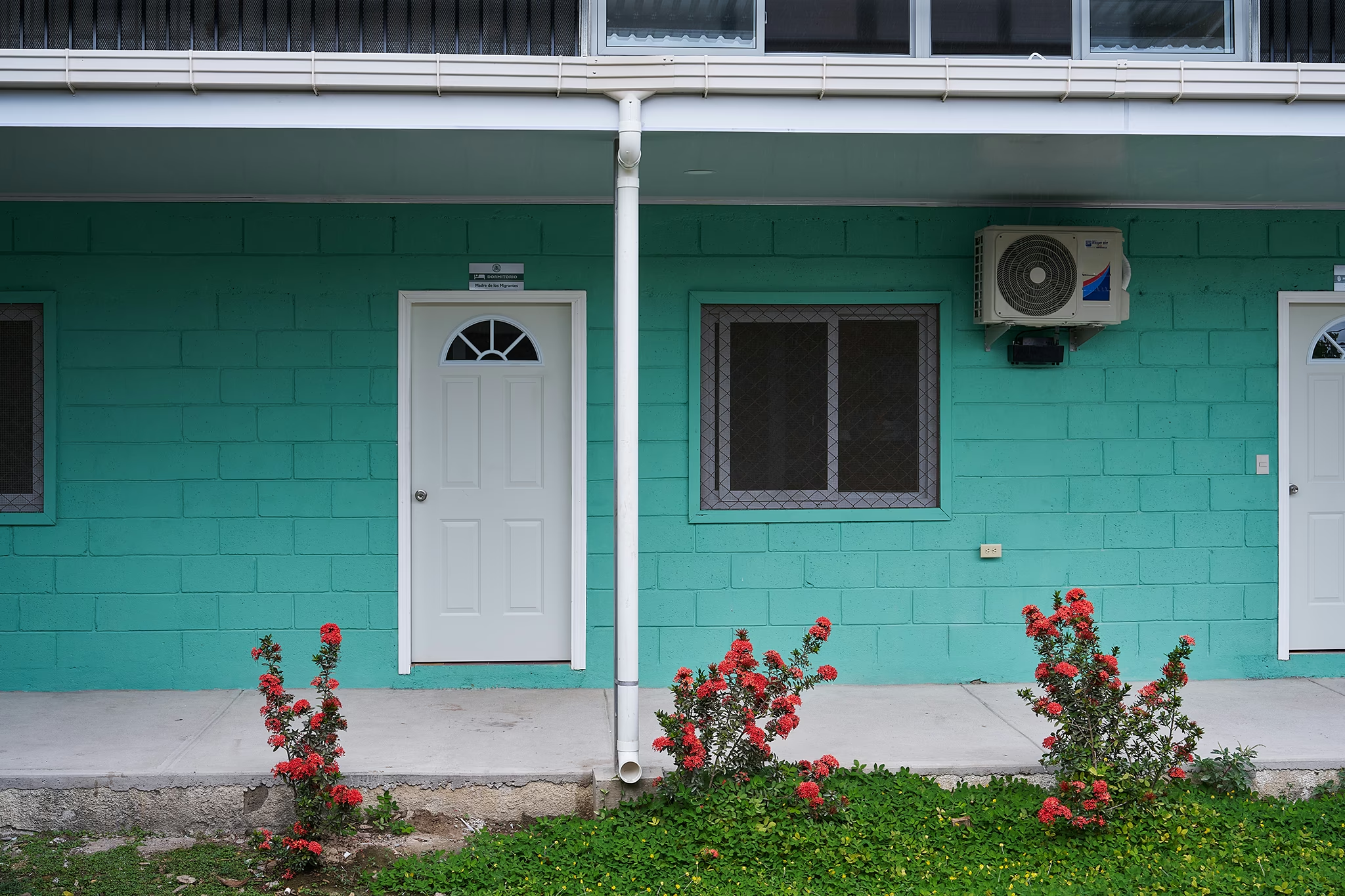
The attack on a nun in a heavily Catholic country was a reminder that “no one is untouchable here,” Alessia Villamar Castro, who volunteers with Idalina as part of the Italian Scalabrinian order, told me. Their religious work is unpaid, so in La Lima they sustain themselves by working for the Honduran government at the reception center. Recently, they opened a short-term shelter in their compound for people who arrive with nowhere to go.
Deportees from the United States are especially vulnerable to robbery and kidnapping because gangs and bandits assume that their families can pay larger ransoms. The Scalabrinians told me that since last fall, at least three have been murdered within days of their arrival. Alessia said she scans each new group at the center for anyone who might be facing an active threat. They tend to hang back, as if scared to walk out the front door. It’s too risky to house those people at the shelter, so she refers them directly to the Honduran government for protection.
Outside the reception center, I met a woman named Nora waiting to pick up her son, Jarol. She told me that, years ago, another son was killed 18 days after being deported, for reasons the family still doesn’t understand. Then, in 2021, Jarol was attacked here by men who cut off half of one of his fingers and left him bleeding in the street, so he fled to the United States. “We were thinking that it was a safer country,” she said, explaining that Jarol had applied for asylum and was working in Miami when ICE arrested him. Now he was being sent back into danger. “This is a disaster,” Nora said. (I’m identifying people by only their first name to avoid putting them at greater risk, and I corroborated their immigration and biographical details using public records.)
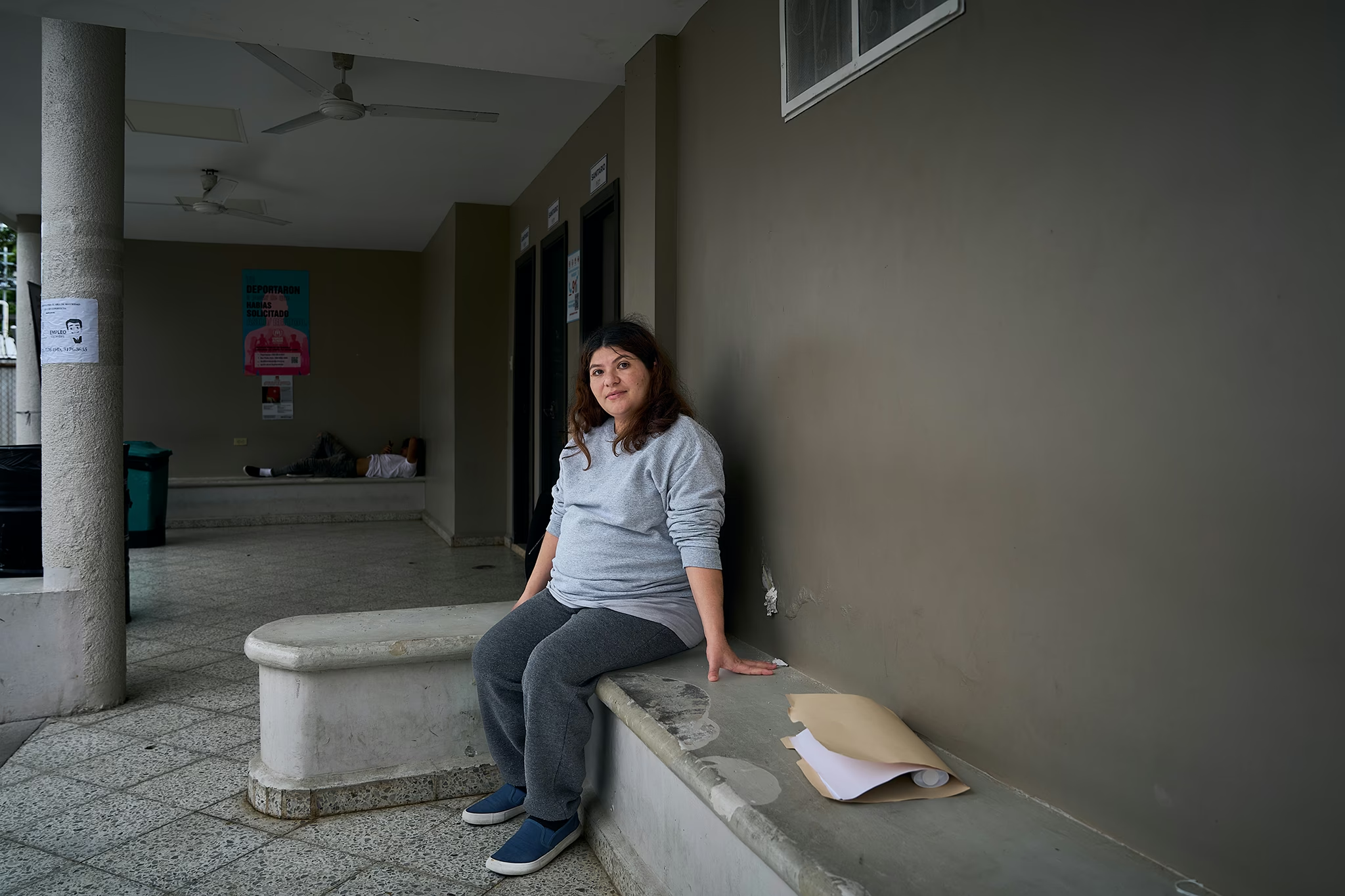
A few of the new arrivals were greeted with hugs and kisses and welcome balloons that locals were selling down the road. But many hadn’t had advance notice that they were being deported. They sat down on a concrete bench and called relatives, looking for someone to take them in. A man with a bag of cash strapped to his chest was hawking lempiras in exchange for U.S. dollars, promising the deportees a better rate than they would get in the streets.
Some of the people I met had been away so long, they had nothing to return to in Honduras (nearly half of all unauthorized immigrants in the U.S. have been there 20 years or longer). A woman named Denia told me she’d lived in Texas for 26 years, since she was 18. She arrived in La Lima wearing the pink knit shirt and Crocs she’d worn to work as a gas-station cook in February, when she was arrested. Her mobile home was about to be repossessed because she hadn’t been able to work and couldn’t pay the mortgage. Denia said her teenage son, who was staying with her sister, wouldn’t take her calls. He had wanted her to hire a lawyer and continue appealing her case from detention in Laredo, but the facility was filthy and cold, she said, with a wretched smell and cruel staff. She tried to explain to her son that it was futile to keep fighting under the current administration. She thought she was going to lose eventually, no matter what, so she accepted a deportation order. (Asylum grant rates are plummeting because the Justice Department has fired scores of immigration judges it considered too lenient.) “They’re collapsing families,” Denia said. “I had everything there. I had a house. I’ve lost everything. Everything, everything, everything.”

A man named Jhonny, detained in Phoenix in February, started to hyperventilate as he told me about seeing his 3-year-old daughter on video calls. “She wants to give me a kiss and hug me, and I can’t,” he said. “It just kills me.” He was peeling off the skin around his fingernails, and he lifted his baseball cap to show me that his hair had been falling out in chunks, from stress. After he lost his asylum case, his wife, a lawful permanent resident, filed a petition for him to gain legal status through her. It was still pending when ICE showed up at a job site where he was installing fiber optics and arrested him, despite his valid work permit. “I told everyone, ‘I have a 3-year-old daughter. I’m married,’” he recalled. “They said, ‘We can’t do anything.’”
[From the April 2026 issue: ‘America doesn’t want my children or grandchildren’]
Again and again, I heard about legal immigration processes that were cut short, and arrests that deportees believed were based on racial profiling alone. Luis, a 20-year-old with a mop of curly hair, said an officer provided no justification for pulling him over in Jacksonville, Florida, while he was driving to McDonald’s. He was detained despite having a driver’s license, a work permit, and a court date scheduled for 2028. A bystander who was listening to us chimed in: “They are pulling over every work truck in the state of Florida.” Adelmo, a slim 53-year-old wearing a polo shirt, said he also had a work permit and a driver’s license, and a court date this spring. But a police officer had pulled him over in Corpus Christi, Texas, claiming that his license plate was scratched, even though Adelmo said the plate was clearly readable. In ICE custody, he met men who’d been fighting deportation for more than a year and had little hope of being released. When he walked out of the reception center in La Lima, he was carrying a meticulously organized folder of evidence to present to an immigration judge, but said he’d given up his asylum case in despair.
The reception-center staff transports most of the new arrivals to a bus terminal 30 minutes away, in San Pedro Sula; Honduras’s new Trump-aligned president eliminated a cash-assistance program for deportees, but the government still provides a one-way bus ticket to anywhere in the country. I found a man named Cristian pacing in the parking lot one afternoon, waiting for a ride to the terminal. He said he had already tried and failed to get back to his family in Wilmington, North Carolina. After first being deported late last year, he crashed with a childhood friend in Tegucigalpa for two months, but couldn’t stand that his wife, who doesn’t work, was overwhelmed with parenting their 6- and 7-year-old sons alone as their savings ran out. Cristian had lived in the United States more than a decade, and said his parents and siblings were there, too. Border Patrol agents caught him after he crossed illegally into southern Arizona. Now he was back where he started.
Massaging her pregnant belly on a bench outside the center, a woman named Ana told me that she made a similar choice to get back to her 14-year-old daughter and 9-year-old son in Atlanta, where she had been living without authorization for 13 years. After Ana was caught driving without a license and deported in September, her daughter stopped eating and floundered in school. When Ana reached Honduras, she discovered that she was pregnant, which she said gave her another reason to get back to Georgia. She was apprehended at the border and detained until being deported again, less than two months from her due date. Most of her relatives live in the United States, so she plans to stay with her in-laws in Honduras until giving birth, and then decide what to do next. “I’m trying to stay calm for the baby,” she said.
Both Cristian and Ana said it would be too dangerous to move their children to Honduras. Though the country’s homicide rate has halved since the 2010s, when it spurred an exodus to the United States, it remains one of the highest in the world. Gangs terrorize civilians and demand monthly “protection” payments. Refusing to pay can be a death sentence, and Hondurans rarely call the police, who are likely to protect the gangs, extort victims, or do nothing.
As a group prepared to head to the bus terminal, Jhonny, the father who worked in fiber optics, said he would rather wait for his brother to pick him up, even if it meant sitting in the parking lot for hours. Boarding a bus full of deportees felt like attaching himself to a moving target.
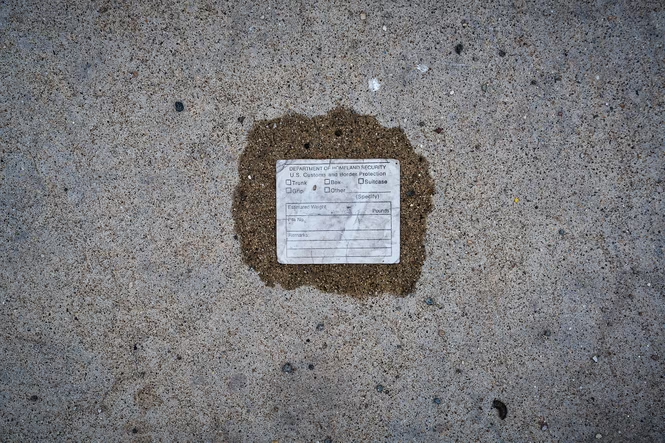
Reunifying separated families may prove to be a logistical nightmare, as well as an emotional one. Parents will have to navigate a multinational maze of government agencies. Many of them will issue travel documents or approve custody decisions for a child only with the consent of all of their legal guardians, which is difficult to secure if one or both parents have been deported. And these children have varied nationalities; some are Honduran or U.S. citizens, while others were born on the family’s migration journey, which means the process could involve a third country’s government and procedures.
[From the September 2022 issue: ‘We need to take away children’]
“We know that, right now, solutions are super, super complicated,” Amy Escoto, the aid worker who was addressing the La Lima reception-center staff on my second morning here, told me. “Sometimes the only way to succeed is with persistence.” Amy works for Kids in Need of Defense, one of the numerous U.S. advocacy groups that are racing to respond to the fallout from Trump’s deportation campaign, with less funding and at greater risk of retaliation than in the president’s first term. KIND had created a guide to the bureaucratic maze, with QR codes and maps, but Sister Idalina raised her hand, looking concerned. She pointed out that the staff was already overextended, and a pamphlet wouldn’t make this process navigable for frantic parents. “Even if the mother has all of this, sometimes her anxiety and nervousness can make it difficult for her to access these resources,” Idalina said. “And I think it’s very important that someone is here to listen, reassure her, and follow up.”
“You’re absolutely right,” Amy replied. “Right now, we’re doing everything we can.”
Groups like KIND are stretched thin because they are essentially acting alone, without government support. When other countries have challenged Trump’s immigration-enforcement blitz, he has bullied them into submission. Since retaking office, he has deported people in annual numbers similar to Barack Obama’s and Joe Biden’s, but he’s eliminated safeguards intended to prevent the kind of pain and chaos on display in La Lima. Obama eventually blocked ICE from deporting most people who didn’t have serious criminal records, and allowed sole caregivers of minor children to remain in the country if they reported for ICE check-ins. Biden did, too. Under Trump, deportations are happening so quickly that ICE routinely delivers people to La Lima who are not pre-cleared by the Honduran government, so they have to be returned to the U.S. on the plane they arrived in.
ICE disputes that people are deported before their identities have been confirmed, and said that claims of poor detention conditions are false. An agency spokesperson told me that ICE encourages people without legal status to leave the U.S. voluntarily through its CBP Home app, or face arrest and deportation without a chance to return.
Coyotes used to linger outside the reception center, ready to ferry people back to the border. But now they don’t bother. Demand to return has fallen among deportees, even though their families in the U.S. are struggling. A man named Osman, wearing a construction shirt still splattered with paint, cried as he told me that his disabled wife, a U.S. citizen, had moved into a homeless shelter in Tucson, Arizona, because she couldn’t work or pay the rent. “She’s completely dependent on me,” he said. “I took her to the doctor every week.” Another man, whom I’ll call Edwin, said that to avoid losing their apartment, his wife had continued working, creating a child-care emergency for their 4- and 12-year-old children, who had never been left alone before.
Speaking gently and with a stutter, Edwin said the family had moved to a Dallas suburb in 2023, after gang members started threatening them. (I’m referring to him by a pseudonym because the threat is ongoing.) They applied for asylum, and Edwin and his wife secured work permits. He did construction during the day and watched their children at night, when she worked as a janitor. But at a routine ICE check-in on January 10, officers took him into a back room and told his wife and children to wait outside. He never emerged, and ended up in La Lima.
Edwin and I stayed in touch after I left Honduras. He told me he still wasn’t sure if he was safe back in their hometown; he had heard that one of the men who threatened him had died and another was in jail, but the gang is still active in the community. Before overnight shifts, his wife starts a video call with him after dinner, and leaves her phone with the children when she goes to work. Edwin talks to them all evening as they do their homework and get ready for bed. His daughter leaves the phone on when they go to sleep, so he can watch over them until their mother comes home.
The post The Last Stop in the Deportation Pipeline appeared first on The Atlantic.