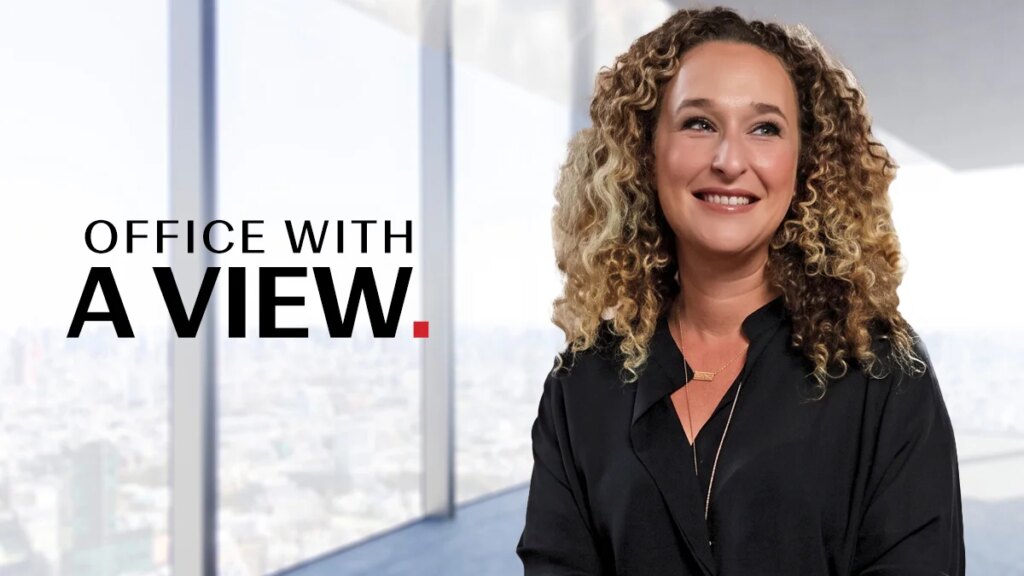
When Linden Productions CEO Riva Marker first read the script for Aleshea Harris’ “Is God Is,” which came to her as a writing sample, she knew the play had what it took to make a successful theatrical adaptation.
Marker recalled being struck by Harris’ singular voice for the revenge-seeking twins at the heart of “Is God Is,” which hits theaters this weekend. They are tasked with killing their father — by their mother. “There was a real driving aspect to her tone, to her words and to the journey — this sort of Odysseyian-like journey that the characters go on,” Marker told TheWrap’s Office With a View. “It felt like a movie from the jump, and it felt like something that had a real pulse to it, a real energy to it.”
With Marker having a hand in both film and stage plays, mastering the stage adaptation is increasingly what Linden has become known for, with the company’s roster of stage-to-screen adaptations also including HBO’s Sydney Sweeney-led “Reality,” which, like “Is God Is,” saw playwright Tina Satter helm the film.
“The art form of storytelling is one art form … whether it’s for the medium of television or film or theater or whatever it is,” Marker said. “We get to work with a lot of different artists who are doing something on stage, and then they come to us, and they’re like … ‘this is a movie we want to tell, could you help us shepherd this film?’”
While Marker describes herself as artist-forward, as a producer, she must balance those creative desires with the contracting entertainment industry, which only sometimes aligns to see developing projects get embraced and receive support for a pickup. Other times, it might mean knowing when it’s time to shelve projects “if the market is feverishly telling you there is no market for this thing.”
But that doesn’t mean it’s the end of a project. Marker pointed to the musical “Fun Home” based on Alison Bechdel’s graphic novel that Linden has been hoping to adapt to screener, but, as she puts it, “the world isn’t ready for this movie yet, but ultimately it will be.”
“It’s a journey of learning to ride that wave … knowing that everything you go out with — it’s unlikely that everything is going to hit, and you have to have enough balls in the air that you can keep moving things forward,” Marker said. “There is the right producer, just like there’s the right filmmaker for every project, and often that aligns. And sometimes you just have let your babies go.”
Read our full conversation with Marker below.
TheWrap: Your partnership with Aleshea Harris also isn’t the first time you’ve taken a bet on a first-time director. What are the things you look for in first-time directors and how do you aim to mentor them through that first project?
Marker: Part of what I love about being a producer is taking bets on people and seeing something in them that is a discovery of talent or discovery of a voice … I’ve worked with a lot of first-time filmmakers, and I love it. It’s not something that I’m afraid of … some people feel like they grow out of working with first-time filmmakers, but I feel like there’s the right filmmaker for any story. We do a lot of developing at Linden, taking IP, taking books and developing them as scripts, and then finding the right filmmakers, and so sometimes that’s a filmmaker who is like very well established in the game, and sometimes it’s somebody who is very new in their journey.
The thing to look for is somebody who is willing to admit what they know and also what they don’t know at the same time, and a big part of producing is really giving your filmmaker options … then really working to build a deeply trusting relationship, as you set off and sort of get married together for a couple of years as you’re making a movie.
“Is God Is” also embraces a fully Black cast, which we also aren’t seeing as much. How are you navigating the pushback of DEI amid the current political climate?
We are always looking for stories that come from a standpoint of voices and from people and from artists who we are not hearing enough from … I think the best thing about working in this business is that a good story is ultimately quite universal … the more specific it is in its details, the more it can crack you open in the heart. The deeper you go into speaking to women or women of color in this industry, they would say the door being cracked … it’s a crack. So the pushback —you feel it, but it’s not like the door was ever fully open in the first place, right? We have to keep pushing, as we always have had to do, to make sure that stories that matter to different communities than just one more male, white community get told.
You are just as much a producer for the stage as you are for the screen. How are you seeing the current relationship between the industries? Is Broadway still a haven while the industry is filled with uncertainty?
I think that there’s so much uncertainty everywhere, I’ll be honest. Producing on Broadway has gotten extraordinarily expensive, so the margins of return are getting smaller and smaller, but I think the haven that the theater offers is you can’t manipulate what an audience is seeing when you’re in a room altogether, and as conversations around AI become scarier, or just more prevalent, the feeling of wanting to gather with other humans who have a beating heart and are sharing the same oxygen — even though that can also be scary — that’s sort of an undeniable experience.
When is it right to tap into that IP from the stage and when is it best to let things be?
It’s a little bit about instinct and it’s a little bit about vision. What you’re looking for are characters that you really want to spend time with, and a world that feels big — and sometimes that big can even just be one person in a room. Does the story have tension? Does the story have stakes?
The industry is in a lot of turmoil right now. How have you navigated that as a smaller production company? How does Linden’s diversification help navigate this challenging time?
Luckily, 2026 feels better than 2025 did. Being nimble and being strategic always is essential. The production arm is built around this idea of always developing and curating in a space that, on the one hand, is deeply commercial, very audience forward, very authored. A big part of our slate is really diversified in that way, looking for what are the plays that feel authored and mainstream, and what are the plays that feel authored and prestigious.
And of course, there is the management vertical, and then we have a brand venture vertical which builds brands … there is so much happening in the branding space, whether they’re financing things. It’s adapting to where the industry feels like it’s headed, which does feel [like] brands are very lucrative right now, and so we’re exploring that space as well.
What gaps in types of projects are you seeing right now in the industry?
Everybody’s looking for what their “Weapons” is — what’s their sort of genre mashup that feels a little bit horror, a little bit sexy … tension ramp, very high, but also super original. That is one of the things that attracted us to “Is God Is” — that it is deeply original — no one else is coming up with that story, and so we’ll see what happens at the box office … Like “Sinners,” I think that’s what we’re hoping for — that that originality pays off. In the vein of “Weapons,” the elevated horror films — I think that is a space that a lot of us are very curious about. And then, the throwbacks to the big ’90s romance and rom coms. Those are two spaces that we are actively developing in and curious about.
What is something you’ve learned from the industry that you would like to pass on as knowledge to your peers and people who are growing their career, or wrestling with specific problem?
We were in the office — we always have interns and are always mentoring people. We sat down and had coffee with these two women who have been interning for us for the past six months, and I think that something that I’ve learned along the way is …. don’t ask for permission to do the thing that you are called to do. If you see that there’s a gap in a place, whether it’s a producer struggling to raise financing, or a writer who’s looking for a filmmaker, or a director — if you see the thing available to you, step in and step up to it.
The things that probably have changed my career the most from moving from one position to another position are when I was scared from the standpoint of “I haven’t done it before, but took bet on myself.” If I failed, I failed, and if I succeeded, I succeeded. Often it’s not about waiting for someone to offer you the opportunity — it’s about putting yourself out there in ways that do feel very scary and then trusting yourself to meet the moment.
This interview has been edited for length and clarity.
The post Linden Productions Boss Talks Shepherding Stage Adaptations and Knowing When to ‘Let Your Babies Go’ appeared first on TheWrap.