I just read a remarkable article that helped me make sense of our times.
It’s by an investigative journalist named Robert Downen, and it appeared in Texas Monthly. It tells the tale of one of the most powerful American religious leaders of the 20th century.
And chances are, you’ve never heard of him.
His name was Paul Pressler. I wrote about him more than two years ago when the Southern Baptist Convention settled a sex abuse suit filed against him by Duane Rollins, who claimed that Pressler had repeatedly raped him, beginning when Rollins was 14 years old.
Pressler, who died in June 2024, was a former Texas judge, an influential lawyer and one of the leading architects of the so-called conservative resurgence in the Southern Baptist Convention, by far the nation’s largest Protestant denomination.
In evangelical America, the story of this conservative resurgence is the stuff of legend. The popular story goes like this: At the onset of the sexual revolution, Southern Baptists, like many mainline denominations, were beginning to fall under the sway of liberal theologians and potentially drifting away from biblical Christianity. While the convention was still overwhelmingly conservative, theological liberals were present in the convention, including in Southern Baptist seminaries.
But in 1967, Pressler met with a young Southern Baptist pastor and seminary student named Paige Patterson at Cafe du Monde, a famous coffeehouse in the French Quarter in New Orleans. The two men vented their frustrations about what they saw as their denomination’s liberal drift and vowed to take action.
They didn’t outline a specific plan that night, but they left with an immense amount of conviction and resolve.
They spent the next few decades waging a relentless theological and political war within the denomination. It’s been called the Battle for the Bible. Along with a considerable number of allies, they purged theological liberals from the denomination, especially from its seminaries.
Their tactics could be ruthless. For example, they encouraged seminarians to report on their liberal professors, as part of an effort to expose them and purge them. They recruited lay members of Southern Baptist congregations to put pressure on pastors and church leaders to toe the conservative line.
But the conservative resurgence wasn’t just theological. Pressler was also closely connected to the Republican Party. In 1981 he joined the Council for National Policy, a group that Downen accurately described as a “secretive network of conservative religious, political and business elites.”
By the late 1980s, Pressler was the president of the council, and in 1989, President George H.W. Bush nominated him to lead the Office of Government Ethics.
In 1990 the conservative resurgence was strong enough to deliver, in Downen’s words, a “knockout blow” against the denomination’s remaining liberals and moderates. The church elected Morris Chapman, a conservative pastor, as president of the convention, “all but ensuring that majorities of the denomination’s various trustee boards would be appointees of the conservative movement.”
(The Southern Baptist Church refers to itself as a convention rather than a denomination because its churches are largely autonomous. As The Baptist Press explains, “The Southern Baptist Convention is most technically an annual convening of messengers from invested and involved Baptist churches rather than a perpetual denominational body.”)
Conservatives would now be able to exercise “total control over the S.B.C.’s seminaries and bureaucracy.” For their victory lap, Pressler and Patterson returned to Cafe du Monde to recreate their meeting 23 years before.
This revolution, conservatives believe, didn’t just save the convention; it helped fuel extraordinary growth. While the membership of liberal denominations declined, sometimes precipitously, the Southern Baptist Convention grew, hitting a peak of more than 16.3 million people in 2006. (The denomination’s membership has declined every year since its high-water mark. As of 2025, roughly 12.3 million Americans belonged to Southern Baptist churches.)
To many evangelicals, the lessons were clear. The denomination’s religious and political conservatism were key to its growth. God was blessing the faithful, and as the more liberal denominations declined, he was turning away from the faithless.
But that’s not the full story — not by a long shot. As Downen detailed in page after painful page, there was an overwhelming amount of evidence that Pressler was a morally corrupt and abusive man.
He was, for example, a Confederate apologist, a member of the Sons of Confederate Veterans.
Reflecting on the conservative resurgence, Pressler said, “It was like Gettysburg, but this time the right side won.” And in 2016, as one of his last public interventions in Southern Baptist business, he tried to argue against a resolution that condemned the use of the Confederate flag.
But by far the most serious claims against Pressler involve allegations that he sexually abused young men and boys.
The earliest known reports of Pressler’s abuse date back to the 1970s, when he was working with young people at a Presbyterian church in Texas. According to court records, the church removed him after learning of an “alleged incident” at his home involving a young member of the church. A former youth group member later claimed that Pressler grabbed him and fondled his penis when they were alone in a country club sauna.
Rumors about Pressler might, in fact, have caused him to withdraw his name from Senate consideration for head of the Office of Government Ethics. As Downen reported, “In a 2005 letter, Patterson acknowledged that Pressler’s nomination was scuttled by a ‘charge of homosexual behavior’ made to the F.B.I. by Abner McCall, a past Baylor University president.” Pressler used this incident to turn himself, in Downen’s words, into a “victim of vengeful liberals who would do anything to destroy God-fearing men.”
But questions about Pressler persisted. In 2004 the First Baptist Church of Houston investigated claims that Pressler had tried to pressure a man in his 20s to pray with him naked and then forcibly undressed and groped the man. The church wrote a private letter to Pressler calling his conduct “morally and spiritually inappropriate.”
The most chilling part of Downen’s report described Pressler’s relationship with his law partner, a far-right Texas Republican, Jared Woodfill.
According to sworn statements by Woodfill, he knew about allegations against Pressler yet — incredibly — stood by while their firm granted Pressler extraordinary access to young men. As Downen wrote, “Instead of giving Pressler a salary, the firm paid a string of young, male personal assistants to work out of Pressler’s home, according to Woodfill’s testimony.”
This arrangement lasted, Downen wrote, until at least 2017, “when a personal assistant, in an email addressed to Pressler’s family, wrote that he had recently heard Pressler brag about being naked with young boys and saw him pressure a young, destitute man into giving him a nude massage for money while kissing him repeatedly.”
Again, it’s worth repeating that these allegations followed Pressler for decades. Yet he retained his power. He retained his influence. For all too many Baptists, the ends justified the means.
Or, as the leaders of First Baptist Church of Houston wrote to Pressler, “Given your stature and various leadership roles in our church, the Southern Baptist Convention and other Christian organizations, it is our considered opinion that this kind of behavior, if brought to light, might distort your testimony or cause others to stumble. We desire neither.”
In this context, “testimony” refers to Pressler’s public religious example. Here the church is saying that exposing Pressler’s misdeeds would “distort” his public Christian credibility.
Downen’s story is notable not just for its focus on Pressler. Patterson, Pressler’s key partner in the conservative resurgence, faced his own scandals. In 2018 the trustees of the Southwestern Baptist Theological Seminary forced Patterson out of the presidency after a widely read open letter condemned him for horribly mistreating women who claimed that they’d been raped or abused.
In one case, he is said to have told a seminarian who stated that she’d been raped to forgive her attacker and urged her not to contact the police. In another, he wrote in an email to campus security that he wanted to meet with a woman who said she’d been raped, to “break her down.”
Patterson, Pressler and Woodfill denied all wrongdoing.
Trust me when I tell you that I’m barely scratching the surface of Downen’s report. It’s agonizing to read. But instead of diving even more deeply into the sordid details, I thought I’d try to answer a question: Why does all this matter now?
The best way to describe the Baptist reaction to Downen’s report was a giant collective yawn. Some people considered the report to be nothing more than a liberal hit piece. Others took a different approach, maintaining that the conservative resurgence was good, even if its leaders were abusive and bad.
But here’s the problem with that second line of thought: Institutions take on the character of their leaders, and political evangelicalism can look much more like Paul Pressler than Jesus Christ. Political evangelicalism is a system that is deeply influenced by depraved men, and it has exactly the features that depraved men will demand of an institution they control.
First, the depraved man will alter the very definition of virtue. He’ll place a higher premium on his thoughts than his actions, so that the goal is theological or ideological purity rather than, say, the fruit of the spirit, which includes kindness, peace, patience, gentleness and self-control.
In this formulation, the absolute worst thing you can be is a heretic, with heresy defined according to the leader’s inflexible interpretation of Scripture.
You can see this temptation across the length and breadth of American religion and politics. How many people see themselves as good because their theology or ideology is pure? How many of the same people then feel righteous even as they inflict extreme cruelty on their theological or ideological foes? To them, cruelty in the name of truth isn’t cruelty at all; it’s a form of tough love.
Second, depraved men are intensely vulnerable to scrutiny, so they hate inquiry and accountability. They’ll create secretive institutions that zealously guard their privacy and autonomy. And when accountability comes, it’s treated like martyrdom. Instead of facing justice for their misdeeds, they act as if they’re the victims of a hostile, unbelieving world.
The media becomes the enemy. So does anyone who challenges the leaders, including even sex abuse survivors. Their cries for help are viewed not as righteous pleas for justice but as malicious attacks on the church and God’s anointed leaders.
The stark reality of this depravity is hidden from millions of evangelicals, including millions of Southern Baptists. They love God and their neighbors and live lives far removed from politics. You would want them next door. You would find much to admire in the way they raise their children and serve their communities.
They almost all vote Republican, but for many, it’s as much a matter of habit as it is a matter of deeply held conviction. It’s what you do when you go to an evangelical church. It’s part of how you fit into the community you love.
As a result, many Christians, maybe most, are completely unaware of the cruelty inflicted on political dissenters in Jesus’ name. And to the extent that they read about scandals within evangelicalism, they read it in right-wing media, which constantly denies, defends and deflects. They are genuinely shocked when they finally hear the truth.
It’s to the great credit of the denomination that thousands of its messengers (the convention’s term for delegates) voted in 2021 to initiate an outside investigation of the Southern Baptist Convention executive committee’s response to sexual abuse allegations. The committee even voted to waive its attorney-client privilege so that the investigation would be thorough and complete.
In 2022, Guidepost Solutions, the outside investigator hired by the executive committee, released a searing report that said survivors and others who reported abuse “were ignored, disbelieved or met with the constant refrain that the S.B.C. could take no action due to its policy regarding church autonomy — even if it meant that convicted molesters continued in ministry with no notice or warning to their current church or congregation.”
But Pressler’s cultural impact remains far too strong. The denomination created an Abuse Reform Implementation Task Force, but it closed its doors in 2024 with its work incomplete. Sex abuse survivors have faced a storm of criticism. Many despair of ever achieving lasting change.
The modern history of political evangelicalism is riddled with the same kind of story: A powerful man gains a following by casting himself as the heroic warrior against the heretical and the godless. When he uses his power and fame to indulge his basest desires, he treats exposure as an attack and justice as persecution.
And because he’s built a following, he has an army of people ready to leap to his defense. After all, if they stay silent, then the liberals will win, and no one can let the liberals win. Ever.
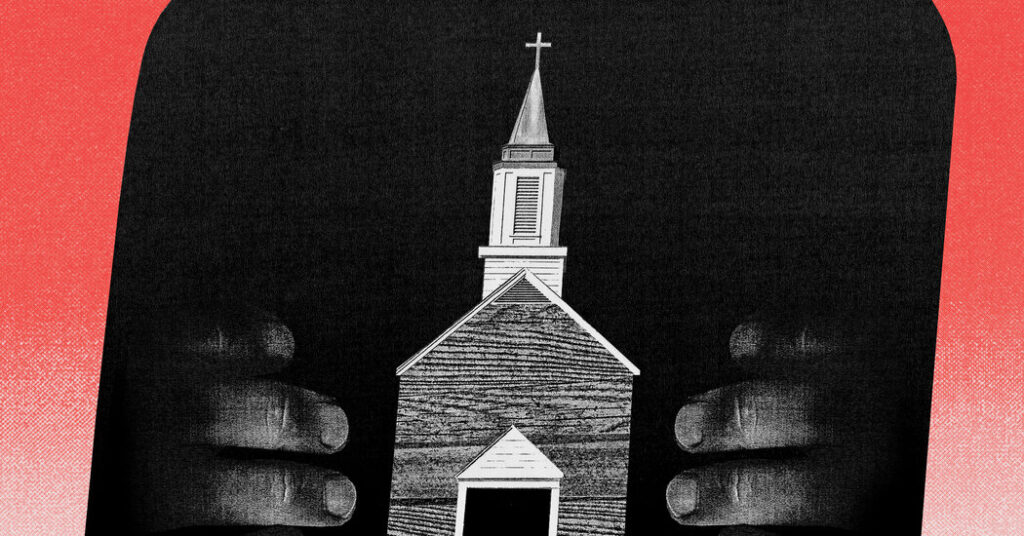
Against this backdrop, President Trump wasn’t an aberration; he was an inevitability. When he asked evangelicals for their political support, little did he know that he was walking into the house that Paul Pressler built.
Some other things I did
My Sunday column was about the Democratic temptation to support Graham Platner. He will almost certainly be the Democratic nominee to take on the Republican incumbent, Senator Susan Collins, in Maine. He also just recently covered up what appears to be a Nazi tattoo and has a long record of extreme and cruel statements online. A charismatic man has a troubled past. What could go wrong?
I don’t want politicians to be authentic. I want them to be decent. I want them to be honest. I want them to be competent. And if they fail those tests, they don’t redeem themselves by opposing President Trump.
If you’re a conservative watching Democrats talk themselves into supporting Graham Platner, the Maine Democrat who until recently wore what sure looked like a Totenkopf tattoo (he covered it up after it became a political embarrassment), you’re probably experiencing déjà vu. To a lesser but still familiar degree, I’m seeing Democrats engage in the same process of absurd accommodation and justification that Republicans use to excuse their deep love for Trump.
This week the round table discussion featured Michelle Cottle, David Wallace-Wells and me, and we talked about the Iran war. We covered a lot of ground, but I wanted to emphasize how much the Trump administration has lied. Among other things, it deceived America about the extent of the damage Iran inflicted on American bases:
I don’t think Americans realized the extent that we were subject to Baghdad Bobbery from our own government. And if you remember, the Iraq war in 2003, Baghdad Bob — he was the spokesperson for the Saddam Hussein government. “Everything’s going great.”
Iraq’s information minister, Mohammad al Sahaf: We are destroying tanks, personnel carriers, killing them, and we will continue.
And he’s saying, “Americans are nowhere near us,” etc.
al Sahaf: They are not even a hundred miles or whatever. They are not in any place.
We’re not used to having a Baghdad Bob administration. It’s not that our governments have always been truthful toward us. They have lied. But the sort of comprehensive dishonesty — and this war began with an avalanche of comprehensive dishonesty — essentially calling this a giant rout. “Why is the media not reporting more on the incredible success of American arms?” When the media was reporting on Americans hitting targets, what we were not reporting on, what was being withheld from us — and is still being withheld from us, but it’s having to leak out, as David was saying, in other ways — is the serious damage that has been done to American facilities.
Thanks for reading. You will soon start to get my columns emailed to you too.
If you’re enjoying what you’re reading, please consider recommending it to others. They can sign up here.
Have feedback? Send me a note at [email protected].
You can also follow me on Threads (@davidfrenchjag).
The post I Don’t Think You Can Even Call This Hypocrisy appeared first on New York Times.