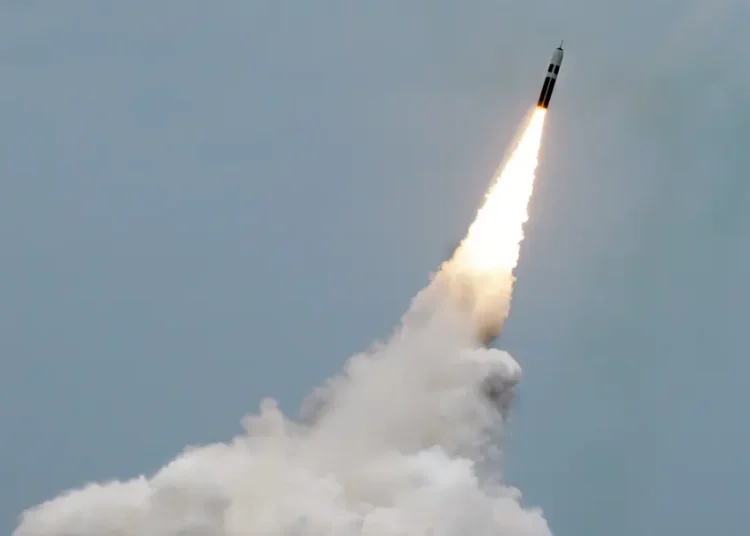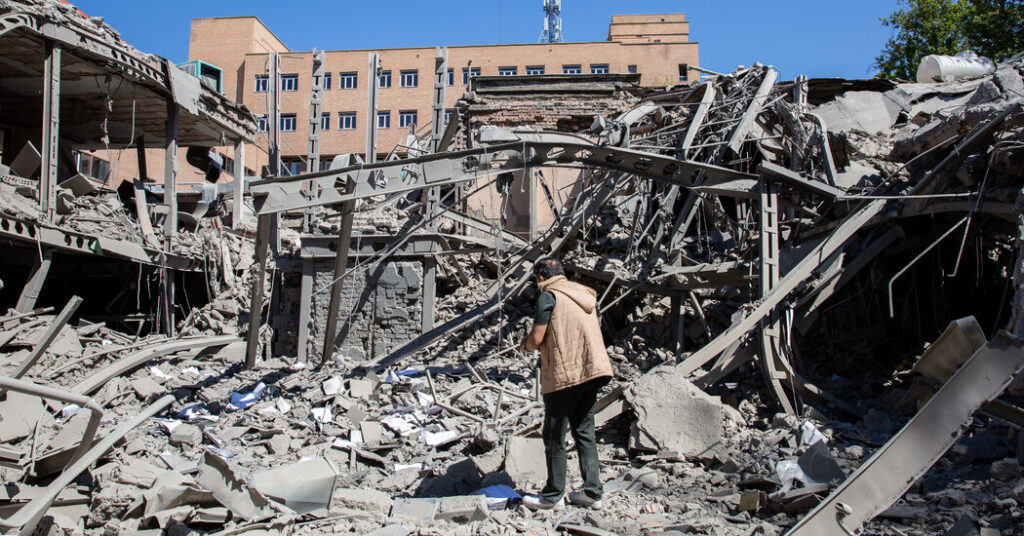
As the United States works to rebuild its supply of missiles and munitions after deploying many of them in the war with Iran, its defense contractors will need a supply of rare-earth minerals and magnets that are essential to making those weapons.
But China dominates global production of those minerals, and it has enacted tight controls over them in the past year to cut off any foreign companies linked to the military and to put political pressure on the Trump administration.
China deployed its control over the mineral supply chain as a powerful source of leverage last year, clamping down on exports until the Trump administration agreed to reduce its punishing tariffs. Christopher Padilla, a former trade official in the George W. Bush administration, said that the U.S. decision to burn through many precision munitions in the Iran war had only increased that leverage.
At least in the next few years, the U.S. effort to rebuild its stockpile “means we need access to rare-earth minerals from China,” he said, adding, “Every missile fired at Iran makes us that much more dependent in the near term on China and its rare-earth minerals.”
The war in Iran is expected to figure into talks between the United States and China in Beijing this week in a variety of ways. The United States is eager to enlist the help of China, a strategic partner of Iran, in carrying out its negotiations. The drawdown in U.S. munitions stockpiles has raised questions about America’s ability to take on other military actions, including defending Taiwan against any Chinese incursion.
But simply rebuilding the U.S. arms supply could be a more immediate issue for the U.S.-China relations. Estimates from the Defense Department and Congress suggest that the United States deployed around half of its long-range stealth cruise missiles and roughly 10 times the number of Tomahawk cruise missiles it currently buys each year since the Iran war began in late February.
Rare-earth minerals are embedded in nearly every advanced U.S. defense platform, experts say. An F-35 stealth fighter, for example, contains roughly 900 pounds of rare-earth elements, while an Arleigh Burke-class destroyer — several of which patrolled the Strait of Hormuz during the conflict — contains roughly 5,200 pounds. Those minerals are essential to its systems for propulsion, radar, missile defense and other onboard electronics.
The Tomahawk cruise missiles the United States has used extensively during the Iran war also need rare-earth minerals for their guidance systems, though they tend to use smaller quantities.
They include materiel like samarium cobalt, which makes the magnets used to rotate fins on guided missiles more resistant to the heat generated by high-speed flight. Gallium is a key component in radars like the ones damaged by Iran in Jordan and the United Arab Emirates, and neodymium is essential to military lasers.
The Pentagon’s $1.5 trillion budget request for fiscal year 2027 includes billions of dollars to find new sources for dozens of critical minerals used in weapon systems and the defense industrial base.
For the Defense Department, divesting its supply chain of materials from China is considered essential for projects like the “Golden Dome,” a missile defense system meant to protect the United States from intercontinental ballistic missiles and hypersonic weapons. The Golden Dome project would require dozens of new radars and thousands of interceptors and space-based sensors, experts said, necessitating bigger volumes of rare-earth minerals and magnets.
The United States has been working to find other sources of supply of rare-earth minerals and magnets, but those efforts can take years to develop. In the meantime, export controls that China introduced in December 2024 and ramped up in April 2025 are putting extreme pressure on supply chains.
Mahnaz Khan, the vice president of policy for critical supply chains at Silverado Policy Accelerator, a Washington think tank, said the U.S. government was rapidly ramping up more secure mineral supply chains both domestically and with allies. “But in a prolonged conflict, America could face a growing collision between expanding defense needs and mineral supply chains still heavily concentrated in China,” she said.
Chinese analysts have come to a similar conclusion. Meng Weizhan, an assistant research professor at the Institute for Advanced Study in Social Sciences at Fudan University, told the Chinese publication “The Observer” that the main reason Mr. Trump might want to extend the current minerals agreement between the United States and China is that the U.S. military industry cannot do without Chinese rare earths.
Mr. Meng argued that, if the United States wanted to request an extension of this agreement, it must make concessions to China in other areas, like tariffs or controls on semiconductors.
Lily Kuo contributed reporting.
Ana Swanson covers trade and international economics for The Times and is based in Washington. She has been a journalist for more than a decade.
The post Why the Bombing of Iran Tied the U.S. More Closely to China appeared first on New York Times.