Jake Rosmarin boarded a cruise ship in Argentina on April 1 expecting a few weeks of swimming, hiking and birding on a trip to Cabo Verde. Instead, he found himself at the center of a global health crisis, as his ship became ground zero for a deadly hantavirus outbreak.
Now he’ll spend another six weeks in a 300-square-foot, airtight quarantine room at a medical center in Omaha. Doctors there will monitor him and 15 other American passengers for signs of the rare virus carried by rodents, for which there is no readily available vaccine.
“I’ve never been so excited to go to Nebraska,” Mr. Rosmarin, 29, texted his fiancé when the group was bound for the specialized quarantine center.
A travel influencer from Boston, Mr. Rosmarin has taken several trips with the cruise ship’s parent company, Oceanwide Expeditions, posting videos and social media updates about the experiences in exchange for free travel.
He shared news from the ship, the MV Hondius, after he and his fellow passengers were exposed to the rare Andes strain of the hantavirus, which — unlike other strains — can be transmitted by close contact with infected people.
“It’s been a surreal, weird experience,” he said on Tuesday, describing the last few days — as he and the other U.S. passengers were flown from the Canary Islands to Omaha — as something that “felt like straight out of a movie.”
When the first passenger died on April 11, Mr. Rosmarin said, he thought it was a sad but isolated incident. Then passengers learned that a second person had died in a hospital on April 26 after disembarking. Cruise officials informed them that a third passenger had died on the ship on May 2.
“Up until that point, all of these things were kind of just weird,” he said. “There was no worry or concern until those very last few moments.”
It was only the next day, on May 3, that Mr. Rosmarin and the bulk of his fellow passengers were told about the hantavirus outbreak. Then he learned that health authorities in Cape Verde were refusing to let them disembark. Mr. Rosmarin said he began texting and calling family members and searching Google for anything he could learn about the disease.
“It was a scary time,” he said. “I confined myself, essentially, to my cabin.”
For the next week, Mr. Rosmarin said, he stayed in that small room, leaving only for 15 minutes or so each day to grab fresh air, food and water. He spent the rest of the time communicating with his family and fiancé in Boston, and posting updates to Instagram.
“There was a while that I didn’t know when I was getting off that ship,” he said.
The ship anchored off the Canary Islands on Sunday, allowing passengers to disembark. Within an hour, he and 17 other Americans had been shuttled onto a U.S. government flight. They wore KN95 masks and could bring only a small portion of their belongings, which were disinfected before they boarded the plane.
Mr. Rosmarin carried a small backpack with his camera, laptop, passport, some clean clothes and a bag of toiletries. The rest of his belongings — two suitcases and a duffel bag full of souvenirs — are still on the ship. It’s unclear if or when he will get them back.
After landing in Omaha, Mr. Rosmarin and 14 other passengers were taken to the National Quarantine Unit, the only federally funded facility in the country designed to monitor those who have been exposed to infectious diseases.
One other person — the only American who had tested positive for the hantavirus — was sent to a special biocontainment unit across the street. And two others, including one who was showing symptoms of the disease, were sent to another biocontainment unit at Emory University Hospital in Atlanta.
That symptomatic person tested negative for the hantavirus on Monday evening, federal health officials said on Tuesday afternoon.
Mr. Rosmarin said he had decided to spend his full 42-day quarantine period in the Nebraska facility, rather than going home to Boston and isolating there.
“If anything were to happen, I can’t foresee there being anywhere else to have better medical care for this specific illness than being here,” he said.
As of Tuesday afternoon, Mr. Rosmarin was not feeling any symptoms. He said he was constantly checking his temperature with a thermometer, and preparing to take his first test for the hantavirus.
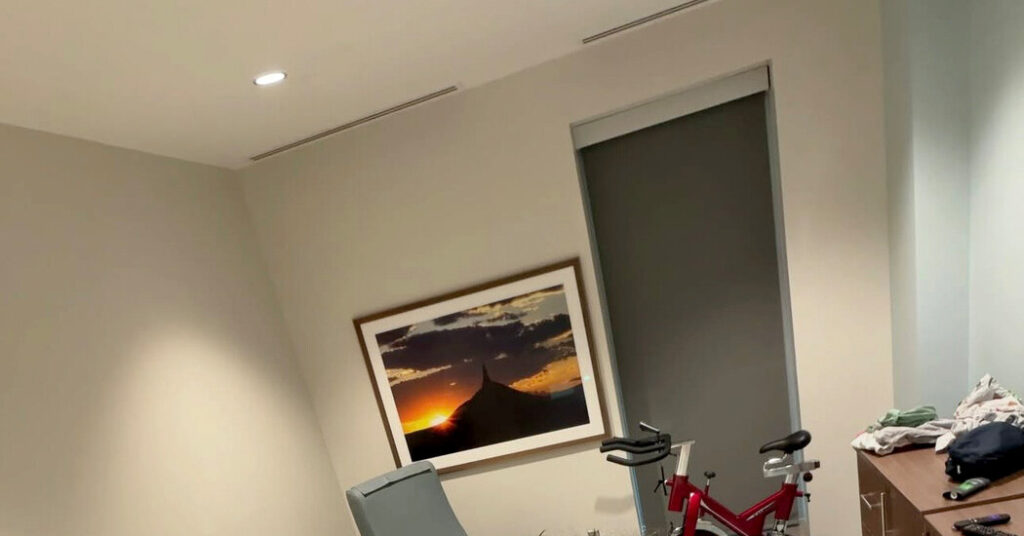
On a video call, he showcased the features of the room where he will be living for the next six weeks, panning his camera across a full-size bed, a desk, a television, an exercise bike, a window and a large bathroom and closet.
He has Wi-Fi, access to streaming services, and a long list of food that he can order for breakfast, lunch and dinner. The nurses brought him Starbucks on Tuesday.
He said he plans to spend the six weeks writing in his journal, planning for his upcoming wedding and keeping in touch with friends and family.
And, of course, making more social media content.
Sonia A. Rao reports on disability issues as a member of the 2025-26 Times Fellowship class, a program for early-career journalists.
The post Day 1 in Quarantine: Tested for Hantavirus, Treated to Starbucks appeared first on New York Times.