In these letters, our Global Editorial Director Ben Ditto and Editor in Chief Kevin Lee Kharas introduce the spring 2026 issue of VICE magazine, THE NOT THE PHOTO ISSUE. Buy it now—or get 4 issues each year in the mail, by subscribing.
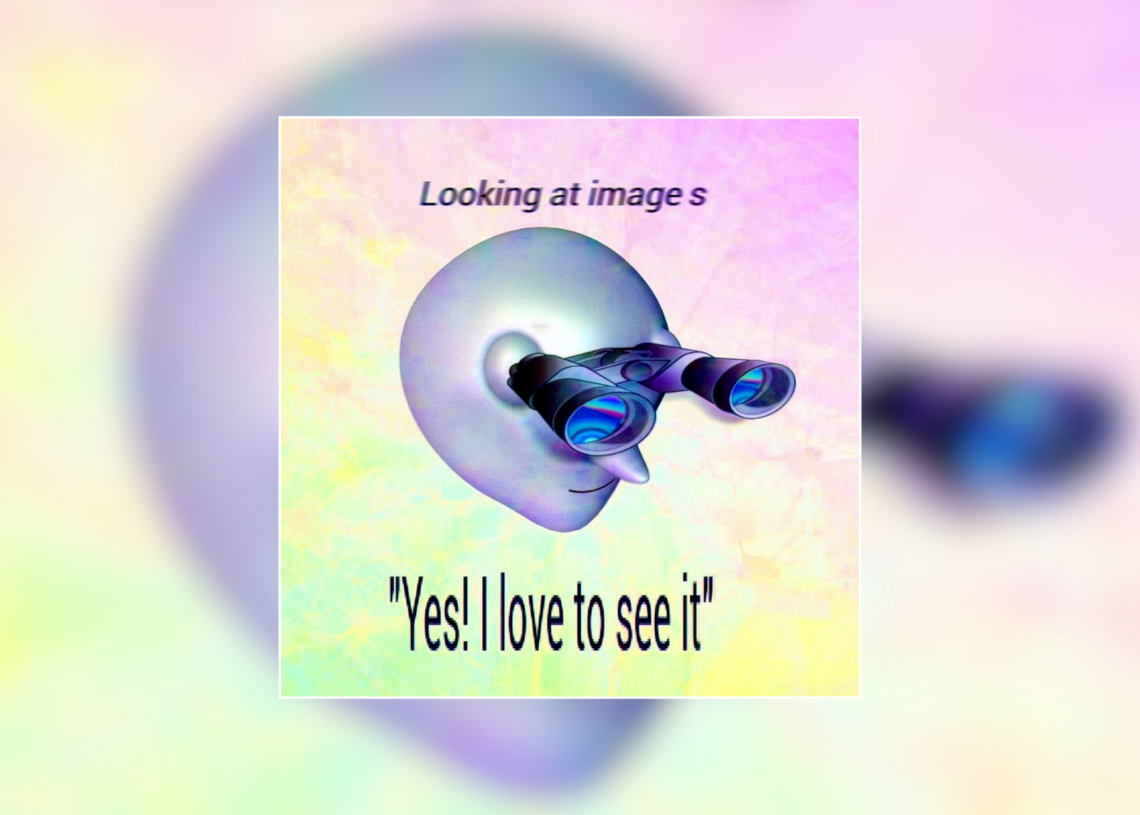
There was an old Tumblr meme. A Nintendo 64-style low-poly head floating on a pink-green ombré background, with a quiet smile and a pair of binoculars stuck to its face. “Looking at image s,” read text surrounding the face. “‘Yes! I love to see it’”.
This meme pretty much defines my life because I do, indeed, love to see images. I spent an unholy amount of time in libraries as a kid. Reading, for sure, but mostly looking at images. Endless science, sci-fi, history, and fantasy books, just satisfying my desire to perceive images. Then came the internet and the floodgates opened.
Rabbit-holes, image boards, Flickr, Yandex, Tumblrs… Then along came Instagram and weaponized image-liking, adrenaline-boosted by Silicon Valley’s most nefarious marketing algorithms. Mood board accounts sprung up, competing with each other for clout by refining their aesthetics and posting rare and unique content. They spawned thousands, then millions of imitators. Instagram hit a billion users.
Over a decade later, we are running out of images. We have seen them all, and we need something new. Traditional modes of image production can no longer satisfy those, like me, who love to see images.
“Images still have the power to pierce the psyche, but they no longer need to pretend to be real”
—Ben Ditto, Global Editorial Director, VICE magazine
Perhaps recognizing this, tech overlords have steered users away from quiet, still images towards the total sensory immersion of Reels. The mood board accounts became carousel accounts as the algorithm punished single-image posters. Meme accounts were mercilessly persecuted, nuked for simply reposting. Around this time, there was an intersection of three landmark events: generative AI, live-streamed war, and the release of the Epstein files. The nature of image production changed profoundly. We were simultaneously exposed to the total dismantling of reality, pure nihilism, and a cache of images and files that undermined and confused everything we thought we knew about power and influence. “Found” images consume our attention. We no longer know if they are real or not, it has become impossible to tell. And there has never been a readier supply of extreme violence, real and fake pornography, and abject boomer slop.
Recently, a contact sent me Kill for Points, a thick art book he made. It’s full of photos showing the last things that FPV drones “see” before they detonate and kill their targets. Hundreds of terrified Russians and Ukrainians, immortalized milliseconds before they exited this mortal coil. After I posted about this on Instagram, another user messaged me, a drone operator in Ukraine. He also made a zine of the final moments of FPV targets. But these were his kills, and the zine he made documenting them was funded by an arts grant from a Ukrainian photography foundation. “Primitive” people used to think that taking a photograph stole the soul. Modern horrors are way beyond their comprehension.
Whether “real” or not, the power of the image persists. Think of Doug Mills’s New York Times photo of Trump punching the air after narrowly avoiding assassination, or the burning Tesla in front of Trump Tower. Jeffrey Epstein flexing a tribal tattoo that is not present on photos of his corpse. The Pope in a luxury full-body white puffer. Images still have the power to pierce the psyche, but they no longer need to pretend to be real: They just need to make us feel a way, to reinforce or challenge our belief system. So maybe the last century or so of photography was just a blip, where we convinced ourselves for a brief moment that we could capture reality, and that it ever existed in the first place. Maybe we’ve been kidding ourselves about big modern ideas like objectivity and journalistic neutrality. Perhaps in the end, we simply love to see images.
Ben Ditto
Global Editorial Director, VICE Magazine
When the pictures are first made public, the outcry is instant.
I scroll the comments. People are saying it’s an angel or a god. A protector of the ancient world. “That’s an ancestral being. For sure an omen,” says one. “Those eyes carry centuries of wisdom,” offers another. “This feels like something we were never supposed to see,” worries a third. A consensus starts to form. This is something sent back from the future or forward from the past, either as a warning or a weapon of survival.
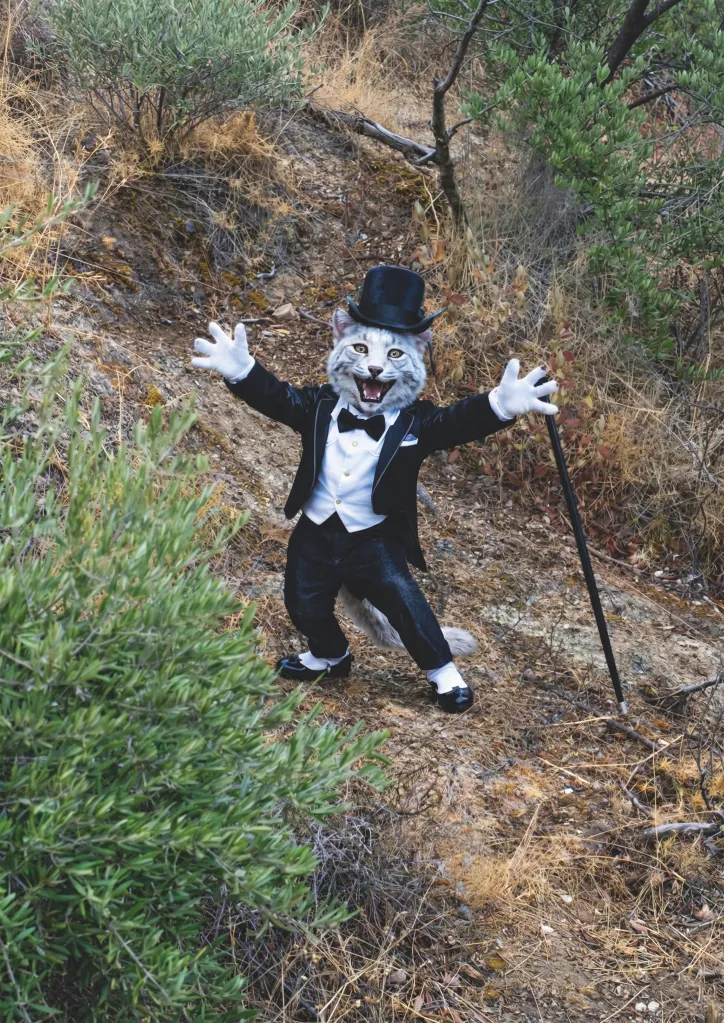
Looking at the white Iberian lynx made me feel insane, too. It made me feel like no photo had made me feel for a long time, which is why I immediately assumed it was AI, and would in the video clip begin to breakdance or start talking about mogging people. A part of me still wonders if it could be a hoax starring no white Iberian lynx at all, just a pesky trouble-making furry in a human-size white Iberian lynx suit. The way the animal moves seems so alien to me: first, not at all, and then suddenly all at once, like an animation. Most of all though it was the eyes. The piercing silver gaze of the white Iberian lynx is most definitely not of this world, though perhaps it is a gateway to another.
I started asking what other people made of this white Iberian lynx. I dropped links in a few group chats and someone told me its name is Satureja, like the evergreen herb with white flowers that grows in the Spanish hillsides. Ben Ditto said, “Love him.” An awed Dean Kissick replied, “Wow, that must be a God.” Drinking buddies lapsed out of their default cynicism to laud a “gorgeous creature” that looked “just as nature intended.” I spoke to an expert in AI-image detection at Kaiber for an hour on the phone about whether or not I could “trust” the footage, and the ramifications of the spell it had cast over me. Using water-chugging AI tech to create a counterfeit version of the magical natural world definitely felt like irony.
Finally convinced of its authenticity, I wanted so much to run pictures of the white Iberian lynx in this issue, to hold it up as proof that photography has lost no power as a visual medium. I even thought about putting it on the cover. Yet despite numerous attempts in both English and Spanish, including offers of payment, the photographer Ángel Hidalgo—who himself described the animal as the “white ghost of the Mediterranean forest”—was the only person not moved to reply to my messages.
This left me in a strange position. Under UK copyright law, I would’ve had a solid case to run it without payment or permission under the “fair-dealing” exception, but in Spain, where the photo was taken, the rules are different. What’s more, it turned out that even wondering aloud in the magazine if the image of the white Iberian lynx was created by AI could see legal trouble headed our way. I was in a state of limbo, wanting to pay tender and reverential tribute to this leucistic phenomenon, to celebrate the wonder of nature and Hidalgo’s arduous months-long mission to capture the animal on film, but unable to, because saying something like “the photo is so otherworldly I assumed it must be AI” might get us sued.
So instead, I had to settle for running an AI version of it. Thankfully, the technology is getting pretty good these days. It took a few goes but the image looks quite realistic, I’m sure you’ll agree. It might not be perfect, but at least this way we all get to luxuriate in the sight of the white Iberian lynx, to marvel at its soft and ethereal beauty, and to look ahead with renewed confidence to the delights and surprises that life can still, it turns out, hold in store for us.
Kevin Lee Kharas
Editor in Chief, VICE Magazine
These letters are from the spring 2026 issue of VICE magazine, THE NOT THE PHOTO ISSUE. Buy it now—or get 4 issues each year sent straight to your door, by subscribing.
The post Letters From VICE Magazine’s Editors: Spring 2026 appeared first on VICE.