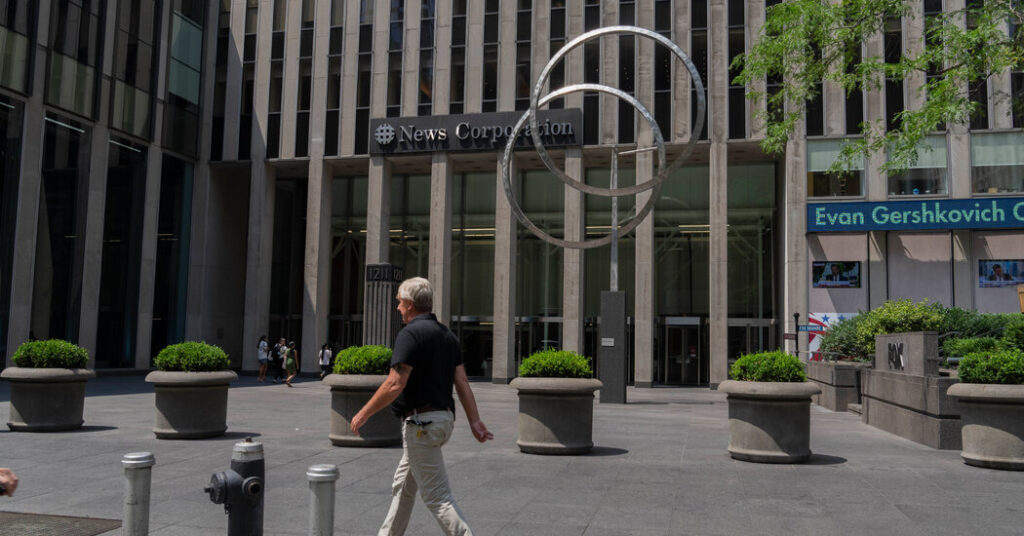
The Wall Street Journal said on Monday that it had received subpoenas for the records of its reporters, an exceedingly rare move by federal prosecutors that prompted concerns the Trump administration is impinging on press freedom as it expands its efforts to investigate leaks of government secrets.
The subpoenas, dated March 4, were issued in connection with a Feb. 23 article describing Pentagon officials’ warnings to the president about the risks of a military campaign against Iran, The Journal reported. The article appeared days before President Trump began his war against Iran.
The subpoenas suggest the Trump administration’s pursuit of leaks and critical reporting could be entering a more aggressive phase, guided by the president’s fury over news coverage about internal deliberations regarding military strikes. While leak investigations into disclosures of classified information are common, subpoenas aimed at journalists are not, and First Amendment advocates say such demands represent dangerous attempts to chill and limit press freedom.
Dow Jones, which publishes The Journal, said in a statement that the subpoenas issued to the paper and its reporters “represent an attack on constitutionally protected newsgathering. We will vigorously oppose this effort to stifle and intimidate essential reporting.”
It was unclear if the paper had sought to quash the subpoenas.
A Justice Department spokeswoman did not immediately respond to a request for comment.
The inquiry into the origins of The Journal’s reporting is one of multiple leak investigations being conducted by the U.S. attorney’s office in the Eastern District of Virginia, according to people familiar with the matter who spoke on the condition of anonymity. The district has long been a hub for criminal investigations into disclosures of classified information, because the Pentagon and C.I.A. headquarters are both in its jurisdiction.
Leak investigations have historically focused on determining which government officials disclosed classified material, and whether they can be charged with a crime. But such cases can become particularly fraught when federal law enforcement officials try to solve a case or build a prosecution by investigating reporters’ records to ferret out their sources.
Last year, the Trump administration signaled it would more aggressively pursue such cases, when the Justice Department canceled a Biden-era policy meant to put strict limits on such investigations. In January, federal agents searched the home of a Washington Post journalist as part of an investigation into a government contractor’s handling of classified records — a search that has led to a prolonged legal fight over access to her electronic data.
Mr. Trump has not only pushed for a more aggressive approach, but he has also publicly suggested that uncooperative reporters should go to jail. Last month, in response to reports disclosing details about the downing of an American jet over Iran, Mr. Trump suggested journalists might be arrested if they did not identify their sources.
“We’re going to go to the media company that released it, and we’re going to say, ‘national security; give it up or go to jail,’” the president said. Todd Blanche, the acting attorney general, seconded that argument at a news conference.
“To the extent that we have seen a series of leaks that necessarily involve classified information and putting the lives of our soldiers at risk, or the lives of agents at risk, that is something that we will always investigate,” Mr. Blanche said.
“If it means sending a subpoena to the reporter, that’s exactly what we should do and that’s exactly what we will be doing,” he added. “If it means doing regular investigations to identify who within the government feels like it’s OK to leak classified information, to put lives at risk, then we’ll try to root him or her out as well.”
Devlin Barrett covers the Justice Department and the F.B.I. for The Times.
The post Justice Dept. Subpoenas Wall Street Journal in Leak Investigation appeared first on New York Times.