The hantavirus outbreak on an expedition ship in the Atlantic Ocean that has killed three passengers is emerging as another test for an administration now led in part by officials who spent years criticizing pandemic-era public health messaging.
Some top administration health figures, including Health Secretary Robert F. Kennedy Jr. and interim leader of the CDC Jay Bhattacharya, have argued that federal agencies overstated risks during covid and imposed overly broad preventive measures.
Now, those same agencies are central to explaining a new and uncertain threat — even as their credibility has been publicly questioned. They must balance warning the public about a potentially serious pathogen without provoking panic — or appearing to revive what some view as the kind of heavy-handed response they once rejected.
The outbreak has put “the shoe on the other foot” for officials who now must make their own public health decisions, said Anand Parekh, a former deputy assistant secretary for the Department of Health and Human Services.
President Donald Trump and Kennedy have given short remarks saying the situation is under control. Such reassurances can be counterproductive if they are not paired with clear explanations of what officials know, what they do not know and what they are still trying to learn, Parekh said.
Without that, he added, such statements can be perceived as “flippant” and risk undermining trust.
“There’s probably a portion of the public that appreciates just information as opposed to sort of telling people to worry or not to worry,” said Parekh, chief health policy officer at the University of Michigan School of Public Health.
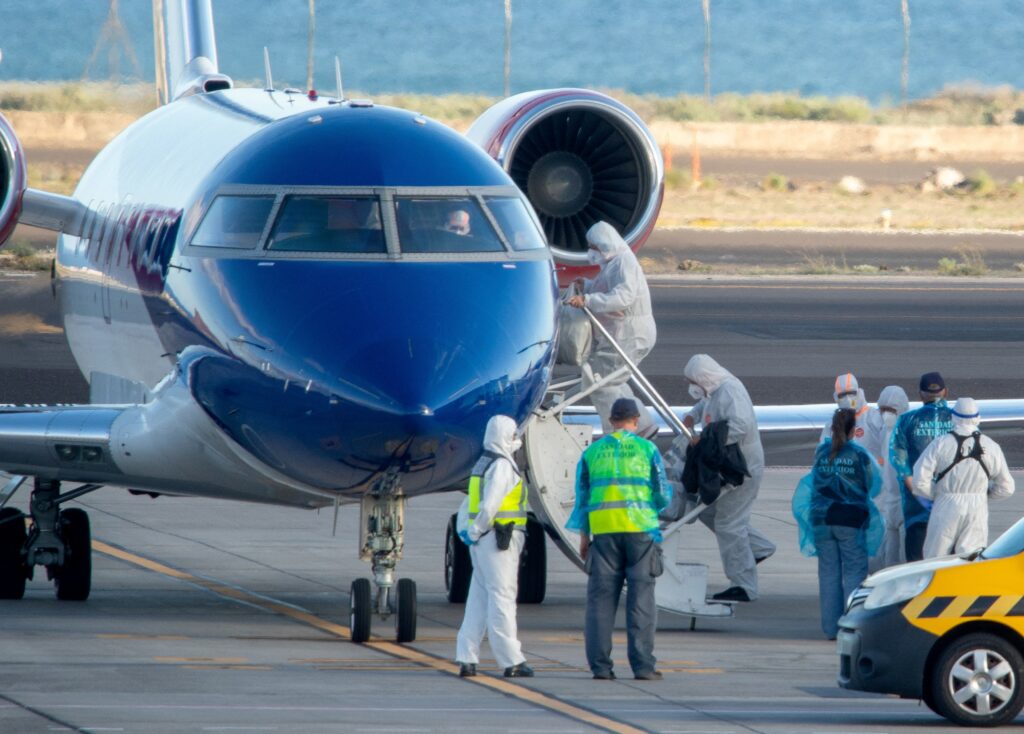
Three people have died of hantavirus linked to the polar expedition ship Hondius that set off from Argentina on April 1. More than 140 passengers and crew members were on board the ship.
A handful of other hantavirus cases have been suspected or confirmed. More than 15 Americans are now in quarantine facilities in Nebraska and Atlanta and are being monitored for symptoms.
The federal response was marked by a notably slow release of public information at a time of heightened concern, public health experts said. A formal health advisory to U.S. clinicians and health departments was not sent out until Friday, days after the CDC had already notified at least six states that American passengers had returned.
An advisory should have been sent when states began monitoring returning passengers last week, said Dan Jernigan, the former director of CDC’s center for emerging and zoonotic infectious diseases. Jernigan was among three senior CDC leaders who resigned last August to protest what they described as the politicization of science at the agency under Kennedy.
“Not communicating doesn’t make the public feel there’s no problem,” Jernigan said.
Federal authorities were also not the first to disclose key developments. The public was not initially informed by the government that some passengers had already returned to the United States; instead, that information surfaced through reporting in a medical news journal.
U.S. officials gave their first public briefing Saturday, nearly a week after the World Health Organization confirmed hantavirus infections linked to the ship. Although WHO has said hantavirus infections are relatively uncommon around the world and the risk to the general public is low, this is the first time an infection has been identified on a ship.
In an interview with CNN’s Jake Tapper on Sunday, Bhattacharya defended the timing of the federal response, saying officials waited to issue broader alerts until they had more complete information.
“We were still gaining information. … The idea is that we are going to give this health alert when it’s appropriate to do so,” said Bhattacharya, the director of the National Institutes of Health who is also temporarily overseeing the CDC while a CDC director nominee awaits confirmation.
Bhattacharya became one of the country’s most prominent critics of the government’s covid response during the pandemic, arguing against widespread lockdowns and other mitigation measures and accusing the CDC of relying on “pseudo science.”
The outbreak should not be treated like the coronavirus pandemic, Bhattacharya said: “This is not covid. … We don’t want to cause a public panic over this.”
Andrew Nixon, an HHS spokesperson, said any claims that Kennedy’s and Bhattacharya’s previous criticisms about federal agencies overstating risks during covid are slowing public communication about this outbreak are “completely inaccurate.”
He said the U.S. government is conducting a coordinated, interagency response led by the State Department. HHS, through CDC and the Administration for Strategic Preparedness and Response, is supporting efforts to protect the health and safety of U.S. citizens, including repatriation, medical evaluation and public health guidance.
Since the start of the outbreak, the CDC has deployed a medical team to assess American passengers on the ship, notified state health departments of returning travelers, and initiated monitoring of those potentially exposed. It issued risk assessment guidance, published a federal health alert for clinicians and health officials, and convened national coordination calls, he said in a statement. The agency also refined exposure assessment tools, released a hantavirus outbreak tool kit, and sent a team to Omaha to meet returning passengers for further assessment and coordination.
Behind the scenes, the response was more active than the public messaging suggested, according to a state health official who spoke on the condition of anonymity to share internal discussions. CDC has been communicating effectively with states and holding frequent calls with states monitoring returning passengers, the person said.
Federal officials were also discussing how to safely transport passengers back to the United States without spreading any threats Wednesday, two days after the World Health Organization called the situation an outbreak, according to a person familiar with the U.S. response who spoke on the condition of anonymity to share internal discussions. The repatriation options included how and when to use a Boeing 747 plane configured with special containment pods to prevent the spread of infectious disease, the person said. But little of that planning was shared publicly.
Some experts have said the CDC’s technical guidance has been difficult to find and confusing about the availability of testing for the virus, said Jeanne Marrazzo, chief executive officer of the Infectious Diseases Society of America. She said the organization was receiving many calls from clinicians trying to respond to a fast-moving situation.
Overall, “the response so far, minus the communication … has been pretty good,” said Nahid Bhadelia, an infectious-disease physician at Boston University and director of the university’s Center on Emerging Infectious Diseases, referring to efforts to bring passengers back and monitor them. “But getting the scientists in front of the people was a missed opportunity early on.”
The slow rollout of information has created space for confusion to take hold, public health experts said. Without early, visible briefings from federal scientists, misinformation — including false claims about treatments and the virus’s origins — began to circulate online, Bhadelia said.
Bhadelia also criticized the decision for the U.S. to withdraw from the WHO, which ignores the reality that Americans are not immune from pathogens that depend on international surveillance and coordinated response efforts.
“It’s important to recognize that you cannot undermine your premier public health agency and step out of global health leadership and expect the response to be the same when the next threat comes along,” she said. “If anything, current events highlight why those were mistakes.”
Bhattacharya posted Wednesday about the outbreak on CDC’s official X account, three days after the WHO called the situation an outbreak and four days after the WHO had identified hantavirus as a cause of sickness in one of the cases.
“We understand that people are concerned and looking for information and that is why we provided clear, written health guidance to the American passengers through the State Department,” Bhattacharya posted. “The safety and health of the affected American travelers is our number one goal.”
The post did not detail what that guidance included, nor did it note that some passengers had already returned to the United States.
Bhattacharya’s public statements have also not included the word “quarantine.” Federal health officials have been trying not to use “quarantine” because of its negative connotation with the covid pandemic, said an administration official speaking on the condition of anonymity to describe internal discussions. The person also said quarantine authority refers to the legal power of governments to restrict the movement of people who may have been exposed to a contagious disease.
“None of these folks have any symptoms at all,” Bhattacharya said in a Fox News broadcast Saturday morning. “We’re going to have them isolate for, you know, about 42 days.”
“Isolation,” in public health terminology, refers to separating people who are ill with a contagious disease from those who are not. “Quarantine” refers to separating people who have been exposed to monitor whether they develop illness.
“They don’t even want to use the word ‘quarantine,’” said Jeanne Marrazzo, chief executive officer of the Infectious Diseases Society of America. “There are scientific terms that scientists agree on to define precisely what we’re talking about. And their desire to be politically in line with what they’ve decided is objectionable or unimportant is really getting in the way of common language.”
Parekh said he understood why officials may be reluctant to use “quarantine,” given the political backlash to mandatory restrictions during the pandemic. But he said the underlying public health purpose still needs to be explained. State officials and health officials at the Nebraska facility where American passengers are being monitored have used the phrase frequently.
“Call it what you will,” Parekh said, but people need to understand that exposed passengers may require “closely supervised monitoring” because some could become ill and transmit the virus.
Lauren Weber and Aaron Schaffer contributed to this report.
The post Hantavirus outbreak tests Trump officials who criticized covid response appeared first on Washington Post.