When President Trump visits Beijing this week, he should have the satisfaction of knowing that time, in the long run, is on America’s side. Unfortunately, that’s also the problem.
That’s the opposite of a conventional wisdom that holds that the United States is a fumbling status quo power, akin to Britain in the waning years of its empire, squandering its strength in sideshow wars (South Africa then; Iran now) while failing to grapple with its principal strategic and economic competitor (Germany then; China now). It’s this same conventional wisdom that has been telling us that, any year now, China will overtake the United States as the world’s largest economy.
But China’s economy most likely will never overtake America’s, just as past would-be contenders — whether they were the Soviet Union, Japan or the European Union — all fell short. Why? Because history shows that the most productive national assets are political freedom and open markets — the freer, more open and more competitive, the better.
That’s a point that often gets lost with those who think that good economics means a wise industrial policy, one that steers government revenues into technologies of “the future.” Hence China’s supreme leader, Xi Jinping, has ordered heavy investment in robotics, electric cars, lithium-ion batteries and military kit, just as Germany’s leaders at the beginning of this century made a titanic push into renewable energy — only to see it founder long before Vladimir Putin’s invasion of Ukraine exposed Berlin’s backdoor dependence on cheap Russian gas.
Outside of emergencies, particularly war, such an approach rarely works out well. Technologies of the future often turn out to be anything but. (Remember ethanol-fueled cars as environmental godsends?) Taxpayer funds steered toward so-called national champion industries frequently lead to sloppy practices as corporate leaders become more attuned to political demands — like keeping money-losing factories open — than to tough-minded management. And corruption tends to become endemic whenever the lines between business and government become hopelessly blurred.
The United States periodically suffers from some of this, not least under the current administration. China’s problems are orders of magnitude worse.
As of last year, state-owned or “mixed-ownership” enterprises account for about 60 percent of China’s largest companies. The bursting of China’s real-estate bubble — creating the eerie phenomenon of “ghost cities” — has depleted the savings of millions of ordinary Chinese and helped cause a municipal financing crisis. And China’s corporate sector is increasingly being “zombified” as companies become dependent on cheap credit to cover their losses: “Business debt has doubled since 2019, while revenues are only 30 percent higher,” reports Fortune.
This economic house of cards rests, if you’ll forgive the mixed metaphor, on a foundation of sand: an aging and declining work force, net emigration, widespread youth unemployment, plummeting foreign direct investment, an arbitrary rule of law that terrifies business leaders, repeated purges of the military that project far more paranoia than confidence and a truculent foreign policy that does little more than alarm and alienate China’s neighbors.
Great powers should have a combination of hard and soft power — the power to compel and the power to attract, in Joseph Nye’s famous formulation. What today’s China has is brittle power: power with too much hardness and not enough capacity to bend or adapt. Sooner or later, it is destined to shatter.
That, however, is what makes today’s China so scary. Rising nations, which is what China was under Deng Xiaoping and Jiang Zemin, have the luxury of being able to bide their time. Declining nations don’t. It tends to make them more inclined to gamble with their future. It’s why Putin invaded Ukraine after he realized the country was moving inexorably into the West’s orbit. It’s also why Xi will be powerfully tempted to seize Taiwan by invasion or blockade despite the enormous risks it poses not only to the world’s economy but also to his own.
What would a wise American policy look like in the face of this kind of challenge? In a sentence, it would be dovish on the terms of trade and hawkish on the defense of our allies.
That’s roughly the opposite of what the administration’s rhetoric and policies have been thus far: a constantly threatened trade war along with decidedly mixed signals on whether the U.S. will continue to supply Taiwan with arms or come to its defense in the event of a conflict. If Trump uses his summit to barter away a pledged $11 billion arms sale to the island in exchange for a variety of diplomatic or economic promises from Beijing — whether the subject is the Strait of Hormuz or the supply of rare earths — you’ll know the summit has been a fiasco.
Certain readers will be tempted to remark that, when it comes to repression or corruption, Trump is every bit the match of Xi. If that were true, this column couldn’t be published. What is true, as Bill Clinton put it in his first Inaugural Address, is that “there is nothing wrong with America that cannot be cured by what is right with America” — which goes for this administration. Nothing similar can be said about China’s Communist Party. That is what makes it dangerous to us now and an even greater danger to itself later.
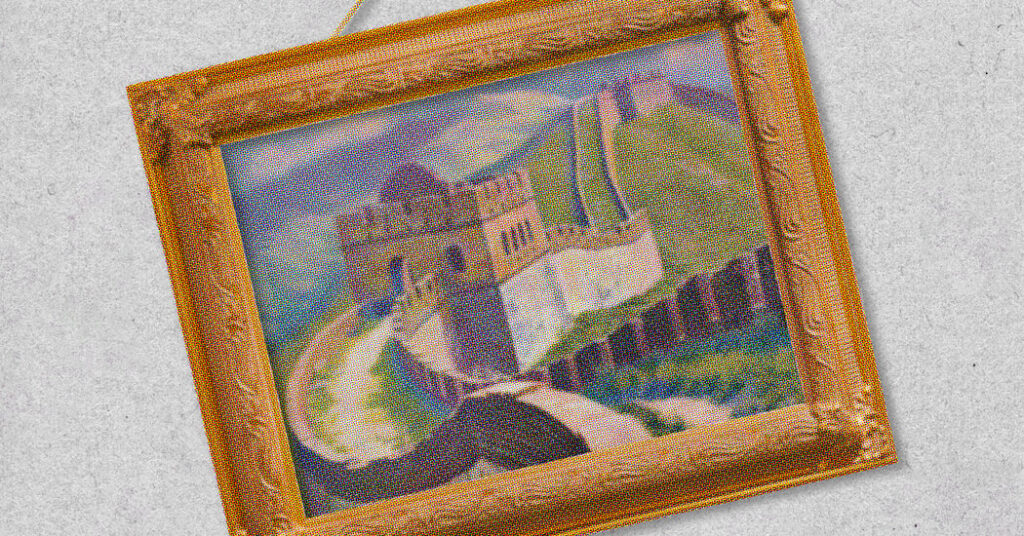
Source photographs by Print Collector/Getty Images; Zoonar GmbH/Alamy.
The Times is committed to publishing a diversity of letters to the editor. We’d like to hear what you think about this or any of our articles. Here are some tips. And here’s our email: [email protected].
Follow the New York Times Opinion section on Facebook, Instagram, TikTok, Bluesky, WhatsApp and Threads.
The post China Is Much Weaker Than It Seems. That’s the Problem. appeared first on New York Times.