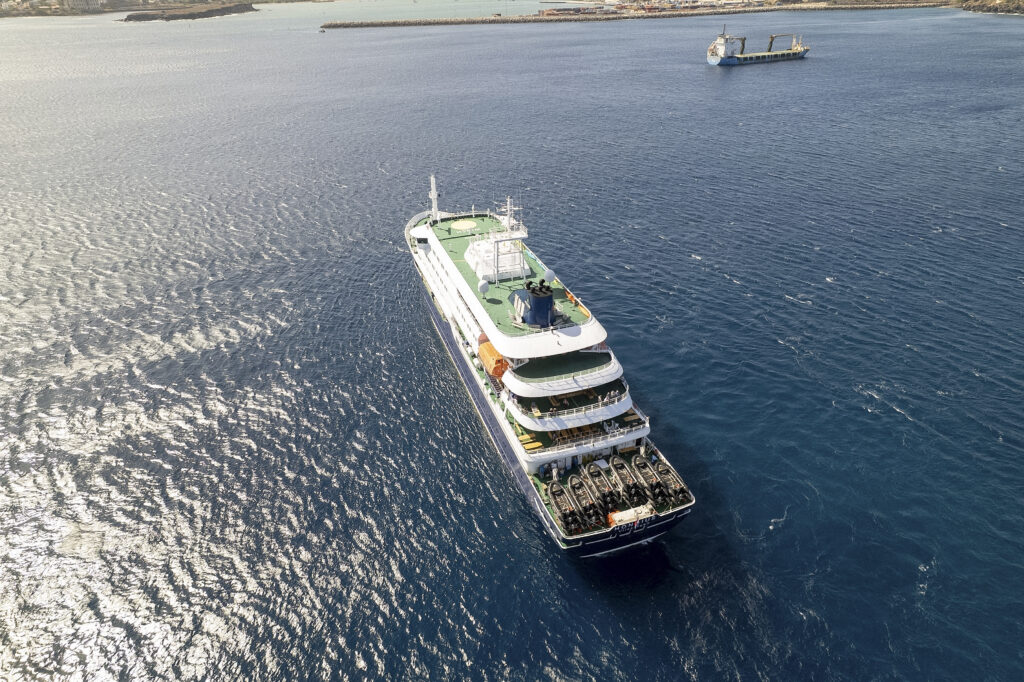
A hantavirus outbreak on an expedition ship in the Atlantic Ocean, which was evacuated in a coordinated global repatriation and monitoring mission, has put a spotlight on the rodent-borne illness.
Passengers, including more than 15 Americans who are in quarantine facilities in Nebraska and Atlanta, have flown back to their home countries and will be monitored over six weeks for symptoms.
More than 140 passengers and crew members were on board the ship, named the Hondius. Three people have died, and a handful of other hantavirus cases have been suspected or confirmed.
Although hantavirus is normally linked to exposure to infected rodents’ urine or feces, in rare cases it can spread between people, as World Health Organization officials believe may have happened in the case of the Hondius. Still, public health officials say the risk to the general public remains very low, as the spread typically requires prolonged contact. Here’s what to know about the disease.
What is hantavirus?
Hantaviruses are a family of viruses that can cause serious illness and death. They are spread mainly by rodents and can cause hantavirus pulmonary syndrome (HPS), which is more common in the Western Hemisphere, and hemorrhagic fever with renal syndrome (HFRS), which is found mostly in Europe and Asia, according to the Centers for Disease Control and Prevention. Both are severe and potentially deadly.
Hantavirus can be contracted by contact with droppings from infected rodents, commonly through inhalation when entering or cleaning unventilated areas. Person-to-person transmission is rare but occurs only with the Andes virus, a type of hantavirus that has been found in Argentina, where the cruise began. The spread is usually limited to close contact with an infected person, including direct physical contact, prolonged time in enclosed spaces or exposure to body fluids.
The WHO has confirmed that the hantavirus responsible for the outbreak on the Hondius is the Andes virus, which can lead to hantavirus pulmonary syndrome.
What happened aboard the ship?
The Hondius, a polar-rated expedition ship, set off from Ushuaia, Argentina, on April 1 for a journey across the South Atlantic, with an itinerary including such remote and ecologically diverse locales as Antarctica, Nightingale Island, Tristan da Cunha, and Ascension Island.
Details released by Oceanwide Expeditions and the WHO show an alarming timeline of events beginning about a week later.
The illnesses began April 6, when a Dutch man developed fever, headache and mild diarrhea. He died April 11 after developing respiratory symptoms, but no microbiological tests were performed, the WHO said. His wife, who was experiencing gastrointestinal symptoms, accompanied his body as it was brought off the ship on St. Helena, a remote island territory in the South Atlantic Ocean. She was flown to a hospital in Johannesburg, where she died April 26. Her case was confirmed as a hantavirus infection on May 4, the WHO said.
Aboard the ship, a British man reported shortness of breath and signs of pneumonia on April 24, and on April 27 he was medically evacuated from the South Atlantic island of Ascension to South Africa, where hantavirus was identified.
On May 2, a third passenger died, a German national with pneumonia-like symptoms. By May 4, the WHO considered the situation a hantavirus outbreak.
On May 10, the ship reached Tenerife in Spain’s Canary Islands, where the remaining passengers disembarked to take noncommercial flights to their home countries. Thirty crew members stayed on board to bring the Hondius back to the Netherlands.
After the repatriation flights, a French national and an American national test positive for hantavirus.
Of the passengers, 19 are British, 17 are American, 13 are Spanish and eight are Dutch. More than half of the crew members are Filipino nationals.
What are the symptoms?
Symptoms typically start to show between one and eight weeks after first contact with the virus.
HPS affects the lungs and can cause fatigue, fever and muscle aches initially, followed by coughing and shortness of breath. Once inhaled, the virus can reach the lungs and infect cells that line tiny blood vessels in the lungs, allowing fluid to enter and making it difficult to breathe, accordingto the American Lung Association.
Thirty-eight percent of people who develop respiratory symptoms die of the disease, according to the CDC.
HFRS is less deadly but still serious. It affects the kidneys and causes headaches, back and abdominal pain, fever, nausea and blurred vision. Later symptoms include low blood pressure, internal bleeding and kidney failure. Fatality rates vary between less than 1 percent and up to 15 percent.
How common is it?
Hantaviruses are found all around the world, but outbreaks are rare. In 1993, a mysterious outbreak of severe respiratory illness originating in the Southwest killed about 30 people. The deaths were the first documented cases in the Americas of hantavirus disease in humans and triggered a public health response that has helped prevent other similarly sized outbreaks to date, The Washington Post reported.
Hantavirus was named as the cause of death for Betsy Arakawa, a pianist and wife of actor Gene Hackman, last year.
There were 890laboratory-confirmed hantavirus cases in the United States between 1993, when the CDC began tracking the illness, and the end of 2023. Globally, there may be as many as 150,000 cases of HFRS each year, according to a review by the American Society for Microbiology.
There are no therapeutic options to treat hantavirus, so early intervention and care is vital, public health officials say.
The best protection against the illness is to avoid contact with rodents and to take care when cleaning their droppings, wearing a well-fitted N95 mask. Health officials also warnagainst vacuuming or sweeping contaminated areas to avoid releasing particles into the air.
What happens now?
More than a dozen Americans who were aboard the ship have arrived back in the United States. Fifteen people are staying at the Nebraska-based National Quarantine Unit, and one passenger who tested positive for the virus while abroad is in the biocontainment unit.
Two other passengers are at a biocontainment unit at Emory University in Atlanta, and one is symptomatic.
The passengers are being monitored for symptoms over a quarantine period of 42 days — though some patients might be escorted in the future to complete monitoring at home, officials said.
“No one who poses a risk to public health is walking out the front door,” said Nebraska Gov. Jim Pillen (R).
Global health authorities have continued to emphasize that this is not the next pandemic.
The post What to know about the hantavirus after deaths amid cruise ship outbreak appeared first on Washington Post.