An American and a French national, who have returned to their respective home countries after being evacuated from the cruise ship hit by a deadly hantavirus outbreak, have both tested positive.
A French woman who was evacuated from the MV Hondius and repatriated to Paris on Sunday tested positive for the virus and her health is deteriorating, French Health Minister Stéphanie Rist said Monday.
The woman was one of five French passengers who left the ship over the weekend and is now in a specialist infectious disease hospital. Per Rist, 22 contact cases have been traced.
The U.S. Department of Health and Human Services (HHS) said Sunday night that one of the 17 passengers being repatriated to the United States had tested “mildly PCR positive for the Andes virus” and another had developed “mild symptoms.”
“As of now, the airlift will transport passengers to the ASPR Regional Emerging Special Pathogen Treatment Center (RESPTC) at the University of Nebraska Medical Center/Nebraska Medicine in Omaha, Nebraska before taking the passenger with mild symptoms to a second RESPTC at its final destination,” read a late-night update from HHS.
Upon arrival at the facilities, “each individual will undergo clinical assessment and receive appropriate care and support based on their condition.”
According to the BBC, a British national who resides in the U.S. was evacuated along with the 17 American passengers.
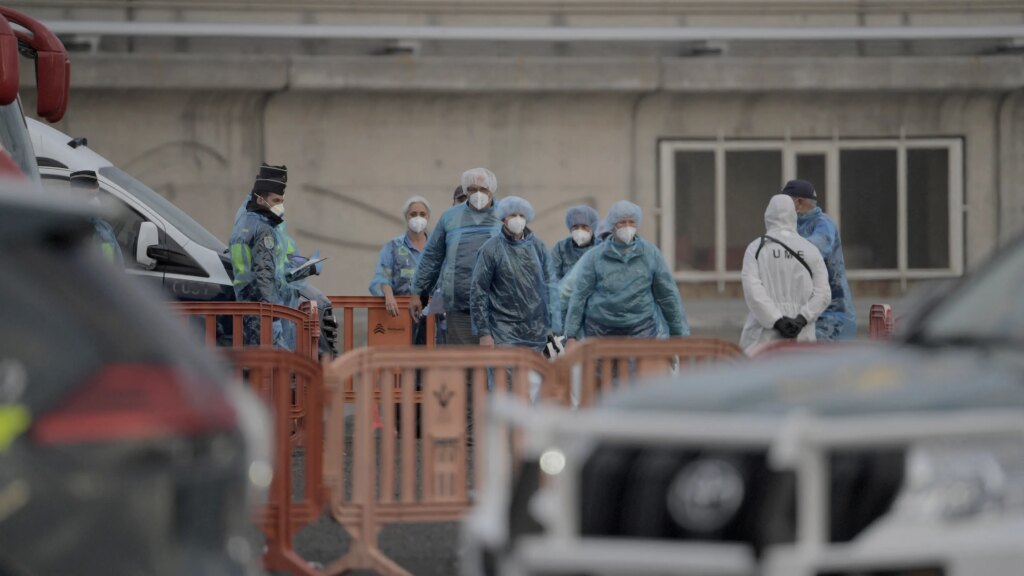
Passengers aboard the MV Hondius began disembarking Sunday after the ship arrived in Spain’s Canary Islands, with personnel in full protective suits and breathing masks pictured escorting passengers.
According to Spain’s Health Ministry, the final repatriation flights are expected to depart Tenerife later Monday for Australia and the Netherlands.
The Dutch-flagged cruise ship is expected to sail to the Netherlands carrying part of the passengers’ luggage for disinfection, as well as the body of one of the three deceased passengers.
Spain’s civil protection agency confirmed Monday that the ship has been refueled and is set to sail at 7 p.m. local time.
A Dutch flight carrying 26 passengers from the MV Hondius landed Sunday evening at Eindhoven Airport. Dutch nationals are expected to be isolated at home for six weeks, while foreign passengers remaining in the Netherlands will be quarantined by municipal health authorities.
20 British nationals arrived back in the U.K. on Monday morning after being evacuated. The U.K. Health Security Agency confirmed Monday that these passengers had arrived at Arrowe Park Hospital and will receive clinical assessments in a period of 72 hours.
The U.K. government also repatriated a Japanese passenger at the request of the Japanese government, and a German national who is a U.K. resident.
Meanwhile, four contact passengers from the cruise ship with German citizenship and residency were taken to a special isolation unit at Frankfurt University Hospital after arriving overnight, according to German health authorities on Monday. None of those passengers have been reported as presenting symptoms thus far.
What is hantavirus—and how is the CDC dealing with the outbreak?
According to the Centers for Disease Control and Prevention (CDC), the rare virus is typically transmitted through contact with infected rodents or their excretions.
The Andes virus is the only type of hantavirus that is known to spread person-to-person. It can be passed through “close and prolonged contact, particularly among household members, intimate partners and people providing medical care,” said WHO director-general Tedros Adhanom Ghebreyesus during a May 7 briefing.
The outbreak aboard the MV Hondius began after the vessel departed Argentina, with two Dutch people and a German national dying onboard.
The WHO has stressed that “this is not coronavirus,” and has advised against travel restrictions while encouraging countries to monitor potential cases and isolate infected individuals.
CDC acting director Jay Bhattacharya has also emphasized that this is “not going to lead to the kind of outbreak” people saw during the COVID pandemic.
“This is not COVID and we don’t want to treat it like COVID. We don’t want to cause a public panic over this. We want to treat it with the hantavirus protocols that were successful in containing outbreaks in the past,” he said Sunday during CNN’s State of the Union.
Bhattacharya confirmed that the CDC will interview the returning U.S. passengers and “assess them for risk.” Further action will be decided upon once assessments are complete.
He also added that the seven U.S. passengers who previously returned home from the cruise ship are being monitored in their home states.
Meanwhile, Ghebreyesus has insisted that the hantavirus outbreak underscores the importance of the WHO in managing international health threats “because viruses don’t care about our policies, viruses don’t care about our borders.”
The United States, under President Donald Trump, and Argentina have both withdrawn from the WHO.
Asked Saturday whether the outbreak would make him reconsider the U.S. withdrawal from the organization, Trump responded: “No, we seem to have things under very good control.”
“They know that virus very well. It’s been around a long time, not easily transferable, unlike covid, but we’ll see,” the President added. “We’re studying it very close. We have very good people studying it very closely.”
The post U.S. and French Nationals Test Positive for Hantavirus After Leaving Cruise Ship appeared first on TIME.