A Malaysian property developer founded six decades ago as a plastics trader is repositioning itself for the artificial intelligence era, leveraging land banks in the Klang Valley and Johor to court data center operators.
Mah Sing, No. 422 on Fortune’s Southeast Asia 500 list, had a blockbuster 2025, reporting decade-high real estate sales of 2.51 billion ringgit ($633 million); the conglomerate also lifted its 2026 revenue guidance to 2.76 billion ringgit ($696.3 million). It also earned 260.1 million ringgit ($66 million) in profit last year, up from 240.8 million ringgit the year before.
Now, the firm is making two bets: Premium residential real estate in Kuala Lumpur’s urban core, and industrial land for data center development.
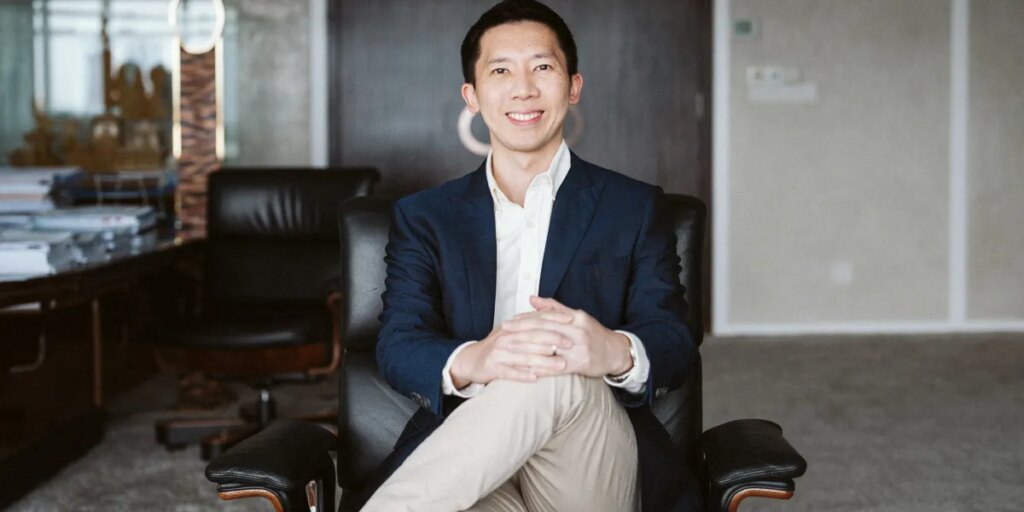
Mah Sing has recently acquired land fewer than 500 meters from Kuala Lumpur’s city center, and hopes to roll out a “premium offering” later this year, Lionel Leong, Mah Sing’s deputy CEO, told Fortune. The move will be a departure from the firm’s M Series properties, based around “affordable luxury” homes priced at 500,000 Malaysian ringgit ($126,000) to target the mass market.
Malaysia, too, had a good year, with the economy growing by 5.2%, ahead of government forecasts. Leong says Malaysia’s success is benefiting local firms like Mah Sing. “The spillovers are quite natural. The current administration is doing a lot to bring in FDI, and the middle class is growing.”
Humble beginnings
Mah Sing was founded in Kuala Lumpur in 1965 by Leong’s father, Tan Sri Leong Hoy Kum. The name derives from the firm’s ambition to expand across both Malaysia (“mah”) and Singapore (“sing”). While the firm began as a plastics company, Mah Sing pivoted hard towards property development in 1994.
Now, property generates more than 80% of Mah Sing’s revenue. “On the margin side, it’s actually a lot better moving into properties,” Leong explains, adding that the new venture has allowed Mah Sing to leverage its entrepreneurial strengths while tapping into Malaysia’s push to urbanize.
When he was young, Leong recalls visiting construction sites alongside his father, who had begun taking an interest in real estate in the 1990s. “He would drive us out far away from town,” he said. “It was very hot, but he’d be on the ground talking to all the technical personnel.” (He eventually joined the firm in 2013, first to oversee the group’s strategic development and operations, and later being appointed as deputy CEO in 2024.)
In recent years, Mah Sing has expanded beyond residential projects into data centers and industrial parks, in a bid to tap Malaysia’s AI boom.
Leong points to a 150-acre site in Southville City, Selangor, which the firm hopes to develop into a large-scale data center hub. “The site has strong fundamentals, including proximity to key infrastructure, access to power, water and dark fiber connectivity, and the potential to tap renewable energy solutions,” he says.
The firm has also identified Johor Bahru as a key growth market, due to its proximity to neighboring Singapore, and increasing levels of cross-border economic activity. Mah Sing has procured a 419.15-acre freehold site within the Johor-Singapore Special Economic Zone, which was formally established last January to allow businesses to set up complementary operations on both sides of the causeway.
In the long run, Leong says Mah Sing’s key strategy is diversification. The firm ventured into the manufacturing of plastic gloves in response to the spike in demand for PPE during the COVID-19 pandemic.
“We’re looking to have a balanced and diversified business,” he concludes. “In the long haul, we want to cushion ourselves from things like market cycles and political uncertainties.”
The post Mah Sing sees natural ‘spillovers’ from Malaysia’s strong growth, as the conglomerate bets on premium residences and data centers appeared first on Fortune.