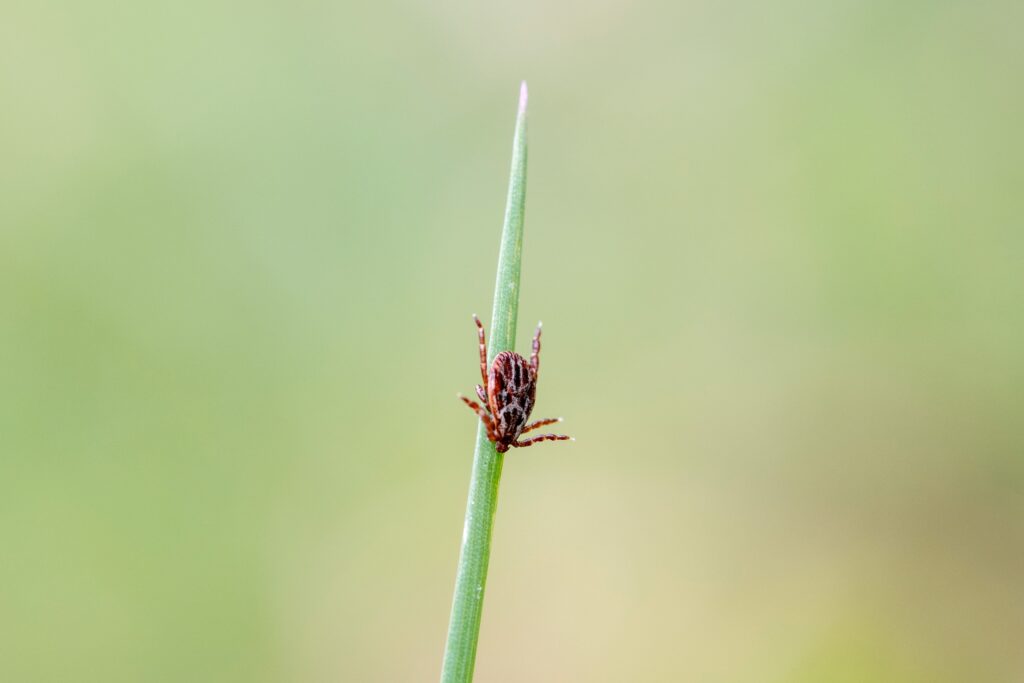
Tick season has arrived, which means that between now and September in the United States, you’re more likely to discover a tick on your skin after spending time outdoors. In fact, emergency room visits for ticks are happening earlier, and hitting higher levels, than they have in the past.
If you do spot a tick on yourself or a loved one, remove it immediately: Ticks can harbor different kinds of bacteria and viruses, and the longer it’s attached, the higher your chances of developing a tick-borne disease.
Lyme disease “is the most common tick-borne disease in the United States, and I think that is generally the first thing that comes to people’s minds, but there are others,” said Jacob Lemieux, an infectious-disease physician in the Multidisciplinary Lyme Disease Program at Massachusetts General Hospital. Your risk for various diseases depends on the specific tick species in your area.
Many tick-borne conditions have similar symptoms, such as a fever, chills or achiness. But there can be additional signs to look out for, and treatment isn’t one-size-fits-all. Because some tick species can carry multiple kinds of pathogens, it’s also possible to contract more than one disease from a single bite.
Here are some of the most common tick-borne diseases in the U.S. to be aware of — including typical symptoms and where you’re likely to encounter them.
Lyme disease
Spread by infected black-legged ticks (a.k.a. deer ticks).
Most common in the Northeast, Mid-Atlantic and Upper Midwest.
Most people have heard of Lyme disease, especially in parts of the country where black-legged ticks infected with Borrelia burgdorferi or Borrelia mayonii bacteria can transmit the disease to humans. There were more than 89,000 reported cases in 2023, but the Centers for Disease Control and Prevention estimates the total number may be closer to 476,000.
Initial Lyme symptoms typically include a fever, headache or fatigue. Around 70 percent develop an erythema migrans rash, often described as a bull’s eye for its resemblance to a target. But a Lyme disease rash can come in different shapes and sizes, said Lemieux. “Sometimes it’s just red, or it can be a dark red or purplish bluish color.” It can also appear as a single circular lesion without additional rings or a ring of red around a lighter center.
If left untreated, Lyme can spread throughout the body, causing additional symptoms days or months later, such as joint swelling and severe pain, dizziness, shortness of breath, heart palpitations, nerve pain, tingling in the hands and feet and facial palsy (droop on one or both sides of the face).
Most cases, though, are successfully resolved with antibiotics. Leading expert groups recommend prophylactic, or preventative, treatment with the antibiotic doxycycline for a tick bite that is considered high risk for Lyme, noted Brian Fallon, director of the Lyme and Tick-Borne Diseases Research Center at Columbia University.
Alpha-gal syndrome
Spread by infected lone star ticks, and occasionally black-legged or western black-legged ticks.
Most common in the South, East and Central U.S. states.
Alpha-gal syndrome, or AGS, is a tick-borne disease, but the symptoms differ greatly from others on this list, noted Lemieux. “[It] presents as an atypical allergic reaction with signs of anaphylaxis several hours after consuming red meat products,” he said.
Alpha-gal is a molecule found in many mammals but not in humans. If a tick bites you and transmits alpha-gal, your immune system could identify it as a threat, causing an allergic reaction when you eat red meat products such as beef, pork and lamb.
A recent review in the Journal of Medical Entomology noted that reported cases have been growing, possibly because of a combination of increased awareness and diagnostics along with the lone star tick’s expanding range into more northern states, due in part to climate change.
Symptoms of AGS vary, but a person might experience hives, nausea, severe stomach pain or diarrhea, dizziness or a more serious anaphylactic reaction. If you start to feel ill several hours after consuming red meat, seek immediate medical care, said Lemieux — and be sure to tell your provider if you were recently bitten by a tick.
There isn’t a cure for AGS, so you may need to stop eating red meat and possibly dairy products to avoid future reactions.
Anaplasmosis
Spread by infected black-legged or western black-legged ticks.
Most common in the Northeastern and Upper Midwestern states.
Though less common than Lyme disease, black-legged ticks in similar parts of the country can also transmit a bacterium called Anaplasma phagocytophilum. An anaplasmosis infection might closely resemble Lyme disease, causing flu-like symptoms such as a fever, headache and chills, said Kristopher Paolino, an infectious-disease physician and assistant professor of medicine at SUNY Upstate University Hospital.
“Many patients can also have some gastrointestinal symptoms with anaplasma, which we don’t always see with a lot of the tick-borne illnesses,” Paolino added.
Because they’re transmitted by the same tick species, coinfections of Lyme and anaplasmosis “happen enough that we worry about it,” said Paolino. Luckily, treatment is the same: A course of the antibiotic doxycycline “treats anaplasma very, very rapidly and very effectively,” he said.
Babesiosis
Spread by infected black-legged ticks.
Most common in the Northeastern and Upper Midwestern states.
Babesiosis differs from many tick-borne diseases in that its pathogen, Babesia, is a parasite. Babesia penetrates red blood cells, explained Peter Krause, a senior research scientist in the epidemiology and public health department at Yale School of Medicine who researches human babesiosis.
Some people with babesiosis don’t have symptoms, while others experience a fever, chills, sweating, headache, fatigue or body aches anywhere from a week after infection to months later. As the parasites continue damaging a person’s red blood cells, they can develop a serious complication called hemolytic anemia, an abnormally low level of blood cells that can cause an increased heart rate and murmur, among other symptoms.
Babesiosis can usually be treated with a combination of antiparasitic medication and antibiotics. But it can be life-threatening for some people, including those who have weakened immune systems, have HIV or AIDS or do not have a spleen.
Ehrlichiosis
Spread by infected lone star and black-legged ticks.
Most common in the Southeastern and South-Central states.
Ehrlichiosis, which is caused by Ehrlichia chaffeensis, E. ewingii or E. muris eauclairensis bacteria, “is very similar in presentation to anaplasma,” said Paolino. An ehrlichiosis infection can initially cause symptoms like a fever, chills, headache and nausea within a week or two of a tick bite. Some people, commonly children, also develop a red, splotchy rash.
This condition can become serious if it’s not treated. Taking the antibiotic doxycycline as soon as symptoms arise helps prevent severe outcomes, including brain damage, uncontrolled bleeding or organ failure.
Ehrlichiosis is reported less often than Lyme disease or anaplasmosis, but there’s evidence cases are rising. National surveillance data collected between 2013 and 2021 noted an increase since 2008, as well as cases in new geographic areas. As with AGS, this may have something to do with the lone star tick’s increasing prevalence in the Northeast, said Paul Auwaerter, a professor of medicine at the Johns Hopkins University School of Medicine and clinical director of the Division of Infectious Diseases.
Rocky Mountain spotted fever
Spread by infected American dog ticks, brown dog ticks or Rocky Mountain wood ticks.
Cases occur throughout the United States.
As its name implies, this tick-borne disease was originally discovered in the Rocky Mountains, but Rocky Mountain spotted fever (RMSF) “really has a predominance in the south, southeast and Mid-Atlantic,” said Auwaerter. The bacterium, Rickettsia rickettsii, can also be found in other parts of the country, including in the Northeast and Pacific Coast.
Like many tick-borne diseases, RMSF may initially start as a fever and headache. Later on, you might develop a rash that’s red and splotchy or has tiny pinpoint dots, called petechiae. Prompt treatment with the antibiotic doxycycline is critical, since RMSF can cause permanent damage to the blood vessels (leading to amputation), brain and hearing if not treated quickly. “It’s currently the most lethal of the tick-borne diseases,” said Auwaerter.
There are other rarer and less severe types of spotted fever you can get from ticks: Rickettsia parkeri rickettsiosis, caused by Rickettsia parkeri bacteria and transmitted by the Gulf coast tick, and Pacific Coast tick fever, caused by Rickettsia rickettsii subspecies californica and transmitted by the Pacific Coast tick. Their symptoms and treatment are similar to RMSF, but the first sign is usually an eschar, a dark scab located at the site of the bite, said Auwaerter.
These diseases may become more common as certain tick species spread. For example, the Gulf coast tick is expanding its range up the East Coast, said Auwaerter. In 2024, a locally acquired report of Rickettsia parkeri rickettsiosis was identified in Connecticut for the first time.
Remember: If you do find a tick on yourself, remove it as soon as possible and consider taking a picture, since this can help your practitioner identify the species and what diseases you might be at risk of contracting, said Neeta Connally, a medical entomologist who oversees the Tickborne Disease Prevention Laboratory at Western Connecticut State University.
Thinking about the many germs ticks can transport can be overwhelming, but the most important takeaway is to be alert to any unusual symptoms after a bite, she added. “Certainly, if you know you were bitten by a tick and start having symptoms and don’t feel well, that’s when you need to see a health care provider.”
The post 6 tick-borne diseases that should be on your radar appeared first on Washington Post.