When I met Celine Halioua, she was sitting with a geriatric corgi-terrier mix named Wiggler in her lap, his eyes lolling under the force of her forehead rub. Around us, white-whiskered hounds meandered near a prop fire hydrant and reclined on shaggy poufs. We were at Muttville, a San Francisco shelter for senior dogs, which had once provided Halioua with a place to swab canine mouths for her company’s proprietary research. She was wearing a gray sweatshirt that declared: “SAVE THE DOGS, SAVE THE WORLD.”
Halioua is the 31-year-old founder and chief executive of Loyal, a biotechnology company that is developing a longevity drug for dogs. In 2023, Loyal began a clinical trial with a new compound that it says can help regulate canine metabolisms. Now, more than 1,300 dogs are consuming a daily pill flavored like beef ramen. If it works, it might become the first F.D.A.-approved drug for life span extension in any species. Since Loyal’s founding in 2019, Halioua has — as of a February funding round — raised more than $250 million off her idea. “More time with the dogs we love,” promises the website, beside a picture of a gray-faced Labrador retriever gazing hopefully upward.
Other companies are busy refining a similar pitch. Loyal is part of a booming pet-longevity marketplace now crowded with pills, powders and nutraceutical biscuits. You can feed your dog a beef-flavored Leap Years supplement that promises “more moments of joy together.” Ship her blood and saliva to Omi Health, which makes the “world’s first pet-longevity test” and features a photo on its Instagram of a lissome model feeding spaghetti to a Goldendoodle with a fork. Sign her up for a $275 pet-longevity strategy session, where a California veterinarian who calls himself the Longevity Vet will suggest a personalized protocol of supplements and off-label prescription medications.
While you’re at it, strap a smart dog collar around her neck to make sure she’s getting her steps in. Jonathan Bensamoun, who co-founded the A.I.-powered pet collar company Fi after he adopted his German shepherd, Thor (named after the exceedingly durable Norse god), said he has seen an acute anxiety in his fellow young dog owners around the aging of their pets. Fi’s collar resembles an Apple Watch that sits in a dog’s scruff and beams the owners insights into their pet’s sleeping, eating, trotting, barking and scratching patterns. Bensamoun heard from one user who said that even after her dog died, she kept the collar and continued to pay the $189 annual membership fee — because when she returned home, her phone synced with the collar and the Fi app pinged her to say, “Luna is with you.”
If you do all this and your dog still dies, cloning is an option. Barbra Streisand, for instance, found the decline of her 14-year-old Coton de Tulear, Samantha, so unbearable that she arranged to clone her upon her death with the help of the Texas company Viagen, which charges $50,000 per dog clone. Or you could try cryopreservation: The Alcor Life Extension Foundation, created to preserve the bodies of recently deceased humans at subfreezing temperatures in the hopes of one day reviving them, now houses the bodies of 124 pets — among them cats, dogs, four chinchillas, a rhesus monkey, a box turtle and a cockatiel. Clients can even arrange to have their terminally ill animals euthanized on site to speed the process. “Pets are in demand, and it is rising,” James Arrowood, Alcor’s chief executive, told me. Arrowood negotiated the cryopreservation of his Labradoodle, Daisy, as a part of his compensation package.
It’s easy to see why so many entrepreneurs have spied an opportunity here. The craze for human wellness and longevity has converged with the American obsession with our pets, which was supercharged by Covid. During the pandemic, people adopted lots of dogs, then poured all their time — and their money — into them. In 2016, we showered $67 billion on our pets. Last year, that number was $157 billion. “It doesn’t really matter how much money somebody makes,” Halioua said. “There is a certain subset of the population that will go into debt for their dogs.” They line up in the comments section of Loyal’s Instagram posts, begging for news about the drug, commanding her: “Take my money.”
Some of the momentum in the dog-longevity industry has been driven by genuinely exciting new science. It has also been driven by the formation of an unlikely coalition. On one side, there are the pet owners who have greeted these treatments with a profound and frantic longing, who just want to hang out with their animals for as many years as they can. On the other side are the biotech chief executives and founders whose deepest aspirations — for the world, and their bottom line — reach far beyond dogs.
Dogs became a darling of longevity researchers two decades ago, when a biologist named Daniel Promislow picked up an issue of Science magazine that caught his eye: On the cover, a Chihuahua and a Great Dane strolled side by side down a sunlit path as if in pleasant conversation. The article pointed to new research showing that a single gene was largely responsible for the variation in size between canine breeds. Promislow, who had studied aging in fruit flies, now found himself thinking of another fact about the Chihuahua and the Great Dane: that the little dogs could live twice as long as the big ones. He wondered if the same gene might be responsible for that, too.
The problem was that he knew nothing about dogs, perhaps less than the average person. At age 6, he’d acquired what he called a “visceral fear” of them when he sustained a head bite that required eight stitches across his scalp. So he enlisted a veterinary scientist named Kate Creevy, who keeps bone-shaped dog tags tied to her stethoscopes, to join him. Veterinary training hospitals had generated a stockpile of data from dogs who died during visits; Promislow and Creevy set out to analyze it.
Then Promislow was recruited to join a colleague, a biologist named Matt Kaeberlein, at a summer program bankrolled by one of Silicon Valley’s earliest anti-aging enthusiasts: Larry Ellison, the now-81-year-old Oracle founder. (Ellison had started distributing hundreds of millions of dollars to life-extension researchers in the late 1990s, before seemingly every tech luminary acquired a longevity side hustle.) Kaeberlein was busy testing an immunosuppressant drug called rapamycin in mice in his own lab, and had seen the drug extend their lives by as much as 30 percent. When he heard about Promislow’s research, he realized he could conceivably slow aging in dogs, too.
Promislow, Creevy and Kaeberlein named their collaboration the Dog Aging Project in 2014, and began dosing dogs with rapamycin. The project has since raised cash from, among others, the Coinbase co-founder Brian Armstrong and the “Outlive” author Peter Attia. Kaeberlein’s aging German shepherd, Dobby, wasn’t eligible for the rapamycin clinical trial, but after an initial safety trial showed no side effects, he began feeding Dobby a rapamycin tablet every week. Then he started taking it himself.
The Dog Aging Project had landed on a deceptively simple new insight. The study of canine longevity is not just about extending the lives of our pets. It also has meaningful applications for us. We keep laboratory animals in cages, but we keep dogs by our sides, in our homes, subjecting them to all the environmental forces that affect the way we age. Dogs develop many of the same age-related diseases we do. And their life span sits in a useful middle ground between most lab animals and humans: long enough to be more physiologically similar to us than fruit flies or mice, but short enough that we can study the full arc of their lives within our own. In 2019, the website Longevity.Technology published an interview with the longevity scientist Steven Austad announcing companion dogs as the new model organism for aging research. “They’re the way of the future,” he said.
The Dog Aging Project planted the idea that dogs might be able to live longer — and that idea soon found a market in the start-up world. Halioua had grown up with rescue dogs and a gang of outside cats and horses in Texas. But it was not a love of animals that led her to canine longevity. She started out as a researcher at Oxford, studying the health economics of gene therapy. By 2019, she had left Oxford to join the Longevity Fund, which was then a venture capital firm investing in biotech companies tackling age-related disease. She was on a camping trip with some autonomous-truck entrepreneurs, and she told them, tipsily, that she knew how to make dogs live longer. After the trip, her comment made its way to an investor exploring the idea of a dog-cloning start-up, who tracked her down and encouraged her to sketch out the idea for what would become Loyal.
None of the previous studies of life extension in simpler organisms were undertaken for the organisms’ sakes. They didn’t spin off into products for people who wanted to keep their pet mice around a little longer. But extending the lives of dogs was a clearly commodifiable idea. Halioua’s appreciation of this gave her “a path toward building a company that could be worth a lot in a relatively short period of time,” she said. The typical pharmaceutical economic model doesn’t apply to longevity drugs because it would take too long to prove they work. A clinical trial started in 40-year-old humans could take 40 or more years to complete. This might appeal to the investor who wants to live in the future, but not to the one who wants to make money now. “Was somebody going to give a 24-year-old a billion dollars to do a shot on goal for longevity?” Halioua asked. “No.”
Instead she came to investors asking for a few million dollars to get some traction in dog longevity — creating a big dog market that teased a vast human market down the line. “That’s a much easier story to tell,” she said. When planning her pitches, she marked which potential investors were dog people, a fact she ascertained through online sleuthing. She speaks of a “dogs first” strategy and believes dogs can prove that aging is “druggable,” a biological process that is modifiable in people, too.
Austad, the longevity scientist, told me he’s interested in canine-longevity drugs, if still a bit wary. He has three senior dogs himself (along with a septuagenarian parrot). When it comes to Loyal, he said, “because I’m a scientist, I’m not going to accept their word for it.” But if the drug does get F.D.A. approval, he said, “I would absolutely use a product like that.”
He’s not sure exactly how remedies proved in animals will translate to human longevity. “From an aging perspective, we’re the LeBron James of mammals,” he said. “We’re the longest-lived mammal that lives on the land.” Researchers in his field have had tremendous success extending the lives of very short-lived organisms, but “the longer they live, the smaller the effect.” Still, as test animals for human-longevity drugs go, dogs may be our greatest hope.
On her right arm, Halioua has a three-part tattoo: a worm, the face of a mouse and the head of a Labrador. “It’s the Loyal thesis,” Halioua explained — the biological path forged by gerontology researchers who have been working to extend the life spans of increasingly complex organisms, starting with a transparent, one-millimeter-long roundworm called C. elegans. I noticed that there was room on Halioua’s arm to ink an additional animal, should the science progress. “There are bets out on whose face it will be,” she said.
After Josh Kadrich read an article about Loyal, he posted to a dog-advice community on Reddit asking for opinions on the risks and benefits of joining an experimental trial. Kadrich was a onetime start-up founder with an interest in technology and human longevity. His dog, Audrey, was 13 years old. “I feel called to do whatever I can to ease her difficulties,” he wrote. Then he decided to go for it.
Kadrich had found Audrey on Facebook. He was 22, in a fight with his first real boyfriend and wine-drunk on his laptop when he saw a post from a friend who had found a puppy wandering down the street. Kadrich took the puppy in as a foster. Soon the boyfriend left, and the dog stayed. She was smaller than a water bowl, with a pink snout and a white streak down the middle of her chocolate fur face — “so prim and proper,” Kadrich said, that he named her Audrey, after Hepburn. Now Kadrich is 36, and Audrey is cloudy-eyed, hard of hearing and white and gray all over. “I’m a gay guy in my 30s. I don’t have kids. This is my baby,” he said. “Of course I want her to live forever.”
So he found a local vet who was enrolling participants in the trial and drove to an office in a strip mall, with Audrey riding shotgun. He sat in the treatment room, Audrey lazing at his feet, with the feeling that his dog and he had a date with the future. Then a young vet tech passed him the pill bottle in a plastic bag with all “the verve of a stool sample exchange,” he said. The whole interaction felt at once heavy and absurd. “On one hand, it’s just another drug trial,” he told me. “But on the other hand, it’s the first drug we’ve ever trialed against inevitability.”
Some of the pet owners I met seemed to care more about their dog’s life span than their own. Ken Friedman, a 70-year-old retiree whose senior dog, Riley, is enrolled in the Dog Aging Project’s rapamycin trial, told me he’s mainly interested in living longer himself because he worries he’ll die before Riley, leaving her without him. Promislow, meanwhile, was characteristically pragmatic: “The benefit of these dogs being short-lived is that we can learn our lessons more quickly,” he told me. As I sat with Halioua on a weiner-dog-shaped bench during our Muttville visit, she reflected on the desperate emails from dog owners that regularly flood her inbox. “They’re like: My dog is old. He means everything to me. He’s not going to make it,” she said. They attach pictures and beg her for her drug. “People get really mad. And I feel terrible, honestly,” she said.
I’d entered the world of pet longevity feeling wary of the chasm between the owners who see prolonging a dog’s life as their great, lasting hope and the founders and scientists who view dogs as a step on the way to extending human lives. I’d wondered how wide the gap was between what people like Kadrich wanted and what people like Halioua could give them. But the further in I got, the more their coalition seemed inevitable. Our need to project our humanity onto a guileless, furry companion came to feel as deep and urgent, in some ways, as our need to maintain the fantasy that we can delay, even evade, our own deaths.
The promise of life extension for dogs arrives after a decades-long decline in organized religion that left a void waiting to be filled by the spiritual and the techno-futurist. It has come amid steep declines in childbearing that have left more adults without offspring on whom to focus their care, attention and identity. The pandemic that helped propel so many dog-longevity start-ups might feel distant now, but its isolation and stress, and the warped feeling it gave many Americans of having defied death, have persisted. Our efforts to delay our mortality arrive in a new form each day, as a fresh wellness protocol, a mail-order potion, an A.I. dog collar.
So, for many pet owners, hope lingers stubbornly that these drugs might delay the inevitable, and the hope itself justifies the gamble. “I think we knew each other in a past life,” said Erica Reese, a dating coach whose 13-year-old mutt, Nalu, is enrolled in Loyal’s study. Half the dogs in the trial are taking placebos, half the real thing, and the owners don’t know which one they’re feeding their dogs. So Reese has been watching Nalu closely, looking for signs that he’s on the actual drug and that it’s working. She has noticed changes in his attitude; he seems more relaxed somehow. “I feel like he’s on it,” she said. “I do.”
Brennen McKenzie, Loyal’s chief veterinarian, told me that veterinarians and owners in previous dog studies have reported improvement even with a placebo. Whether or not their dog is receiving a life-extension drug, some owners just find that their dog seems more youthful. And anecdotally, owners in the Loyal trial often “feel like Fluffy is jumping on the bed again,” Halioua said. “They feel like Fluffy is more excited and goes on longer walks. Is it real? Is it a placebo? We don’t know.” There’s a certain poignancy in the fact that if Loyal’s drug does work, its effects might seem modest. Halioua said she would consider it a success if they could extend the canine life span by a single year. For the dog owners in the trial, even that would be worth it.
In the end, Kadrich did not feed Audrey the Loyal pills. Her regular veterinarian discovered a tumor growing between the muscle and bone of her hip, and he warned against starting any new medications while they treated the mass. Kadrich and his partner cleared out their savings to pay for Audrey’s leg surgery, which was successful. But he’s still open to other experimental treatments down the line. Even as he’s come to feel ambivalent about the human-longevity space, with its frenzy of podcasters and influencers, he would try just about anything for Audrey. “I can’t bear that her little light will be extinguished,” he said. “I just want to keep the light on as long as possible.”
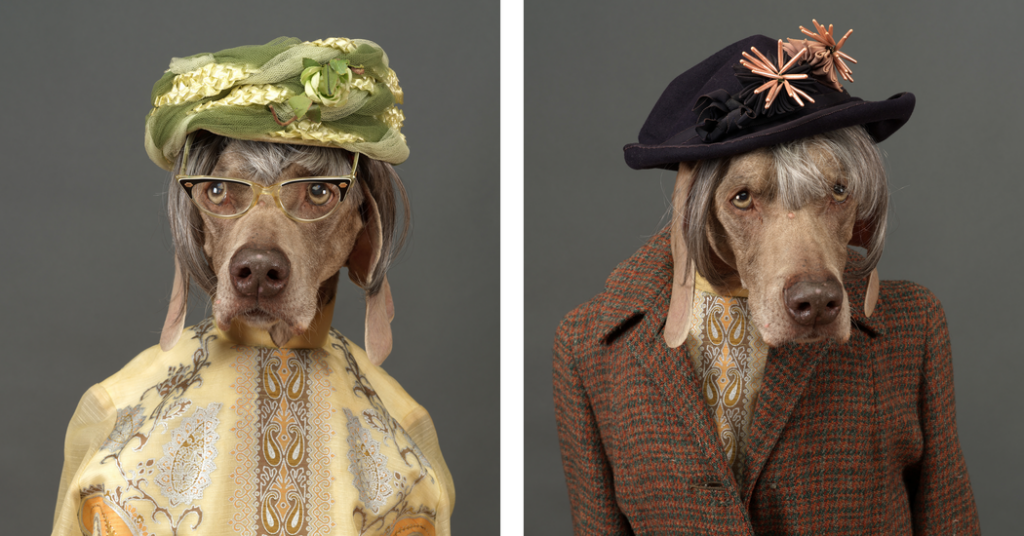
William Wegman is an artist and author whose most recent publication is “William Wegman: Writing by Artist.” He has been collaborating with his Weimaraners since the 1970s, beginning with his dog Man Ray, who died in 1982.
The post What if You Could Give Your Dog a Longer Life? appeared first on New York Times.