Peyton Vanest was fuming about President Donald Trump when he grabbed his phone and hit record. “Somebody should,” he declared, pausing for dramatic effect. “Somebody should, you know?”
“If somebody knew what needed to be done, that person should probably just do it …” the 27-year-old progressive influencer continued, conspicuously not defining “it.”
Then he uploaded the 62-second video to TikTok, where it accumulated more than 700,000 likes and 3.2 million views. His version on Instagram garnered another 1.4 million views.
“Crazy how we all know exactly what you’re talking about,” one of thousands of commenters replied.
Vanest’s vague plea — posted 18 days before the third apparent attempt on Trump’s life in less than two years — is part of a social media trend that has twisted the idea of a presidential assassination into a morbid joke. Once an unseemly feature of the web’s fringes, deliberately ambiguous chatter about political violence has spread on mainstream platforms over the past year — most often in reference to Trump and Elon Musk, according to a new report from Know Your Meme, which tracks the rise of viral posts. “Somebody should do it” and its online variants, the authors wrote, is wink-nudge shorthand for suggesting that somebody kill a powerful person.
One of the earliest cases to go viral was a TikTok video from a Brooklyn comedian nebulously talking about “all the Elon, Trump stuff.” Someone should “throw their life away,” he said in the February 2025 post, and “take one for the team.” The conservative Libs of TikTok reposted the clip. So did Musk, helping it rack up 48 million views. “Everybody dies, but not everybody lives,” the tech titan jabbed back on X. (The comedian declined to comment.)
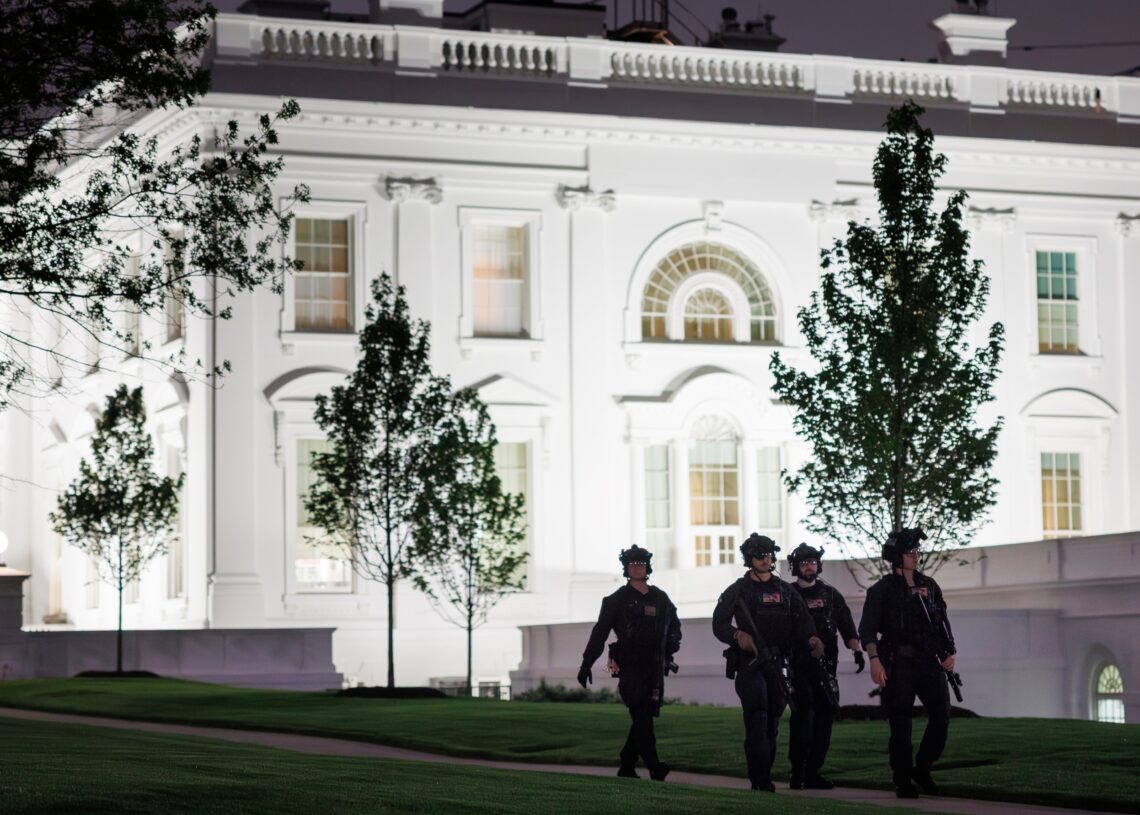
Know Your Meme found that interest in the “Somebody should do it” trend spiked after an armed man’s thwarted attack last month at the White House correspondents’ dinner in Washington, where Trump was scheduled to speak.
Researchers who study how violence multiplies told The Washington Post they are concerned about the posts’ reach and impact. Tim Weninger, an associate professor at the University of Notre Dame who studies how social media is wielded to dehumanize enemies, first encountered the trend last fall when a teenage family member happened to scroll upon it. This week, he said, he asked a few students on campus whether they’d seen “Somebody should do it” appeals, too. Every single one, he said, knew what that meant.
“I’ve never seen it quite like this,” Weninger said of America’s seeming comfort level with murder gibes. “People are in a dark place.”
Normalization of formerly taboo rhetoric — from both ends of the political spectrum — can sound like encouragement, he said, to somebody in the grip of a mental health crisis.
The Post interviewed six people who described a range of complex and sometimes contradictory reasons for posting their own spin on “Somebody should do it.”
Most characterized their posts as a way to vent rage against an administration they say is committing actual violence against its citizens. Most say they weren’t appealing for Trump’s assassination. Some said killing the president would actually make the world worse; they didn’t want him glorified as a martyr. One woman, though, acknowledged that she did hope somebody would kill Trump.
“Anyone who engages in or endorses political violence or assassination culture must be condemned in the harshest terms possible,” said White House spokesman Davis Ingle. “They should also immediately seek psychiatric help to treat their severe and debilitating case of Trump Derangement Syndrome that has warped their brains and made them sick in the head.”
Vanest, whose April 7 video was among the meme format’s most widely viewed, insists that he was not advocating violence against the president or anyone else. He didn’t think people watching his video would assume that, either. Nobody has contacted him to say he inspired them to plot an assassination, he said. But what if someone does say they want to act on his message?
“I wouldn’t report them,” Vanest said — not immediately — “because I wouldn’t believe that they meant it.”
He would offer to hop on the phone with them first, Vanest said, and steer them toward a calmer headspace.
Meme culture used to be sillier, said Don Caldwell, editor in chief of Know Your Meme. Consider Howard Dean’s oft-remixed viral scream.
By 2015, however, political discourse took a darker turn, Caldwell said, when people began circulating images of Hillary Clinton and Bernie Sanders getting tossed out of aircraft. That trend came to be dubbed “free helicopter rides,” a nod to Chilean dictator Augusto Pinochet’s preferred means of disappearing his political enemies.
U.S. elected officials have waded as well into the digital muck. Then–Rep. Paul A. Gosar (R-Arizona) was censured for posting an animated video in November 2021 that depicted him appearing to kill Rep. Alexandria Ocasio-Cortez (D-New York) and swinging two swords at Joe Biden. (“Everyone needs to relax,” Gosar’s then-digital director, Jessica Lycos, said at the time in a statement defending the post.) Trump shared a video in March 2024 that featured an illustration of then-President Joe Biden with his hands and feet tied. (“That picture was on the back of a pickup truck that was traveling down the highway,” Steven Cheung, now a White House spokesman, told The Post back then, adding that Democrats and “crazed lunatics” have called for “despicable violence” against Trump.)
Some on the left said they felt compelled to fight rhetorical fire with rhetorical fire.
The Ghost, a 37-year-old vlogger in Virginia whose political views fall “between communism and socialism,” said his post was a response to the Trump administration’s combative tone. (He spoke on the condition that he be identified only by the name he uses on social media, saying he worried about his safety.)
“The opposition is so loud and shocking,” he said, “that you almost have to match it to be heard.”
Grace, a 26-year-old university employee in Louisiana, said it felt like writing in her diary when she logged onto X and typed “somebody should do it” to her few hundred followers.
Trump’s policies, she said, are brutal to people she loves, particularly immigrants. Her words, she said, were her little swipe at a man she believes is evil. (She spoke on the condition that only her middle name be used because she feared legal repercussions.)
“I don’t have a violent bone in my body,” she said. “I’d never do it myself.”
But Grace would be happy, she said, if someone happened to kill Trump.
“Literally,” she said.
This kind of social permission worries violence experts who traced how the infamous mass shooting at Columbine High School in 1999 inspired dozens of similar school attacks.
“Oftentimes, there’s kind of a seminal case,” said Jillian Peterson, a forensic psychologist and co-founder of the Violence Prevention Project. “One that gets just tons of attention and attraction. That starts the contagion.”
But the fans of the two Columbine shooters are largely relegated to the internet’s fringes that tolerate their taboo obsessions.
“That’s a very, very tiny group,” Peterson said, contrasting those anonymous outsiders with the myriad people publicly embracing Luigi Mangione, the 28-year-old charged with murdering the chief executive of UnitedHealthcare on a New York sidewalk; celebrating the killing of right-wing political influencer Charlie Kirk; or sharing memes that flick at assassinating the president. (Mangione has pleaded not guilty to all charges he faces.)
“This is different, because it feels like we have a big sector of society agreeing at some level with the feeling, the emotion, where it’s coming from,” she said. “It’s a scary reaction.”
Any debate about the normalizing of violent political rhetoric can’t ignore Trump’s role in spreading it, said Jeffrey A. Engel, founding director of the Center for Presidential History at Southern Methodist University.
The head of state, he said, “traditionally sets the tone for civility and morality in a nation.”
Over the past decade, in addition to broadcasting the bound Biden illustration, Trump has repeatedly urged his supporters to beat protesters, called opponents “traitors” and “vermin,” amplified a call to “HANG” Democrats, and described lawmakers’ behavior as “SEDITIOUS” and “punishable by DEATH!”
Although the Supreme Court has set a high bar for what constitutes unlawful language under its interpretation of the First Amendment, that has not prevented Trump officials from filing criminal cases against the president’s critics for alleged threats. Former FBI director James B. Comey, a frequent Trump critic whom the president has targeted for his role in investigating Russian interference in the 2016 election, was indicted last month for posting on Instagram a photo of seashells arranged in the numbers “86 47.” That was the Trump administration’s second attempt to prosecute Comey; an indictment that alleged he had lied to Congress was dismissed by a judge who said the prosecutor was unlawfully appointed.
“‘86’ is a mob term for ‘kill him,’” Trump wrote on social media. “‘86 47’ means ‘kill President Trump.’” (Eighty-six, as Merriam-Webster explains it, is restaurant industry slang that means “to throw out,” “to get rid of” or “to refuse service to.”) Comey has said he thought the seashells broadcast a political message, not a call to bloodshed, and deleted the image once he noticed some followers were reading it that way.
Mark, a 43-year-old who works with nonprofits, knew what he was doing when he combined Vanest’s clip with his own commentary and posted it to TikTok. He knew that he’d be accused of pushing for violence. That, as a father of three young daughters, he might be called irresponsible or, as a supporter of gun control, hypocritical. That he could lose his job. That if a troubled stranger acted on his message, he’d live with that burden forever.
But none of it changed his mind.
“If you do it, I’ll chip in the first $50 on the GoFundMe, okay?” he said into the camera, explaining that he suspected many other people would do the same. (Mark spoke on the condition his last name not be used because he fears retaliation.) “For what, ya know, I don’t think anybody really knows yet. It’s hard to tell what it’s going to be for. But yeah, just know that.”
He added hashtags: “#america,” “#fdt” (for “f— Donald Trump”) and “#whenithappens.”
Mark wouldn’t have embraced the “Somebody should do it” meme during the president’s first term, he said, but that was back when he believed Trump’s election was a mistake the country would one day permanently correct at the ballot box. He’s since abandoned that belief and, like many other liberals, anticipates that Trump will resist leaving office at the end of his second term.
“Are you advocating that someone should take a gun and shoot this person in the head? ‘No’ is the answer to that question,” Mark said. “But at the same time, we’re going to joke about this, and we’re going to say this stuff, because we’re all feeling the most desperate and desolate that we ever have.”
Razzan Nakhlawi contributed to this report.
The post They’re not saying someone should kill Trump. But they’re coming close. appeared first on Washington Post.