1 p]:text-cms-story-body-color-text clearfix”>
In the fragmented mysteries of the great Argentine filmmaker Lucretia Martel, her explorations always start with sensory flashes: faces, spaces, objects, sounds in transfixing procession. The language is its own, resulting in disorienting but undiluted depictions of the worlds of modern elites (“La Ciénega,” “The Headless Woman”) and 18th century colonists (“Zama”) alike.
But now, with her first feature documentary, “Our Land (Nuestra Tierra),” Martel unravels a political crime and the larger offenses behind it with a vital clarity. The film is centered on the 2009 murder of Javier Chocobar, an Indigenous Chuchagasta man from Argentina’s northwestern Tucumán province, who was shot while defending his ancestral homeland from a thuggish incursion. The weight of the issue at hand — stolen land, territorial rights and the overdue recognition of a colonized country’s original peoples — brings out a tantalizing lucidity from the typically elusive Martel on a serious subject that requires discipline.
In one sense, she’s dealing with a rights issue too painful to be aggressively aestheticized, but she’s also exploring a blood-soaked injustice that can’t be treated conventionally. She begins, in fact, with rolling satellite images from space — as if to say: This appropriation of nature is the world’s problem, not just Argentina’s.
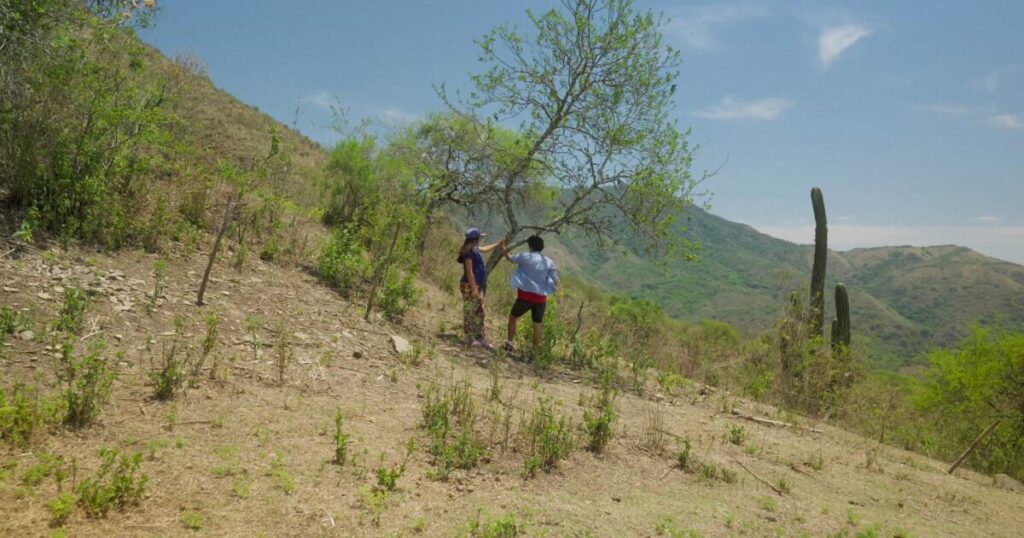
What follows, toggling between a courtroom and vast, contested land (filmed with dreamlike urgency by cinematographer Ernest de Carvalho), is a righteous, visually arresting swirl of fact and feeling, past and present. It’s also anchored by the stories of a community desperate to claim territory they’ve cultivated for centuries. “Our Land” is as honorable a documentary as you’re likely to encounter this year about what fighting looks like in today’s era of grab-what-you-can thievery.
First, we hear from the defendants, captured by Martel’s cameras at their 2018 trial in Buenos Aires (an unconscionable nine years after the shooting). The three accused men — a businessman and two ex-cops — flounder at positioning themselves as the true victims when their own handheld video of the incident shows otherwise: The confrontation with the Chuchagastas only escalated because they brought a gun. Their lawyers obnoxiously push a narrative of ownership versus trespassers, backed by reams of documents and tossed-around historical dates.
But as Martel patiently unfolds the Chuchagastas’ perspective — personal narratives that come to life in intimate photos, atmospheric sound design and warm home footage — we begin to understand that documents and files are a bogus battleground given their hundreds of years of careful tending. One community member distrusts dialogue to begin with, calling it a means to “give up something.”
“Our Land” is the work of a director whose attention is rigorous, whose care is genuine, but who is also conscious of her outsider’s perspective. It’s an ally’s respect. There’s no better proof of that than in her drone shots of this embattled community’s sun-soaked valley: elegant, purposeful, even awkward (a bird hits one) visitations from the air. They’re a reminder that she’s the filmmaker, surveying a story that belongs to others. Documentaries don’t get much more honest than that.
The post For her first documentary, ‘Our Land,’ Argentina’s Lucrecia Martel chases down a murder appeared first on Los Angeles Times.