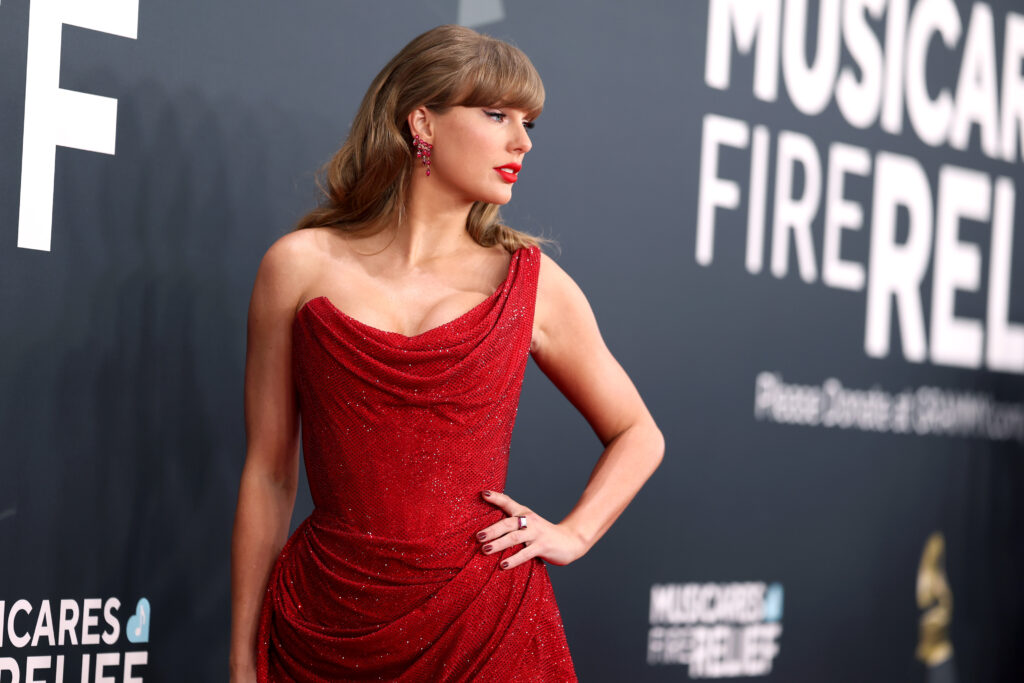
When Taylor Swift filed three trademark applications with the U.S. Patent & Trademark Office last month, some legal experts thought she was trying to protect herself from misuse involving artificial intelligence.
It’s a theory with some credibility. In recent years, Matthew McConaughey has registered trademarks with videos, audio files and images of him talking, smiling and acting in the film “Dazed and Confused.” His lawyers described the registrations as a maneuver to halt AI software companies or users from imitating McConaughey’s likeness or voice without his permission. But it remains an open question whether the trademark registrations will hold up in court.
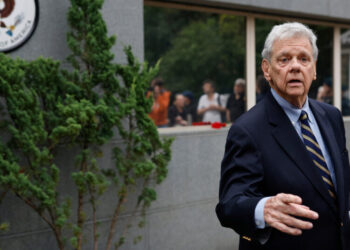
“When I saw that Taylor Swift did it, it was very vindicating,” said Jonathan Pollack, an attorney for McConaughey. “When you do these things, you worry that everyone else on the planet is going to look and be like, ‘Look what this moron did.’ But at least there are other morons out there.”
A few years ago, McConaughey raised the question with his lawyers of what protections he had when it came to AI, so Pollack looked at potential guardrails for who gets to use the actor’s likeness and voice. There are a patchwork of laws in place, including state-level right of publicity legislation and national false endorsement laws, but Pollack believes the threat of a federal lawsuit through trademark law could act as a deterrent. It’s a “round peg in a square hole,” he said.
Various public figures have seen AI videos, images and audio that falsely represent them across the internet. Pornographic deepfake images of Swift have circulated online, while a video that saw an AI Swift endorsing President Donald Trump’s 2024 campaign was reposted by the then-candidate. That same year, Scarlett Johansson asked OpenAI to stop using a voice for an AI assistant named Sky, which she described as sounding “eerily similar to mine” in a statement at the time. (The Washington Post has a content partnership with OpenAI.) Tom Hanks had to warn his Instagram followers about an AI rendition of him promoting a dental plan the year before. On Monday, Los Angeles mayoral candidate Spencer Pratt reposted a video that featured AI-generated versions of Hugh Jackman, several California politicians and others.
The lawyers The Post spoke with for this article said that more celebrities might follow McConaughey and Swift in registering trademarks of their likenesses. If they’re using their likenesses or voices in a commercial context — a requirement to claim a trademark — these registrations could act as a safeguard. Pollack said a lot of his clients have asked about filing trademarks as a protection in the AI age.
“McConaughey and Swift registered sound clips, which is not entirely novel,” said Jennifer Rothman, a law professor at the University of Pennsylvania. “That will probably cause more of a trend of people who are actors and singers using those voice clips to claim that their voice itself is a mark.”
Other public figures have attempted to use trademark law to protect their identity in the past. Michael Jordan sued two supermarket chains for trademark infringement, among other causes of action, after they used his name and jersey number in advertisements. A 2003 court case involving a painting of Tiger Woods found that a person’s image or likeness can’t act as a trademark unless the image is consistently used. Pop musicians beyond Swift, such as Lizzo and DJ Khaled, have trademarked song lyrics, while “self marks” have been registered for Beyoncé and Dwyane Johnson using their names in various commercial endeavors.
Not everyone thinks these recent trademarks will be an effective tool: Robert Brauneis, a law professor at George Washington University who focuses on intellectual property, said they seem designed to publicize the fact that McConaughey and Swift are willing to take someone to court for using their likeness. And so a registered trademark might make someone think twice about building a fake Swift or McConaughey. “Having a registration certificate, with a number that you can refer to — it’ll sometimes impress people,” Brauneis said. “Sometimes that’s all you need, right?”
He added that there are laws on the books to help in potential situations of AI misuse: State-level right of publicity laws could be used if, for example, someone had an AI software replication of McConaughey’s voice reading an audiobook, while fraud laws could help if a celebrity’s likeness was being used for financial gain. Rothman emphasized that, through unregistered trademark protections, Swift and McConaughey could also claim a mark if they can prove that their likenesses are part of their goods and services.
For McConaughey, the trademarks aren’t about being anti-AI. He’s invested in the AI voice company ElevenLabs, which produces a Spanish-language version of his newsletter, and told the Wall Street Journal that he wants to make sure any AI-generated content involving him comes with his permission. A representative for Swift didn’t respond to a request for comment, nor did Rebecca Liebowitz, who is listed as the attorney on the registrations. It remains unclear whether Swift’s filings are a reaction to potential AI misuse.
There’s the potential that federal law will make such maneuvers unnecessary. McConaughey’s lawyers pushed for some form of legislation to address the issue, while SAG-AFTRA, his union, called for the passage of the No FAKES Act, which is designed to protect an individual’s voice and likeness from unauthorized computer-generated content. The bill was introduced in Congress in 2024 but hasn’t been voted on.
“Individuals need control in a world awash with digital clones,” SAG-AFTRA wrote in a statement shared with The Post, “but that control cannot harm the freedom of expression our industry relies upon to entertain and inform the world.”
If registering trademarks can potentially help celebrities fight AI misuse, there’s little chance they will be handy for everyday people worried about AI deepfakes based on them. Pollack expressed skepticism that any nonpublic figure would need to file a trademark for protection against AI misuse, considering that a trademark is designed to protect commercial use.
“Unless you’re using your likeness in your goods or services, you may not successfully register a mark,” Rothman said. “Or you may not be able to enforce the mark if people don’t recognize that that’s something you’re using in selling products or services.”
After all, the trademarks that McConaughey and Swift have registered remain theoretical until they land in front of a judge.
“I wouldn’t say this is grasping at straws because then that’s belittling what we’ve done,” Pollack added. “But I think this is the best we can do right now.”
The post Celebrities are filing trademarks to combat AI clones. Should you? appeared first on Washington Post.