Dr. Andrea Tufano-Sugarman is the first to admit she didn’t always live the way she does now. In medical school and residency, she ate poorly, slept badly, and didn’t prioritize exercise. It was only once she started practicing as an oncologist—and the data on cancer prevention started to land differently—that she began rebuilding her habits from the ground up. Her advice now, she warns up front, isn’t going to surprise anyone. “Everything I do is quite boring and quite routine,” says Tufano-Sugarman, a gynecologic medical oncologist at Memorial Sloan Kettering Cancer Center in New York.
That, essentially, was the party line when we asked four oncologists what they do in their own lives to try to prevent cancer. They prioritize fundamentals—sleep, fiber, movement, regular screenings—not always perfectly, but consistently.
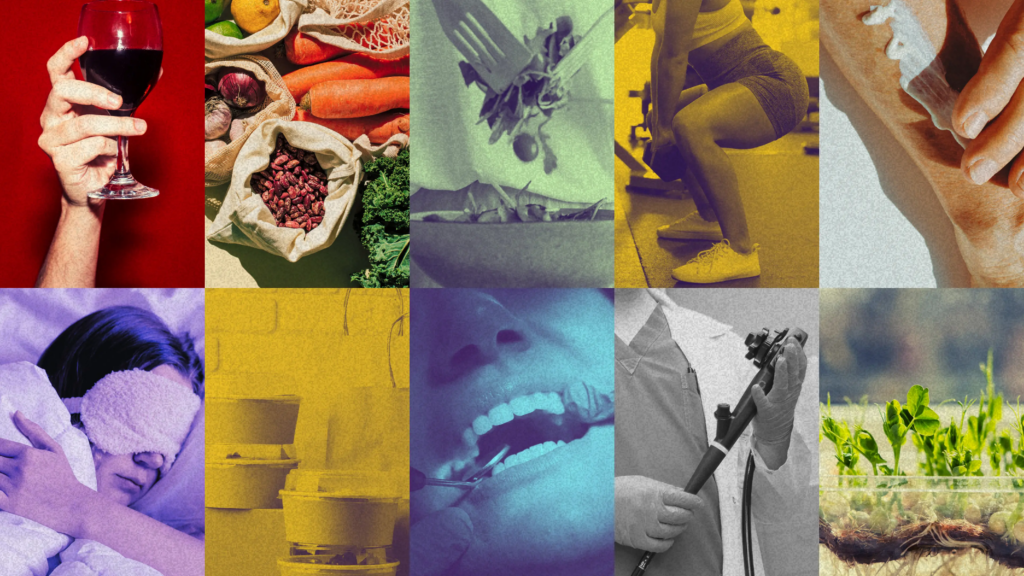
Here are 10 daily habits oncologists swear by.
They don’t drink alcohol
Two years ago, Tufano-Sugarman went from minimizing her alcohol intake to cutting it out completely. The reason, she says, was simple: The science kept pointing in one direction. “We really don’t know if there’s any safe amount, and it’s linked to increased rates of multiple cancers,” she says. “It’s just easier for me to avoid it completely.”
Her decision reflects a broader shift in how alcohol is understood. In recent years, research has increasingly linked even low levels of drinking to higher risks of several cancers, including breast and colorectal cancer. For Tufano-Sugarman, that makes the calculus clear: It’s easier not to drink than to keep wondering how much is too much.
They eat plant-forward—and aim for serious fiber
Diets high in fruits, vegetables, and whole grains have been linked to lower rates of several cancers—and oncologists’ eating habits reflect that research. Dr. Andre Goy, chairman and chief physician officer at John Theurer Cancer Center at the Hackensack University Medical Center in New Jersey, makes 70% to 80% of his meals plant-based during the week. On weekends, he shifts toward a Mediterranean eating style. He also puts his patients on a plant-based diet—and says no one complains about taste. “Out of all the patients, including famous chefs from New York, there’s not one person who didn’t tell me they felt better in a few weeks,” he says.
Tufano-Sugarman is specific about a single number: She aims for 30 grams of fiber a day, in part because of the nutrient’s role in supporting the gut microbiome, the composition of which is linked to inflammation and cancer risk. Most Americans don’t come close. “Just eating an apple a day isn’t enough,” she says. “An apple is 4 or 5 grams, and that’s only if you eat the skin.” Her go-to sources are smoothies with chia seeds, popcorn (”a wonderful whole grain”), legumes like chickpeas and beans, brown rice, and lots of fruits and vegetables.
They cook at home
Many oncologists try to limit processed and ultra-processed foods, which have been linked to increased risk of several cancers. “I never eat processed food,” Goy says. One of the simplest ways to do that is cooking at home.
“You’re making the dish yourself, so you know how much salt, sugar, and butter you’re adding,” says Dr. Michael Dominello, a radiation oncologist at Karmanos Cancer Institute in Detroit. Restaurants, he notes, tend to use more of those ingredients—and are less likely to use organic produce unless they explicitly say so, “because that hurts the bottom line.”
When he can, Dominello opts for organic versions of produce that tend to carry higher pesticide levels. “Strawberries and blueberries tend to accumulate a lot,” he says, “so when you can do organic, that’s better.”
They skip takeout—and wait to box up leftovers
Many of the everyday plastics people use to eat and store food can leach chemicals when they’re heated. Some of those chemicals are endocrine disruptors—compounds that interfere with the body’s hormone systems and have been linked to a range of health concerns, including certain cancers. That’s reason enough for Dr. Nikki Wood, a pediatric hematologist/oncologist at Children’s Mercy Kansas City, to rethink takeout entirely. When the rest of her family orders takeout, she sometimes opts out and eats home-cooked leftovers instead. “I truly have an aversion to carryout,” she says.
Wood applies a similar logic at restaurants. Rather than asking for a to-go box as soon as she’s done eating, she lingers over the meal until it cools. “I’ll wait until the food is closer to room temperature before I’ll box it up,” she says. That way, it’s not sitting hot in plastic.
They aim for 7 to 9 hours of sleep
Tufano-Sugarman is realistic about sleep—“It’s not going to be perfect every night,” she says—but typically aims for 7 to 9 hours. The reason isn’t just about feeling rested. “We know that poor sleep drives insulin resistance and causes appetite dysregulation,” she says. “So for me, getting enough sleep maintains my energy levels and helps with keeping a healthy BMI. It’s very important.”
They prioritize strength training—especially squats
Strength training is a core part of many oncologists’ routines. Dominello says its benefits transcend aesthetic ones: It triggers hormonal and metabolic changes that affect everything from mood to long-term health.
He recommends lifting weights at least two times a week (ideally three) and says squats are one of the most efficient movements. “You’re exercising one of your largest muscle groups,” he says. “There’s a lot of bang for your buck.”
Strength training becomes even more important for women as they get older, Wood stresses. On days when she can’t make it to the gym, she adds shorter bouts of movement into her work day. “I try to incorporate lunges and air squats and maybe some pushups, just to have those little spurts of getting my heart rate up,” she says.
They wear sunscreen every day and get a full-body skin check every year
Tufano-Sugarman wears sunscreen daily, regardless of the season or weather. She also gets an annual full-body skin check from a dermatologist—even though, she notes, it isn’t part of standard recommendations. She does it anyway because the skillful eye of a dermatologist catches things a self-exam won’t. “These dermatologists are trained to do very comprehensive exams,” she says. “Usually, they can only do a certain amount per day because their eyes get fatigued.” That kind of attention to detail, she adds, is “absolutely worth it.”
They go to the dentist at least twice a year—for cancer reasons
Most people associate dental visits with cavities and gum disease. Dominello goes twice a year with something else in mind: his long-term health.
Poor dental health and periodontal disease have long been linked to cardiovascular disease, he says, likely driven by bacteria that move from the gums into the bloodstream, triggering inflammation in blood vessels.
There’s also an emerging—though less established—link with certain cancers. Scientists think chronic inflammation and changes in the oral microbiome may play a role, but the relationship isn’t yet fully understood. “We know there’s an association,” Dominello says, “but causation we cannot prove.” Still, it’s enough to keep him on schedule.
They don’t ignore early colon-cancer warning signs
Colon cancer in younger adults has become “an epidemic,” Tufano-Sugarman says. Researchers don’t fully understand why—though diet is a leading suspect.
Her message is simple: For adults of any age, rectal bleeding or a prolonged change in bowel habits are good reasons to see a specialist, who may recommend a colonoscopy. “Best-case scenario, everything’s fine,” she says. “They’ll tell you to come back in five to 10 years.” And if it’s not, catching it early can make a critical difference.
They grow sprouts at home
Dominello grows sprouts on his kitchen counter—and sees them as one of the easiest ways to upgrade his diet. “It’s like cruciferous vegetables on steroids,” he says. Sprouts from vegetables like broccoli and red cabbage pack especially high levels of beneficial compounds compared to the fully grown versions.
Getting started doesn’t take much. He uses seeds labeled for sprouting—things like broccoli, alfalfa, or red cabbage—which you can find online or at many grocery stores. Add a small amount to a mason jar, rinse and drain them, and then repeat that rinse twice a day. (Unlike microgreens, sprouts don’t require soil; they grow with just water and regular rinsing.) In four to five days, you’ve got fresh sprouts ready to eat. “It’s super easy and inexpensive,” he says. “Anyone can do it.”
The post 10 Cancer-Prevention Habits Oncologists Do Every Day appeared first on TIME.