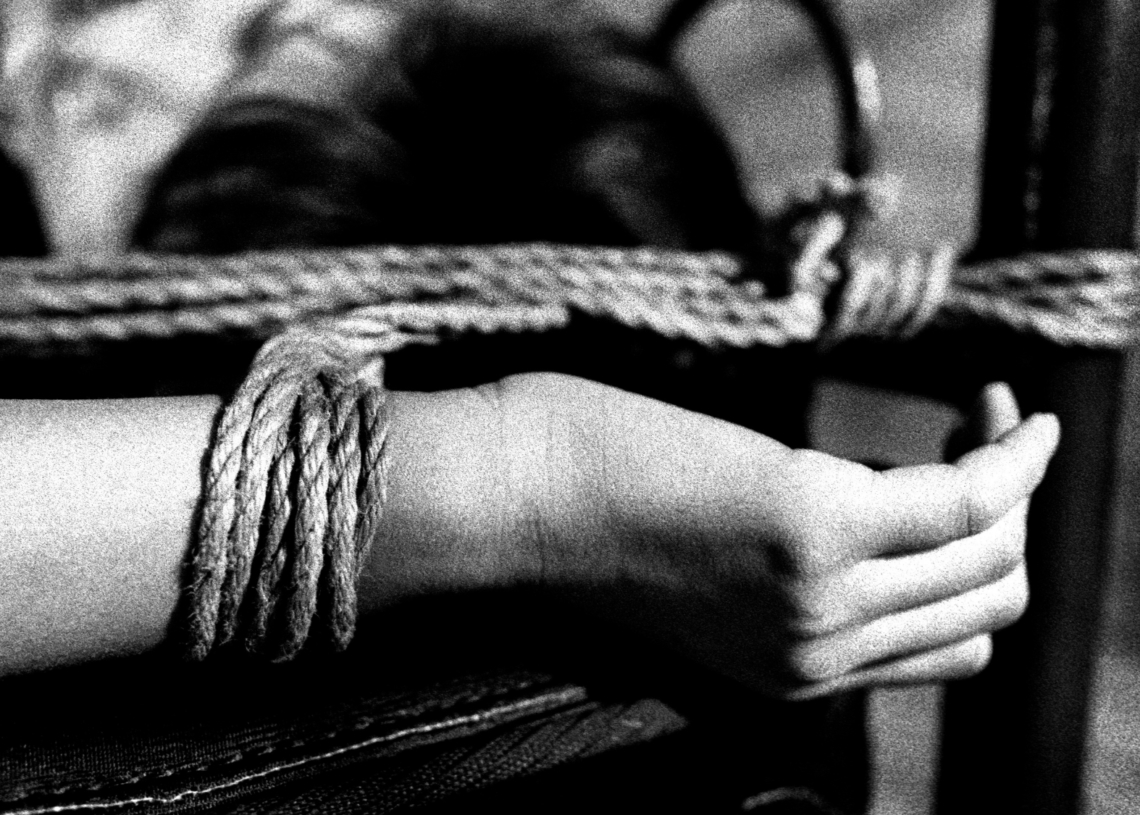
The words “Japanese rope bondage” can make people feel momentarily speechless. Which is ironic, given that the people who actually practice it say it’s mostly about talking.
Shibari—which translates from Japanese as “to bind” or “to tie”—has been practiced for centuries, but it’s gaining a new audience among couples looking for something beyond the usual range of a standard date night. The practice involves one partner, the rigger, tying the other, the receiver, using specific knots, hitches, and rope-based restraints. What practitioners describe has very little to do with what most people picture when they hear the words “rope bondage.”
“I always thought it was something for people that enjoyed pain and submission,” Richard, a shibari practitioner who regularly engages in rope play with his wife Kate, told the New York Post. The two have since become regulars. The pivot came when Kate, a self-described “rope bunny,” was practicing shibari with a friend before they were together.
Richard was uncomfortable with it. Rather than give it up, they learned together—with Richard, the more dominant partner outside of sessions, becoming the one who gets tied. “It’s an amazing balance,” he said.
Japanese Rope Bondage Is Apparently Great for Communication
Sara Landa, founder of Shibari Academy, calls shibari “conversation without words”—and she means that literally. The rigger spends the entire session reading what the receiver’s body is communicating—breathing, tension, posture, facial expressions—and responding accordingly. “In shibari, ‘listening’ means reading everything that isn’t verbalized,” she told the Post. That ongoing exchange, she says, builds a closeness that most couples spend years trying to find through talking.
For couples Tessa and Yasmin, who came to shibari early in their relationship, the effects were immediate and unexpected. “I thought shibari would be a sexy thing to do together,” Tessa said. “I didn’t expect that it would lead to a lot of vulnerable conversations that helped us get to know each other better.” Yasmin, as the receiver, found it pushed her toward something she normally struggles with. “Shibari requires you to speak up, and that’s not always easy for me,” she said. “When you’re tied up, you have no choice but to voice your needs.”
Landa is careful to note that shibari amplifies whatever is already present in a relationship. For solid couples, that can mean deeper trust and communication. For strained ones, it can surface existing tensions. “Expectations or unresolved tensions can surface during a session,” she said. Which makes it either the best relationship investment you haven’t considered, or a very revealing stress test.
Either way, the most-searched relationship term in 2025 was “emotional intimacy.” Shibari practitioners would argue they’ve been working on that for years.
The post Japanese Rope Bondage Is the Kink That Could Save Your Relationship appeared first on VICE.