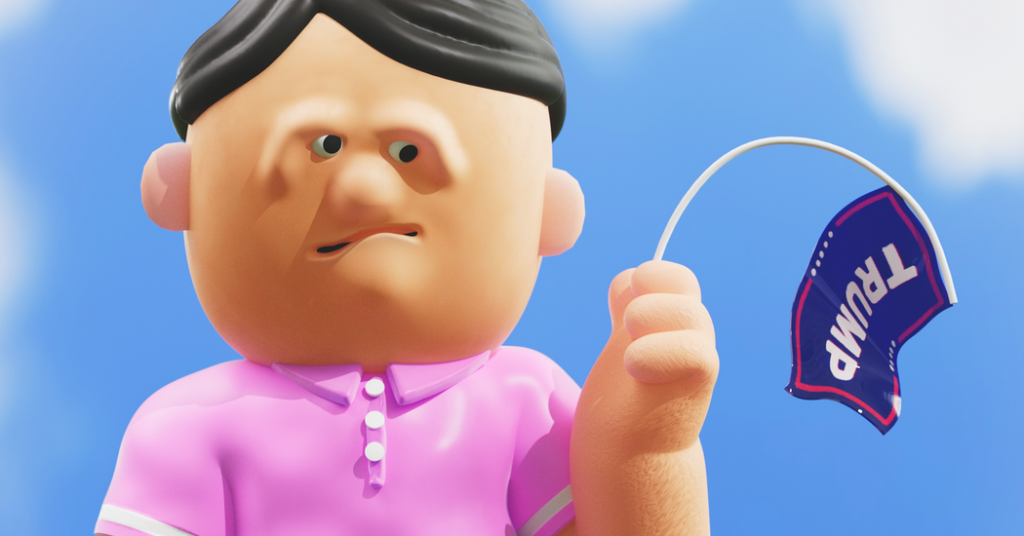
We often talk about Republicans as members of two easy-to-understand factions: MAGA die-hards and Never Trumpers. But the most electorally critical slice of the Republican electorate, about half of all Republicans today, generally falls into neither camp. This slice is neither Republicans in exile who voted for Kamala Harris nor is it the Trumpist faithful.
Let’s call these voters “normie” Republicans. It’s with this group that the G.O.P.’s most immediate political challenge really lies.
As a pollster who studies voters and the shifting coalitions of our two major political parties, I’m frequently asked how various actions taken by President Trump, such as his decision to attack Iran, will resonate with his core supporters. As I wrote a few weeks ago, polls have shown that Mr. Trump’s MAGA base is sticking with him.
But what about the rest of the party? The normies are fairly supportive of Mr. Trump’s presidency, even if they’re not in lock step with him on every issue. Most report watching Fox News, and most hold deeply unfavorable views of the Democratic Party and its most prominent voices. They are, by and large, voters who think of themselves as conservative and Republican — firmly so.
They don’t, however, think of themselves first and foremost as supporters of Mr. Trump, and they have displayed increasing disaffection with the direction of the country under his leadership. They generally think his combative posts on Truth Social are harmful to the Republican cause. Most of them don’t consider themselves part of the MAGA movement.
The flagging enthusiasm of these normies ought to be a powerful alarm bell for Republican candidates looking to win the 2026 elections.
To be clear, Mr. Trump remains a popular figure among Republican voters, with 86 percent holding a favorable view of him in my polling, not far off from the 90 percent who held a favorable view of him a year ago. If you want to understand why Republican lawmakers have thus far been reluctant to cross the president, look no further than those numbers.
But under the surface, there are signs that for some Republicans, the thrill is gone. Since last year, the percentage of Republicans who felt very favorably toward the president has fallen by 10 points. Only 44 percent of Republicans strongly approve of his handling of the economy.
As these trends have unfolded, the number of Republicans who say they think of themselves more as supporters of the party than of Mr. Trump has risen substantially.
The good news for Republican candidates is that 68 percent of these party-first Republicans say they’re extremely likely to vote, comparable to the 71 percent of Trump-firsters who say the same. And they’re not exactly defecting to vote for the Democrats; 91 percent of party-first Republicans expect to vote for a Republican in the midterms.
But when my polls ask how motivated they are to vote, the gap widens enormously. While 62 percent of Trump-first Republicans describe themselves as extremely motivated, less than half — 49 percent — of those party-first Republicans say the same.
This matters because Democrats are essentially telling pollsters they will walk across hot coals to get to the polls. Fox News’s most recent poll finds that more Democrats than Republicans are “extremely” motivated to vote. In my own polling, 82 percent of Democrats say it is “extremely important” to win the midterms and stop Mr. Trump from carrying out his agenda — while only 57 percent of Republicans say that it is similarly important for their party to win. That number falls to 47 percent among party-first Republicans.
What’s driving this discontent? The economy is one clear factor: Only 29 percent of party-firsters strongly approve of Mr. Trump’s handling of the issue, and less than half describe the economy as “improving.” They are also less upbeat about their own party on issues such as health care, foreign affairs and the overall state of democracy. They aren’t widely convinced things are becoming more stable in the country. Only around one-third strongly support the U.S. military operations in Iran.
That situation could improve if the economic outlook brightens, or if the war with Iran results in what these Republicans consider a victory. It’s conceivable that as the midterms approach, the normies come home to Mr. Trump. And winning back some of the independents who are giving Mr. Trump horrible ratings on his handling of the economy and Iran would be a much-needed boost to Republican candidates’ fortunes.
Failing that, what will Mr. Trump and Republicans’ strategy likely be to increase Republican voter turnout? Go negative, negative, negative. The one thing that unites Trump-firsters with the rest of the party is disdain for the Democrats, including notable figures like Gavin Newsom and Alexandria Ocasio-Cortez.
Democratic voters clearly feel that the stakes are sky-high in this election. Mr. Trump’s most loyal supporters do, too. Many normie Republicans aren’t so sure. If they decide to stay home in November, it will probably spell electoral disaster for the G.O.P.
Kristen Soltis Anderson is the author of “The Selfie Vote: Where Millennials Are Leading America (and How Republicans Can Keep Up).”
The Times is committed to publishing a diversity of letters to the editor. We’d like to hear what you think about this or any of our articles. Here are some tips. And here’s our email: [email protected].
Follow the New York Times Opinion section on Facebook, Instagram, TikTok, Bluesky, WhatsApp and Threads.
The post Trump Is Losing Normie Republicans appeared first on New York Times.