More than a decade before their organizing in mosques and Muslim communities helped create an untapped groundswell of support for Zohran Mamdani’s run for mayor of New York City, a network of Muslim leaders rallied behind another cause: making Eid, among the most jubilant and holy days in Islam, a school-sanctioned holiday.
It would take nearly a decade and two mayoral administrations before the effort paid off, making New York one of the first major cities to put Eid al-Fitr and Eid al-Adha on the city’s public school calendar — a victory for the city’s Muslim communities and especially the Muslim Democratic Club, whose leaders were widely credited for the behind-the-scenes groundwork and persuasion that made it possible.
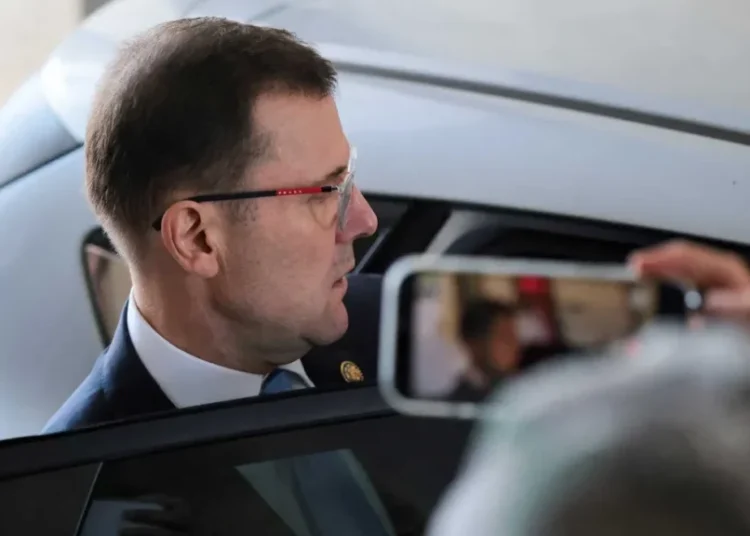
Now, as Mr. Mamdani begins his fifth month as mayor, his closest allies in Muslim organizing have emerged as key parts of the city’s political framework. Founding members of the Muslim Democratic Club now lead citywide offices and top advisory committees; other Muslim political veterans fill high-ranking posts at City Hall, like the Office of Management and Budget and the city’s chief counsel.
More candidates have sought the Muslim club’s endorsement for the 2026 primaries than in past election cycles; mosques and Muslim community centers, once largely skipped, have become must-stops for candidates, as more Muslim groups move to organize.
And influential gatherings like the Somos conference, held in Puerto Rico days after the mayoral election, featured programming for Muslims organized by the Muslim Democratic Club, including a Friday Prayer where dozens of people across faiths clamored to join the mayor-elect at a mosque.
To Fahd Ahmed, the executive director of Desis Rising Up and Moving, that scene captured how quickly the power dynamic had changed in New York.
“I don’t think that would have happened before,” said Mr. Ahmed, whose group focused on mobilizing South Asian voters and was one of Mr. Mamdani’s earliest backers. “It was almost like a lot of other people being like, ‘Oh, this is an important moment for this community and we should be there alongside them.’”
The shift in power became more striking after Mr. Mamdani took office, especially for some of the Muslim Democratic Club’s founding members.
Ali Najmi now chairs the mayor’s advisory committee on the judiciary; Faiza Ali is the commissioner of the Mayor’s Office of Immigrant Affairs; and Aliya Latif is now the executive director of the Office of Faith-Based Partnerships.
Several Muslims who are veterans of city agencies also have high-ranking posts at City Hall, like Sherif Soliman, who directs the Office of Management and Budget, and Ramzi Kassem, who is chief counsel to the mayor.
“We know what it’s like to have no political power and to be ignored. And it wasn’t that long ago for us,” Mr. Najmi said. “We are sensitive to making sure that this is an administration that will serve all New Yorkers — even the ones who don’t have as much political power, just like we didn’t. And it’s that service that guides all of us.”
He and other Muslim leaders recall how the Sept. 11 terror attacks brought increased harassment and government surveillance to many of New York’s Muslim communities, effectively making their leaders reluctant to become deeply involved in city politics.
But against the backdrop of the community’s growing population and sparse representation, Mr. Najmi and several Muslim organizers formed the Muslim Democratic Club ahead of the 2013 mayoral election to change that.
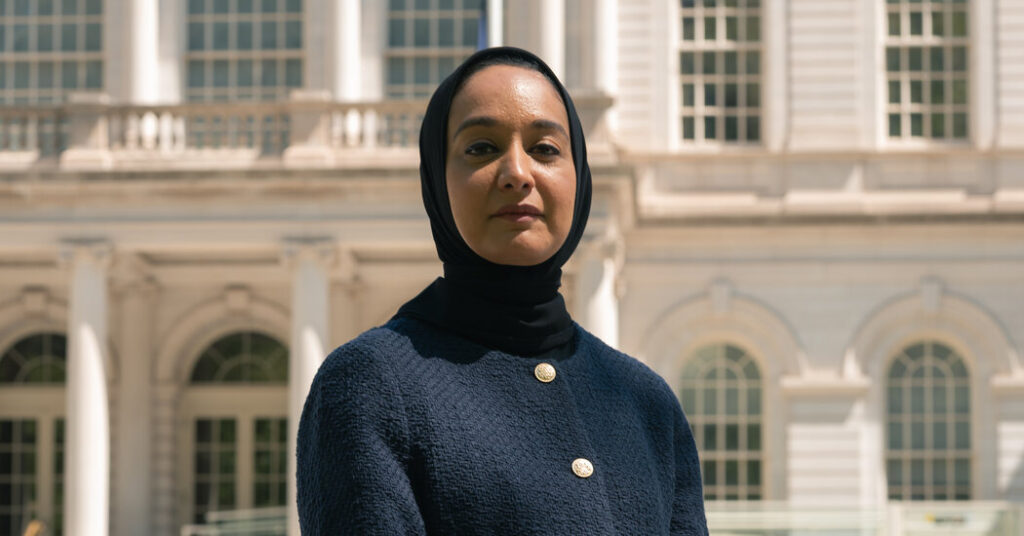
Thirteen years later, their efforts have helped propel the rapid political ascendance of the city’s Muslims, including its first Muslim mayor; Shahana Hanif, the first Muslim woman elected to the City Council; and a new class of young civil servants at City Hall.
The growth of the club and its members also mirrors the growth of Muslims in New York City. More than 500,000 people in the city identify as Muslim, according to the 2020 U.S. Religion Census.
“We are developing a cadre of political leadership in New York City,” said Linda Sarsour, a well-known Palestinian American activist who was among the group’s founders. “These are highly skilled, highly qualified people with incredible résumés that really could be hired by any mayoral administration.”
Aside from a means of increasing Muslim political engagement, Mr. Najmi said he and his fellow founders also viewed the club as a political voice for the city’s emerging Muslim groups. The group’s leaders saw their style as more akin to the Stonewall Democratic Club, which sought to use grass-roots tactics to push party leaders from the outside than make change from within.
That philosophy helped shape Mr. Mamdani, who joined the club straight out of college and eventually became one of its leaders until he decided to run for the State Legislature. Core to his mayoral candidacy was his belief that the city’s Muslim groups, taxi drivers and halal cart workers who supported him early in his campaign were an untapped political force — a notion he learned as an enthusiastic 20-something who worked with the club.
It is a political worldview informed by many Muslims’ experience as members of a community that has long been excluded from New York’s power structures, if not outright reviled by them.
Not long ago, many Muslim political professionals seeking positions in mayoral administrations were often heads of outreach or Muslim community affairs. The fact that they have posts more aligned with their professional work, early leaders of the club argue, is an outgrowth of their organizing.
“It’s a proof of concept,” said Murad Awawdeh, a founding member and former president of the club who is now president and CEO of the New York Immigrant Coalition. “You have to illustrate to people that, one, they have power. And then two, how to exercise it. And then three, what happens when you exercise that power and then you’re able to deliver — we are in the delivery phase now.”
The club’s influence can be seen in subtle and symbolic ways. Earlier this year, Mr. Mamdani and his Muslim aides planned and executed programs for Ramadan, including a first-of-its-kind iftar dinner for city workers. And a new bench of Muslim candidates cropping up has gained a larger network of organizers and volunteers.
Jibreel Jalloh, a 32-year-old community organizer in Brooklyn, is one such candidate. He is challenging Jaime Williams, a 10-year incumbent in the State Assembly, and gained the group’s endorsement in December. He said its support has come with a network of volunteers, new connections to Muslim leaders and access to “some of the greatest minds in politics,” pointing to Mr. Najmi’s work as his campaign counsel.
A Muslim of Sierra Leonean heritage, Mr. Jalloh said he was inspired by Mr. Mamdani’s message and campaign style, recalling how he saw the mayor campaign at his mosque — the first politician to do so, he said. The Muslim Democratic Club, he said, helped create a space for both of them to run that had not existed.
“It’s not the usual candidates you see running for office that are coming out of this club,” he said. “It’s a part of the city that has for too long not been at the table. And I think this club is ushering in that generation of pockets of New York that hasn’t had their voice really heard.”
The success of groups like the Muslim Democratic Club also coincides with a steep rise in Islamophobic events and increasingly violent rhetoric against Muslim political candidates. During his campaign and again as mayor, Mr. Mamdani has had to contend with threats against his faith.
But in interviews, many said that being Muslim or part of the club has not attracted much negative attention. Now that one of their own leads the city, it has only amplified the pressure to deliver.
“Whether you’re an elected official or a public official, we come to these spaces with our own personal stories and experiences and a responsibility to do right by our communities,” Ms. Ali said. “And that’s something that we don’t shed at the door, no matter what level of power and prestige that you achieve.”
Maya King is a Times reporter who writes about the intersection of politics, religion and ritual in New York City.
The post In Mamdani’s Rise, Muslim Organizers See Political Opportunity appeared first on New York Times.