A sharp escalation in attacks in the Strait of Hormuz and the Persian Gulf on Monday is threatening the shaky ceasefire between Iran and the United States as the two sides struggle to make progress in talks on a lasting end to the war.
Two U.S. destroyers, closely followed by two merchant vessels, came under attack during successful transits of the strait Monday morning, in an expansion of U.S. operations in the waterway. The United Arab Emirates reported an Iranian assault on an energy hub that caused a fire. And Oman’s state media reported an attack in the country but did not identify a perpetrator.
Iran fired cruise missiles and drones at the U.S. naval and commercial vessels but did not land any hits, said Adm. Brad Cooper, head of U.S. Central Command. Iran also sent six fast boats after the commercial ships, he said, but U.S. forces fired on and destroyed the vessels. He would not say whether the exchange of strikes meant the ceasefire was over.
In a separate incident, President Donald Trump said Iran hit a South Korean tanker in the strait. “Perhaps it’s time for South Korea to come and join the mission!” Trump wrote in a Truth Social post Monday.
Any U.S. vessels in the strait would be considered “a legitimate target,” the head of the Islamic Revolutionary Guard Corps, the predominant branch of the Iranian armed forces, warned earlier Monday.
“The Strait of Hormuz will not be opened by the tweet of the President of the United States; the management and control of this waterway is in the hands of Iran,” Ahmad Vahidi said in a post on X.
Iranian officials said over the weekend that U.S. attempts to “interfere” with Tehran’s “management” of the strait would qualify as a ceasefire violation.
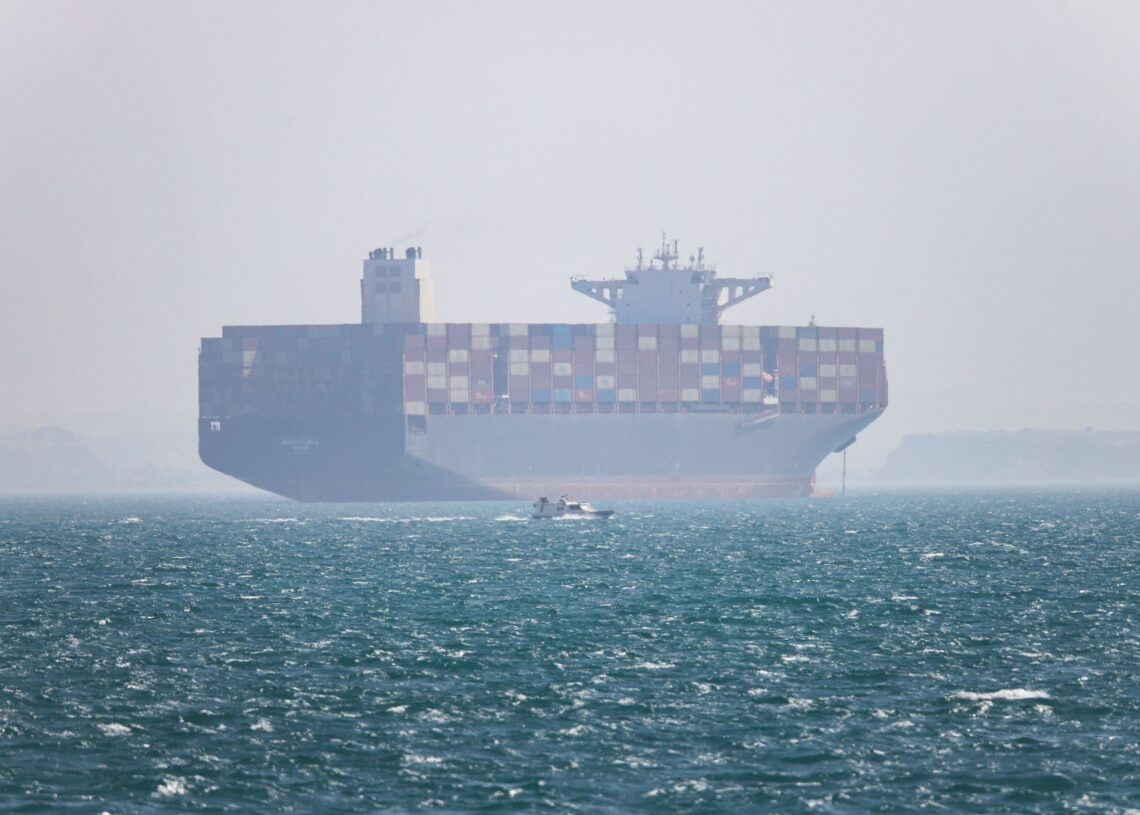
Reopening the strait — a vital chokepoint for oil and gas shipments through which Iran has slowed traffic to a trickle, causing severe disruptions to the global economy — has been a central issue in the weeks of negotiations between Iran and the U.S. since they agreed to a ceasefire on April 7, which largely halted fighting. The two sides have exchanged a number of proposals and held face-to-face talks in Pakistan, but they have failed to bridge considerable differences on key issues, including Iran’s nuclear program. Further complicating matters, Iran has insisted on using its control over the strait as leverage to demand the unfreezing of assets and war reparations.
Iran mined parts of the strait after the U.S. and Israel launched large-scale airstrikes on the country in late February. Since then, a handful of vessels have been allowed to transit, but they are required to coordinate with Iran, which has begun demanding tolls. Others have come under attack. Tehran has largely shut the waterway to traffic, cutting off roughly a fifth of global energy supplies, leading to energy shortages in many countries and skyrocketing prices elsewhere. The U.S. responded last month by implementing a naval blockade of Iranian ports.
The U.S. is reaching out to the hundreds of vessels, representing 87 countries, that are in the Persian Gulf to help them get through the strait, Cooper said Monday.
The Trump administration said over the weekend that it was moving forward with further military action to reopen the strait, including an effort between the State Department and international partners to increase information sharing on security in the waterway.
Trump said in a Truth Social post Sunday that the action is “meant to free up people, companies, and Countries that have done absolutely nothing wrong — They are victims of circumstance.”
The U.S. military mission to reopen the Strait of Hormuz, named “Project Freedom,” includes guided-missile destroyers, more than 100 Navy and Air Force warplanes, drones, satellite imagery and more than 15,000 personnel, Central Command said Monday.
The two U.S. destroyers that passed through the strait Monday were not escorting the commercial vessels and were instead moving through the waterway to clear it for traffic, Cooper said.
The United Arab Emirates reported that its air defenses engaged 15 missiles and four drones on Monday, the first such attacks in nearly a month. Local authorities in the oil hub of Fujairah reported a fire caused by one of the Iranian attacks. Also Monday, the UAE Foreign Ministry said a tanker affiliated with the state oil company, ADNOC, was hit by drones. The tanker was empty at the time, according to the statement.
In Oman, an attack injured two people, according to a state media report citing “a security source.” The report said the attack targeted a residential building in a town on Oman’s Musandam Peninsula inland from the Strait of Hormuz. The attack also shattered windows and damaged four vehicles, according to the report.
The U.S. naval blockade of Iranian ports remains in place. Two aircraft carriers and a host of warships are intercepting commercial vessels that have visited Iranian ports or are carrying Iranian oil or cargo. The Navy says it has sent back to Iran or stopped 48 vessels, including firing on one to disable it when it tried to get past the blockade.
The post Attacks in Strait of Hormuz, Gulf region imperil fragile U.S.-Iran ceasefire appeared first on Washington Post.