A high-profile abortion case that has now been escalated to the Supreme Court seeks to curtail national access to the abortion pill, mifepristone, via telemedicine and medication through the mail. Here’s what to know as the case develops.
What is the case about?
Louisiana sued the Food and Drug Administration in October, seeking to force it to stop allowing abortion providers to prescribe mifepristone by telemedicine and send it to patients in the mail. The F.D.A. began allowing that in 2021, during the coronavirus pandemic, after reviewing new data that showed it was safe and effective for patients to take the pills without seeing a health care provider in person to obtain mifepristone.
Louisiana, one of 20 states that ban or restrict abortion, claimed that the decision to allow pills by mail was made without adequate review and that it violated the state’s sovereignty by allowing Louisiana residents to receive the medication despite its abortion ban.
This has become a major way that patients throughout the country receive abortion medication, which is now used in about two-thirds of American abortions. A report from a reproductive rights research group found that in the first six months of 2025, more than one-fourth of abortions in the United States were provided via telemedicine.
What has happened so far?
In February, Judge David C. Joseph, a federal judge in Louisiana’s Western District, heard arguments about Louisiana’s request for an injunction to stop the telehealth prescribing and mailing of mifepristone until the full case could be heard in court.
In April, Judge Joseph declined that request and instead ordered that the case proceedings be paused until the F.D.A. could finish a review of mifepristone that it has begun. That pause was requested by the F.D.A., which said in court filings that the outcome of the review could lead the agency to change or reaffirm its policies, and could therefore affect the outcome of the case.
Louisiana appealed Judge Joseph’s decision to the U.S. Court of Appeals for the Fifth Circuit, which on Friday temporarily blocked telemedicine abortion and pills by mail nationwide. The court essentially reimposed a previous F.D.A. requirement that health care providers prescribe mifepristone only after seeing patients in person.
On Saturday, two manufacturers of mifepristone, Danco Laboratories and GenBioPro, which are defendants in the lawsuit along with the F.D.A., filed emergency appeals to the Supreme Court. On Monday, the Supreme Court paused the Fifth Circuit order from taking effect at least until May 11, temporarily restoring access to mifepristone by mail. After that, the Supreme Court will decide how to proceed.
What are telehealth abortion providers doing?
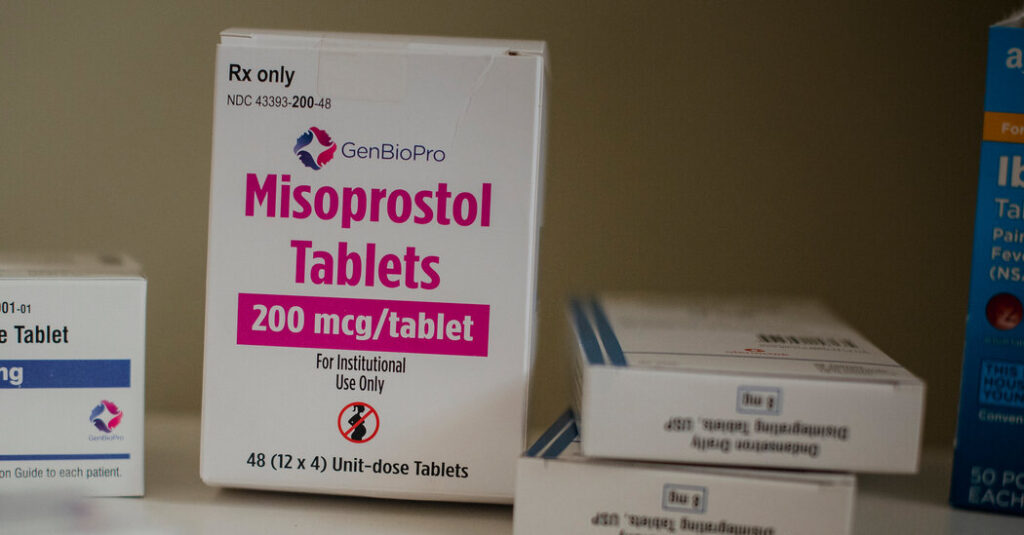
After the Fifth Circuit ruling, some telehealth abortion services immediately stopped prescribing and shipping mifepristone. Instead, they began sending only misoprostol, which is the second drug used in the typical medication abortion regimen. It can be used for abortion on its own and is safe, although it is considered slightly less effective and more prone to causing side effects like nausea. On Monday, services resumed prescribing mifepristone after the Supreme Court temporarily restored access.
Where does the Trump administration stand on this?
The Trump administration has not said in this case, or in public statements, whether it supports keeping in place the regulations that allow for pills to be mailed, which were issued under the Biden administration. The Trump administration has also not commented on the Fifth Circuit ruling, and it did not file an emergency appeal with the Supreme Court like its co- defendants, the mifepristone manufacturers, did.
That posture may reflect that this is a politically tricky issue for the Trump administration. Its hard-core Republican base is anti-abortion, but many voters who are key to the midterm elections support abortion rights. Political observers say that the Trump administration does not want to be seen as too permissive or too harsh on abortion.
Legal experts say that a court ruling dictating decisions for a federal agency sets a precedent that could open the door for other states to challenge federal agencies if they disagree with their policies and regulation.
Pharmaceutical companies, as well as health policy experts, have strongly argued against courts shaping F.D.A. policies, saying that it undermines the kind of evidence-based drug regulation that the industry relies on. Notably, in October, under the Trump administration, the F.D.A. granted approval for a new generic version of mifepristone, increasing the number of American manufacturers to three.
How can abortion pills be sent to states that ban abortion?
Providers in some states that support abortion rights are prescribing and sending these pills to about 100,000 patients per year in states with abortion bans. They are doing so under shield laws, which prevent authorities in states that have adopted those laws from cooperating with investigations from states with abortion bans, including by responding to subpoenas or extraditing providers.
A few abortion providers in shield-law states have been targets of criminal charges or civil actions from Louisiana and Texas, in cases that legal experts believe are setting up a constitutional showdown over whether states must honor one another’s abortion laws.
What do we know about the F.D.A. review of mifepristone?
More than 100 studies and years of F.D.A. reviews have consistently found that mifepristone is safe and that serious complications from taking it are rare. But under pressure from some Republican attorneys general and lawmakers who oppose abortion, the Trump administration said in September that it would review the safety of mifepristone.
Administration officials recently told The New York Times that the review would probably be finished toward the end of this year. If the Louisiana case is paused until then, it would likely mean that any outcome of the F.D.A. review would be less of an issue in the midterm elections, at a time when Republicans are struggling to maintain control of Congress and restricting abortion is not considered a broadly winning issue in many races.
The Trump administration has not given details about how the F.D.A. review is being conducted, but an administration official recently told The Times that the agency was doing its own safety study, at least partly using data from the F.D.A. Sentinel Initiative, which collects information from electronic health records and insurance carriers.
Pam Belluck is a health and science reporter for The Times, covering a range of subjects, including reproductive health, long Covid, brain science, neurological disorders, mental health and genetics.
The post What to Know About the New Abortion Pill Case Before the Supreme Court appeared first on New York Times.