Times Insider explains who we are and what we do, and delivers behind-the-scenes insights into how our journalism comes together.
To put it lightly, developing a list of the 30 greatest living American songwriters was neither a swift nor a simple process for The New York Times Magazine. What began as an idea for a photo portfolio highlighting the country’s more tenured songwriters evolved into a year-and-a-half-long collaboration, with a core team of around 15 people.
“We decided: Hey, let’s make a list,” said Sasha Weiss, deputy editor for culture at The Times Magazine. “And let’s extend it and make it kind of an intergenerational conversation, not just about older living songwriters, but also about their inheritors,” she added.
The magazine started by sending hundreds of ballots to experts, including historians and music industry professionals. From there, a judging panel of six Times critics helped narrow down more than 700 nominees to a tidy 30. (An original goal of 25 songwriters proved to be too constricting.)
The magazine published the project on Tuesday. Each songwriter’s entry is accompanied by a critic’s essay, a playlist of five essential songs and quotations from a notable admirer (for example, FKA twigs on Missy Elliott, and Patti Smith on Bob Dylan). The youngest honoree is the Puerto Rican superstar Bad Bunny, 32. The oldest is the country musician Willie Nelson, 93. Between them flow many genres of American music.
In an interview last week, Ms. Weiss and Nitsuh Abebe, a story editor at the magazine, described leading the project, and hearing from readers who disagreed with the selections. These are edited excerpts from the conversation.
This project is a package of seven interactive articles. When you first started, did you expect it to be so wide-ranging?
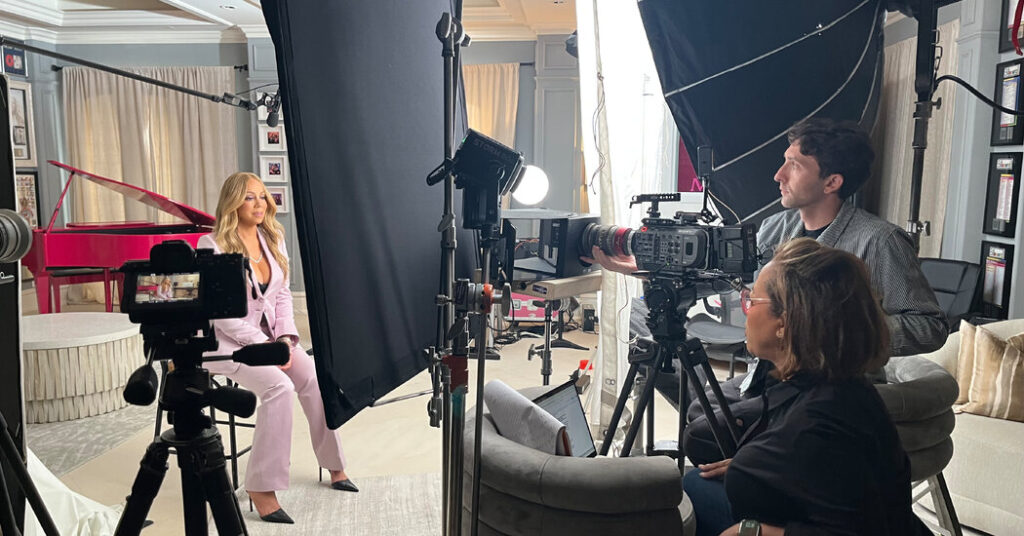
SASHA WEISS We did know that we wanted to make a video project. The reason we decided on living songwriters rather than a more retrospective list was that we knew we wanted to go to the people on the list to ask questions.
NITSUH ABEBE And its form developed as we went along, which led to things like the portfolio of instruments and objects that inspired these people.
Was it difficult to make decisions on such a collaborative project? Were there any picks that caused a debate?
WEISS We presented the critics with the ballot results and highlighted the top 50 names, and they mostly worked within those names. And there were huge debates. But the critics were trying to reach as close as we could get to a consensus.
Randy Newman was a big subject of debate. Wesley Morris, a critic at large for The Times, was upset that Erykah Badu wasn’t included, and Lindsay Zoladz went down swinging for a couple of punk innovators. They all had artists they had to give up on. If there’s a genre that’s missing, you can be sure that it was considered and discussed.
Was there a songwriter No. 31 whom you’d like to shout out?
WEISS What happens in the room stays in the room. I will say that Brian Wilson was originally on the list, and then he died. So we had to replace him.
Did you ever consider breaking the final list down, for example, by genre?
ABEBE There were discussions about various ways that one might organize the list; one was a timeline of eras. In the end, 30 is such a small number. It was nice to have an unranked buffet. Everybody on this list is basically No. 1.
WEISS I think we were really committed to a nonhierarchical structure in every way. We were trying to say that this all falls under the definition of songwriting as it is practiced today.
The video interviews, featuring artists including Jay-Z and Taylor Swift, were a great addition. How did you choose whom to include in that part of the project?
WEISS At first we were like, We’ll do interviews with all of them! And then it became clear as we went along that to make even seven videos is a really big project. You need time, resources and participation. But we wanted representatives from different styles and traditions, and we felt really lucky that we ultimately got that.
Aggrieved — and pleased — readers can use this online form to share their picks for the greatest living American songwriters. What do you plan to do with those submissions?
ABEBE To be determined. We’re going to take in all the submissions, process them and reflect to readers what the response was. The exact form of that depends on what we see and what’s most interesting about it.
Who is your favorite songwriter?
WEISS Joni Mitchell.
The post How Do You Name the Greatest Songwriters? Much Debate. appeared first on New York Times.