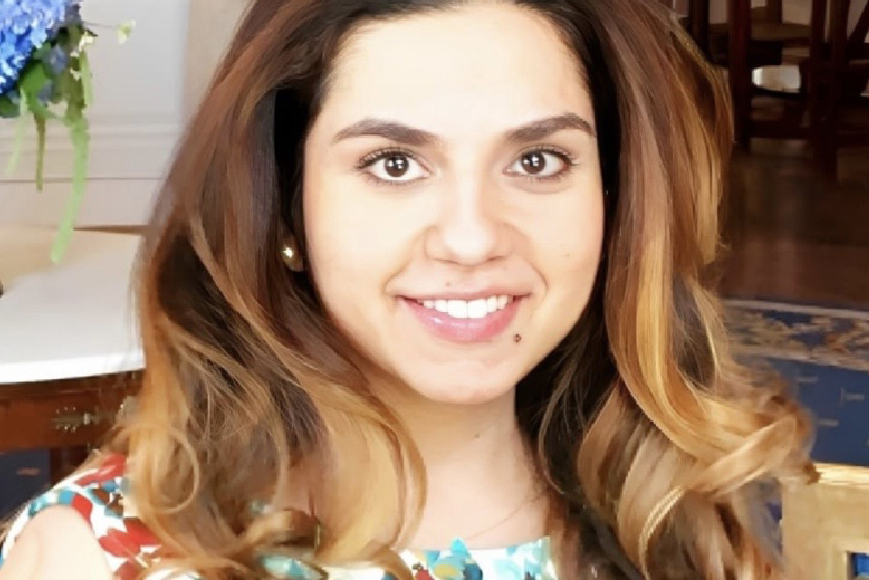
By the time she was diagnosed with Stage 4 colon cancer, Asal Sayas was already working to shape federal health policy, meeting with lawmakers on Capitol Hill as the director of government affairs at Amfar, the Foundation for AIDS Research.
It was March 2020, at the onset of the coronavirus pandemic. Ms. Sayas was only 36. The daughter of Iranian immigrants, she had come to Washington hoping to make a difference, and had risen to become a top aide to Sen. Amy Klobuchar (D-Minnesota), working as a senior adviser on her 2020 presidential campaign.
But when Ms. Sayas got her diagnosis, her sister said, she was given six months to live. Rather than quit her job, she went back to work, championing AIDS research and HIV prevention while establishing herself as a tenacious advocate for people with cancer.
“She pushed the field in a way that no one else did,” said Michael Sapienza, the CEO of the Colorectal Cancer Alliance.
During the Biden administration, Ms. Sayas served as a senior White House adviser for infectious disease and cancer, working on the president’s “cancer moonshot” initiative, which aimed to reduce the death rate from the disease by 50 percent over the next 25 years.
She also helped her friend David Hicks, a fellow colon cancer patient, start a nonprofit to advocate for people with the disease. After Hicks died in 2021, at age 28, she redoubled her efforts, meeting with lawmakers, speaking at medical conferences and sharing information with fellow cancer patients and caregivers, including while serving as a consultant for the cancer alliance.
Ms. Sayas “fought tirelessly for more federal research dollars and earlier diagnoses to combat the rise of this disease,” Klobuchar said in a statement. Six years after she was diagnosed, she died April 21 at 42, at Inova Fairfax Hospital in Virginia.
“Asal embodied the spirit of the Cancer Moonshot — to move with the urgency of those living with cancer,” Jill Biden, the former first lady, said in a tribute. “Even as she faced her own journey with extraordinary resolve, she never stopped fighting for others, pushing for scientific breakthroughs and a future where fewer families have to endure this kind of loss.”
A recent study by the American Cancer Society found that colorectal cancer is increasingly diagnosed among young peopleand has become the deadliest cancer in patients under 50, causing more deaths than breast, lung or brain cancers.
Ms. Sayas sought to increase awareness of the disease, expand screenings for at-risk patients (most people begin testing for colorectal cancer after turning 45) and develop new treatment options. She also highlighted the need for improved care for underserved groups, including communities of color, and spearheaded the creation of a congressional Colorectal Cancer Caucus.
“She was a tireless advocate for changing the system and changing how we did things,” said Timothy Cannon, her oncologist at Inova. Ms. Sayas, he said, was the rare patient who not only knew about her disease and treatment options in detail, but attended annual meetings of the American Society of Clinical Oncology.
The Biden cancer moonshot “wouldn’t have been the same without her,” said Danielle Carnival, a neuroscientist who led the initiative. The project included an effort to make up for an estimated 10 million cancer screenings that were missed during the early years of the pandemic, and expanded access to navigation services for cancer patients and caregivers trying to determine their treatment options.
Ms. Sayas “was planting seeds around this everywhere,” pushing to improve cancer research and awareness on the Hill, at the National Cancer Institute and among fellow patients, said Aparna Parikh, an oncologist at Massachusetts General Hospital who met Ms. Sayas through the moonshot program. “She was all over, coming at it from as many angles as she could.”
Her efforts were all the more remarkable given her commitments at home. About three years after her diagnosis, Ms. Sayas’s father learned that he had Stage 4 liver cancer. Ms. Sayas became his caregiver, drawing on her own experience navigating a maze of appointments, tests and treatment options, even as her health declined.
“She was managing his care while she was having trouble breathing with her oxygen,” said her sister, Melody Sayas. “I’m taking over everything she managed, and I don’t know how she did everything in her condition. Even without her condition, I don’t know how she did it.”
The oldest of three children, Asal Sayas was born in Tehran on Oct. 21, 1983. One of her grandfathers had served as a judge in the military, and the family faced political persecution after the shah was overthrown in the 1979 Iranian revolution. They fled the country when Ms. Sayas was about 8 months old, taking a bus to Istanbul before making their way to the United States.
While her mother had been a nurse in Iran, she lacked certification to work in the U.S. Her father eventually started his own flooring and carpeting company.
“They came with nothing,” Melody said, “and relied on food stamps and government housing,” scraping by and saving money before buying a home in Reston, Virginia, when Ms. Sayas was in the fifth grade.
“She understood what it means to struggle, but also what it takes to rise out of it,” Melody added in a text message. “Having a younger brother with Down syndrome also made her deeply compassionate, and more aware of how important it is for people to be seen, supported and given real access to resources. That’s why she was so committed to making sure others have those same opportunities.”
Ms. Sayas graduated from high school in Sterling and studied business administration at Old Dominion University, receiving a bachelor’s degree in 2005. She later worked on the Hill as director of operations for Rep. André Carson (D-Indiana) and, after a stint in Klobuchar’s office, joined Amfar in 2016.
“She was sort of a trifecta of tenacity, brilliance and compassion,” said Greg Millett, director of the organization’s public policy office. “When she started at Amfar, she hadn’t done HIV work before, and threw herself into this space and rapidly became one of the most trusted voices among HIV advocates in terms of how to work with Capitol Hill.”
“She was a preeminent strategist,” he said.
Ms. Sayas is survived by her parents, Frankie and Shahla Sayas; and her siblings, Melody and Ali. Her sister said she had been devastated by the ongoing war in Iran, which Ms. Sayas hoped to visit before she died. Her mother’s family is still in the country.
“There was something about her that was so full of hope,” said Kristine Dunkerton, one of many colorectal cancer patients who met Ms. Sayas through an online support group. The two women struck up a friendship over the phone, sharing information and encouragement.
“She never called to feel sorry for herself, or to make me feel like I was going down a wrong path,” Dunkerton said. “She was just always so excited to talk, or to reassure me that there’s more out there we could find. She just had that vibe that there’s so much hope left — she wanted to find it.”
The post Asal Sayas died of colon cancer at 42. She advocated for patients until the end. appeared first on Washington Post.