Generals who led the United States to victory and Native Americans who fought for tribal rights. Athletes, musicians, movie stars and religious figures, not all of whom were American.
President Trump has wanted to build a Garden of Heroes in Washington, D.C., since the tail end of his first term. Now, he’s planning on doing it.
Here’s a look at more than 200 U.S. founders, politicians, civil rights leaders, artists and others the White House is considering for the garden, according to an executive order signed by the president and the committee organizing the 250th celebration of American independence.
American colonists and founders
-
Samuel Adams, founding father who organized the Boston Tea Party
-
Crispus Attucks, a Black and Native American sailor who was the first person killed in the Boston Massacre, a galvanizing event before the Revolutionary War
-
William Bradford, Plymouth Colony governor who came to North America on the Mayflower
-
Charles Carroll, founding father from Maryland
-
Benjamin Franklin, founding father and inventor
-
Bernardo de Gálvez, Spanish colonial governor who aided the colonists during the Revolutionary War
-
Nathanael Greene, Revolutionary War general
-
Alexander Hamilton, founding father and primary author of the Federalist Papers
-
Nathan Hale, American spy during the Revolutionary War who was captured and executed by the British
-
Patrick Henry, founding father from Virginia known for a saying attributed to him: “Give me liberty, or give me death!”
-
Henry Knox, Revolutionary War general and first secretary of war
-
Tadeusz Kościuszko, Polish general who fought in the American Revolutionary War
-
John Jay, founding father and first chief justice of the Supreme Court
-
William Penn, Quaker who founded the Province of Pennsylvania
-
Paul Revere, revolutionary figure who warned colonists in Massachusetts Bay that the British were coming
-
Betsy Ross, seamstress who made flags for the Pennsylvania navy
-
Caesar Rodney, founding father who cast the deciding vote for Delaware in favor of independence
-
Roger Williams, founder of Rhode Island and advocate for the separation of church and state
-
John Winthrop, a founding father of the Massachusetts Bay Colony, who envisioned America as a “city upon a hill”
Presidents and first ladies
-
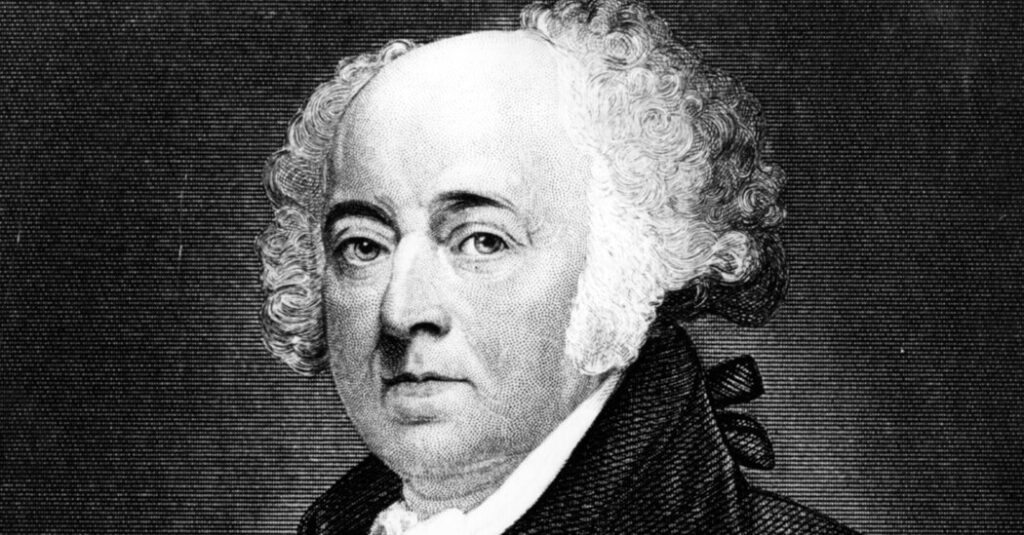
John Adams, founding father and second president of the United States
-
Grover Cleveland, first U.S. president to serve nonconsecutive terms
-
Calvin Coolidge, 30th U.S. president, who advocated laissez-faire economics in the Roaring Twenties
-
Dwight D. Eisenhower, 34th U.S. president and supreme commander of the Allied Forces in Europe in World War II
-
Ulysses S. Grant, 18th U.S. president who led the Union Army to victory in the Civil War
-
Andrew Jackson, seventh U.S. president whose Indian Removal Act forcibly displaced tens of thousands of Native Americans, many of whom died in the Trail of Tears march
-
Thomas Jefferson, founding father, third U.S. president and primary author of the Declaration of Independence
-
John F. Kennedy, 35th U.S. president who was assassinated in 1963
-
Abraham Lincoln, 16th U.S. president who held the country together through the Civil War and signed the Emancipation Proclamation, which abolished slavery
-
Dolley Madison, first lady and wife of James Madison; saved a George Washington painting from the White House during the War of 1812
-
James Madison, founding father, fourth U.S. president and primary author of the Constitution and Bill of Rights
-
William McKinley, 25th U.S. president, who led the country to victory in the Spanish-American War and imposed protective tariffs
-
Ronald Reagan, 40th U.S. president and conservative icon
-
Eleanor Roosevelt, first lady and Franklin D. Roosevelt’s wife who advocated civil rights and women’s rights
-
Franklin D. Roosevelt, 32nd U.S. president who helped the United States exit the Great Depression and led the country through most of World War II
-
Theodore Roosevelt, 26th U.S. president, progressive reformer, conservationist and Nobel Peace laureate
-
William Howard Taft, 27th U.S. president and the 10th Supreme Court chief justice, the only person to hold both offices
-
Harry S. Truman, 33rd U.S. president who ordered the use of the atomic bomb to bring an end to World War II and established NATO
-
George Washington, Revolutionary War leader and first U.S. president
Politicians, legislators and judges
-
Henry Clay, Kentucky lawmaker known as the “Great Compromiser,” including for pacts forged between the North and South over slavery
-
Ruth Bader Ginsburg, liberal Supreme Court justice and advocate of gender equality
-
Barry Goldwater, Republican presidential nominee and father of the modern conservative movement
-
Daniel K. Inouye, Hawaii lawmaker who was the first Japanese American to serve in Congress
-
Robert H. Jackson, Supreme Court justice who led the U.S. prosecution of the Nazis at the Nuremberg trial
-
Barbara Jordan, Texas lawmaker and the first Black woman elected to Congress from the South
-
Jeane Kirkpatrick, foreign policy adviser in the Reagan administration who supported anti-communist authoritarian regimes that aligned with the U.S.
-
Clare Boothe Luce, politician, writer and diplomat and conservative intellectual
-
Jeannette Rankin, first woman elected to Congress
-
Margaret Chase Smith, the first woman to serve in both the House and the Senate and an outspoken critic of McCarthyism
-
Thurgood Marshall, civil rights lawyer and the first African American Supreme Court justice
-
William Rehnquist, Supreme Court chief justice who presided over a resurgence in judicial conservatism
-
Antonin Scalia, conservative Supreme Court justice and a leading proponent of originalism
-
Lorenzo de Zavala, helped Texas secure its independence from Mexico and served as the vice president of the Republic of Texas
Religious figures
-
John Carroll, nation’s first Catholic bishop and the founder of Georgetown University
-
Katharine Drexel, Catholic religious leader who served Black and Native American communities
-
Jonathan Edwards, theologian who helped shape American evangelism and a leader during the First Great Awakening
-
Billy Graham, evangelical preacher
-
Thomas Merton, a Trappist monk who wrote “The Seven Storey Mountain”
-
John Neumann, a Bishop of Philadelphia and the first American male to be canonized
-
Junípero Serra, a Spanish Franciscan friar who helped establish the first nine Spanish missions in California
-
Elizabeth Ann Seton, founded Catholic schools in the United States and was the first native-born U.S. citizen to be canonized
-
Fulton J. Sheen, the Bishop of Rochester and host of the TV show “Life is Worth Living”
-
Kateri Tekakwitha, considered the first Native American saint
-
Augustus Tolton, the first Black Catholic priest in the United States
Activists, humanitarians, journalists and social leaders
-
Susan B. Anthony, abolitionist, suffragist and women’s rights activist
-
Clara Barton, founder of the American Red Cross
-
Sitting Bull, symbol of Native American resistance movement who defeated the U.S. military in the Battle of Little Bighorn in 1876
-
Red Cloud, Oglala Lakota leader who won the Red Cloud’s War against the U.S. government
-
Dorothy Day, journalist, social activist, self-described Christian anarchist and co-founder of the Catholic Worker Movement
-
Frederick Douglass, abolitionist and orator who was considered the most photographed American in the 19th century
-
Mary Fields, first African American mail carrier
-
Samuel Gompers, labor leader who founded the American Federation of Labor
-
Medgar Evers, civil rights activist and first N.A.A.C.P. field secretary in Mississippi
-
Nellie Gray, anti-abortion activist who founded the March for Life
-
Julia Ward Howe, abolitionist and suffragist who wrote the “The Battle Hymn of the Republic” and the “Mother’s Day Proclamation”
-
Chief Joseph, Nez Perce leader who fought against relocation to reservations and was an advocate for Native American rights
-
Helen Keller, activist for disability rights who was deaf and blind
-
Martin Luther King Jr., civil rights leader who promoted nonviolent protest against racist policies and gave the “I Have a Dream” speech
-
Coretta Scott King, civil rights leader and Martin Luther King Jr.’s wife
-
Lucretia Mott, abolitionist and suffragist who co-organized the 1848 Seneca Falls Convention
-
John Muir, conservationist who is considered the father of the National Parks
-
Edward R. Murrow, broadcast journalist and war correspondent who reported from London for CBS during World War II
-
Rosa Parks, civil rights activist who’s arrest sparked the Montgomery bus boycott
-
Elizabeth Cady Stanton, suffragist who helped organize the 1848 Seneca Falls Convention
-
Anne Sullivan, teacher who instructed Helen Keller
-
Tecumseh, a Shawnee leader who organized Native American tribes to resist U.S. expansion into the Northwest Territory
-
Jefferson Thomas, one of the Little Rock Nine, the first Black students to attend Central High School in Arkansas
-
Sojourner Truth, an abolitionist and suffragist who was born a slave and escaped to freedom
-
Harriet Tubman, an abolitionist who helped slaves escape to freedom on the underground railroad
-
C. T. Vivian, civil rights activist, minister and Martin Luther King Jr. ally
-
Booker T. Washington, African American educator who founded what is today Tuskegee University
-
Ida B. Wells-Barnett, African American journalist who exposed racial violence and co-founded the N.A.A.C.P.
Artists, architects, writers and public intellectuals
-
Ansel Adams, photographer and environmentalist known for his black-and-white landscape photos
-
Hannah Arendt, Jewish philosopher known for writing on totalitarianism
-
John James Audubon, naturalist whose paintings were collected in “The Birds of America”
-
William F. Buckley Jr., public intellectual who helped shape the modern conservative movement
-
Julia Child, chef and cookbook author who introduced French cuisine to the United States
-
Samuel Clemens (Mark Twain), author known for his books “The Adventures of Tom Sawyer” and “The Adventures of Huckleberry Finn”
-
James Fenimore Cooper, author known for “The Last of the Mohicans”
-
Emily Dickinson, prolific and influential poet
-
Milton Friedman, Nobel laureate in economics, founder of monetarism and free market advocate
-
Cass Gilbert, architect who designed the Woolworth building and the Supreme Court building
-
Ralph Waldo Emerson, intellectual who led the Transcendentalist movement and wrote essays such as “Self-Reliance” and “Nature”
-
Robert Frost, poet known for works including “The Road Not Taken”
-
Theodor Seuss Geisel, children’s author known as Dr. Seuss
-
Ernest Hemingway, author known for books including “The Old Man and the Sea” and “A Farewell to Arms”
-
Francis Scott Key, wrote the poem that became the American national anthem
-
Russell Kirk, conservative political philosopher
-
Harper Lee, author who won the Pulitzer Prize for “To Kill a Mockingbird”
-
Pierre Charles L’Enfant, city planner who designed Washington, D.C.
-
Henry Wadsworth Longfellow, poet known for “Paul Revere’s Ride”
-
Herman Melville, author who wrote “Moby Dick”
-
Charles Willson Peale, artist who painted revolutionary figures
-
Edgar Allan Poe, poet known for works such as “The Raven”
-
John Russell Pope, architect who designed public buildings in Washington, including the Jefferson Memorial and the National Archives Building
-
Henry Hobson Richardson, architect known for buildings like the Trinity Church in Boston
-
Norman Rockwell, painter who captured American culture in his Saturday Evening Post cover illustrations
-
John Singer Sargent, painter who was highly sought after for his Gilded Age portraits
-
Harriet Beecher Stowe, author and abolitionist who wrote “Uncle Tom’s Cabin”
-
Gilbert Stuart, painter known for his unfinished George Washington portrait that served as a model for the dollar-bill engraving
-
Henry David Thoreau, writer and naturalist who wrote “Walden”
-
Thomas Ustick Walter, architect who designed additions to the U.S. Capitol building, including the central dome
-
Phillis Wheatley, considered the first African American woman to publish a poetry book
-
Walt Whitman, poet whose collection “Leaves of Grass” he expanded and revised until his death in 1892
-
Laura Ingalls Wilder, author known for her “Little House on the Prairie” children book series
-
Frank Lloyd Wright, architect who designed hundreds of buildings over his career
Entertainers and athletes
-
Muhammad Ali, three-time world heavyweight boxing champion
-
Louis Armstrong, decorated jazz trumpeter and singer
-
Lauren Bacall, Hollywood actress and Broadway star
-
Ingrid Bergman, Swedish award-winning actress who starred in “Casablanca”
-
Irving Berlin, composer featured extensively in the “Great American Songbook” canon
-
Humphrey Bogart, star in “Casablanca” and “The Maltese Falcon”
-
Herb Brooks, coached the U.S. men’s hockey team to gold in the 1980 Olympics, including an upset of the Soviets in the “Miracle on Ice”
-
Kobe Bryant, five-time NBA champion with the Los Angeles Lakers
-
Frank Capra, director of “It’s a Wonderful Life”
-
Johnny Cash, country-rock singer-songwriter known for songs including “I Walk the Line” and “Man in Black”
-
Ray Charles, singer, songwriter and pianist known as “the Genius of Soul”
-
Roberto Clemente, Puerto Rican baseball Hall of Famer who played for the Pittsburgh Pirates
-
William F. Cody (“Buffalo Bill”), frontiersman who created the “Buffalo Bill’s Wild West” show
-
Nat King Cole, singer known for songs including “Unforgettable”
-
Miles Davis, jazz trumpeter known for albums including “Kind of Blue”
-
Walt Disney, co-founder of the Walt Disney Company and co-creator of Mickey Mouse
-
Duke Ellington, jazz pianist and an originator of “big band” jazz
-
Aretha Franklin, singer-songwriter and activist known as the “Queen of Soul”
-
Lou Gehrig, baseball player for the New York Yankees who died of A.L.S.
-
Woody Guthrie, singer-songwriter and folk musician who wrote “This Land Is Your Land” and anticapitalist protest songs
-
Charlton Heston, actor who starred in “The Ten Commandments” and “Planet of the Apes”
-
Alfred Hitchcock, director known for films like “Vertigo” and “Psycho”
-
Billie Holiday, jazz singer
-
Bob Hope, entertainer who regularly performed for U.S. soldiers
-
Whitney Houston, singer known for hits including “I Will Always Love You”
-
Elia Kazan, film and theater director who won three Tonys and two Oscars and cooperated with the McCarthy anti-communism inquiry into Hollywood
-
Vince Lombardi, football coach for the Green Bay Packers who won the first two Super Bowls
-
Annie Oakley, sharpshooter who performed in the “Buffalo Bill’s Wild West” show
-
Jesse Owens, Black track and field star who won four gold medals at the 1936 Olympics
-
Elvis Presley, singer and actor known as the “King of Rock and Roll”
-
Jackie Robinson, first African American to play in Major League Baseball
-
Babe Ruth, baseball legend who won seven World Series with the Boston Red Sox and the New York Yankees
-
Frank Sinatra, singer and actor known for songs including “Theme from New York, New York,” and “Fly Me to the Moon”
-
Bessie Smith, African American blues singer known as “Empress of the Blues”
-
James Stewart, actor known for his roles in “The Philadelphia Story” and “It’s a Wonderful Life”
-
Maria Tallchief, Osage Nation member who was America’s first major prima ballerina
-
Shirley Temple, renowned child actor during the Great Depression
-
Jim Thorpe, first Native American to win a gold medal for the U.S. at the Olympics
-
Alex Trebek, host of “Jeopardy!”
-
John Wayne, American actor who starred predominantly in war movies and Westerns, including “Stagecoach” and “True Grit”
-
Cy Young, hall-of-fame baseball pitcher with more wins than any other pitcher in history
Scientists, physicians, inventors and explorers
-
Neil Armstrong, first person to walk on the moon
-
Luis Walter Alvarez, Nobel laureate in physics for discovering resonance states
-
Alexander Graham Bell, credited with inventing the telephone
-
Daniel Boone, frontiersman who explored and helped settle Kentucky
-
Norman Borlaug, plant scientist and Nobel Peace laureate who helped increase agricultural production
-
George Washington Carver, African American agricultural scientist and proponent of the peanut
-
Johnny Chapman (“Johnny Appleseed”), pioneer who brought apple trees to the American frontier
-
William Clark, a leader of the Lewis and Clark expedition
-
Samuel Colt, inventor of an early revolver pistol model
-
Christopher Columbus, Italian explorer who ushered in European colonization of the Americas
-
Amelia Earhart, first woman to fly across the Atlantic
-
Thomas Edison, inventor of the incandescent lightbulb
-
Albert Einstein, physicist who developed the theory of relativity
-
John Glenn, first astronaut to orbit the Earth
-
Grace Hopper, mathematician and a rear admiral in the navy who helped develop modern computing
-
Edwin Hubble, astronomer who proved there were other galaxies beyond the Milky Way
-
Mary Jackson, first Black female engineer at NASA
-
Katherine Johnson, a “human computer” at NASA who helped put an astronaut in orbit and on the moon
-
Meriwether Lewis, a leader of the Lewis and Clark expedition
-
William Mayo, physician and surgeon who helped establish the nonprofit Mayo Clinic in Minnesota
-
Christa McAuliffe, teacher and astronaut who died in the Space Shuttle Challenger disaster
-
Louise McManus, the first nurse to receive a Ph.D. in the field and a leader in medical education
-
Maria Mitchell, the first widely recognized female astronomer in the United States and the discoverer of the Miss Mitchell’s Comet
-
Samuel Morse, a developer of the electrical telegraph and Morse code
-
John von Neumann, a polymath who developed game theory, the mathematical foundations of quantum mechanics and helped develop computer architecture
-
Walter Reed, Army physician who helped discover the cause of yellow fever
-
Sally Ride, first American woman in space
-
Sacagawea, Native American who helped the Lewis and Clark expedition
-
Jonas Salk, virologist who developed the first successful polio vaccines
-
Alan Shepard, first American astronaut to travel to space and fifth person to walk on the moon
-
Nikola Tesla, engineer and inventor who made advancements in electricity
-
Dorothy Vaughan, the first African American female manager at NASA
-
Orville Wright and his brother Wilbur, considered the first to successfully build and fly a motor-operated airplane
Military leaders, decorated veterans and civilian honorees
-
Todd Beamer, 9/11 victim who tried to regain control of United Flight 93, which crashed in Pennsylvania
-
Roy Perez Benavidez, decorated soldier who served in the Vietnam War
-
Joshua Chamberlain, professor and governor of Maine remembered for heroics at the Battle of Gettysburg
-
Whittaker Chambers, American-born Soviet spy who defected and testified in support of anti-communist investigations
-
Gordon Chung-Hoon, Navy admiral during World War II and the first Asian American flag officer
-
Davy Crockett, politician and frontiersman who died at the Battle of the Alamo
-
Benjamin O. Davis Jr., first African American general officer in the U.S. Air Force and leader of the Tuskegee Airmen during World War II
-
Joseph H. De Castro, first Hispanic American awarded the Medal of Honor for his valor during Pickett’s Charge in the Battle of Gettysburg
-
William Donovan (“Wild Bill”), founded the C.I.A.’s precursor during World War II
-
Jimmy Doolittle, Air Force pilot who led the Doolittle raid on Tokyo in 1942
-
Desmond Doss, a military medic during World War II who refused to carry a gun and is credited with saving 75 lives
-
David Farragut, Union navy admiral during the Civil War
-
George Fox, minister and one of the four chaplains who sacrificed himself to save troops on a sinking ship during World War II
-
Marquis de Lafayette, French military officer who assisted the Colonies in the Revolutionary War
-
Gabby Gabreski, Air Force ace in World War II and the Korean War
-
Alexander Goode, rabbi one of the four chaplains who sacrificed himself to save troops on a sinking ship during World War II
-
Carl Nelson Gorman, Native American who served as a Navajo code talker during World War II
-
William Frederick Halsey, Jr., Navy five-star admiral who served in the Pacific during World War II
-
Ira Hayes, Native American who served as a Marine during World War II and helped raise the U.S. flag on Iwo Jima
-
Hans Christian Heg, abolitionist who served as a colonel in the Union army during the Civil War
-
Sam Houston, general and politician who was a leader in the Texas Revolution
-
Douglas MacArthur, five-star general who led the allied forces in the Southwest Pacific front during World War II and oversaw the occupation of Japan after the war
-
George C. Marshall, military leader and secretary of state who created the Marshall Plan to rebuild Europe after World War II
-
William Mitchell, considered the father of the U.S. Air Force
-
Audie Murphy, one of the most decorated American soldiers in World War II
-
George S. Patton Jr., commander in World War II who was known as “Old Blood and Guts”
-
Oliver Hazard Perry, navy officer who defeated the British in Lake Erie during the War of 1812
-
John J. Pershing, army general who led the American Expeditionary Force during World War I
-
Clark Poling, minister and one of four chaplains who sacrificed themselves to save troops on a sinking ship during World War II
-
Hyman G. Rickover, navy admiral who led effort to develop nuclear-powered fleet
-
Matthew Ridgway, military commander who served in Europe and Korea
-
Norman Schwarzkopf, army general who commanded U.S. forces during the 1991 Gulf War
-
Robert Gould Shaw, Union officer who commanded the first official all-black regiment in the Civil War
-
Maxwell Taylor, army officer who led the 101st Airborne Division “Screaming Eagles” in World War II and later served as the Chairman of the Joint Chiefs of Staff
-
John P. Washington, priest and one of the four chaplains who sacrificed himself to save troops on a sinking ship during World War II
-
Alvin C. York, awarded the Medal of Honor in World War I for capturing over 130 German soldiers
Business leaders and philanthropists
-
Andrew Carnegie, steel industrialist and philanthropist
-
Herbert Henry Dow, chemical industrialist and founder of Dow Chemicals
-
Peter Drucker, management consultant credited with founding modern management
-
Henry Ford, founder of the Ford Motor Company
-
Johns Hopkins, millionaire investor who founded Johns Hopkins University and Johns Hopkins Hospital
-
Steve Jobs, co-founder of Apple
-
George P. Mitchell, Texas businessman known as the “father of fracking”
-
Sam Walton, businessman and a founder of Walmart and Sam’s Club
Photo credits: Hulton Archive, via Getty Images (John Adams); Benjamin F. Powelson, via Library of Congress (Harriet Tubman); Associated Press (Albert Einstein); Edward S. Curtis, via Library of Congress (Chief Joseph); Jim Wilson/The New York Times (Steve Jobs); Frances Benjamin Johnston, via Library of Congress (Susan B. Anthony); William Gottlieb/Redferns, via Getty Images (Louis Armstrong); Bettmann Archive, via Getty Images (George S. Patton Jr., Samuel Clemens (Mark Twain)); Ernie Sisto/The New York Times (Muhammad Ali); E. Purdy/Underwood Archives, via Getty Images (Clara Barton) and U.S. Army (Roy Benavidez)
Adam Sella covers breaking news for The Times in Washington.
The post A List of Everyone Who Could Be in Trump’s ‘Garden of Heroes’ appeared first on New York Times.