The value of debt held by the public has officially surpassed the size of the U.S. economy, and members of Congress are increasingly sounding the alarm over the fiscal trajectory of their nation. As of March 31, debt held by the public stood at $31.27 trillion, while nominal GDP over the prior 12-month period was an estimated $31.22 trillion—pushing the debt-to-GDP ratio to 100.2%, according to a press release issued Thursday by the Committee for a Responsible Federal Budget (CRFB), based on new data from the Bureau of Economic Analysis. It marks yet another threshold for the U.S. borrowing burden, which now requires more than $1 trillion in interest payments every year.
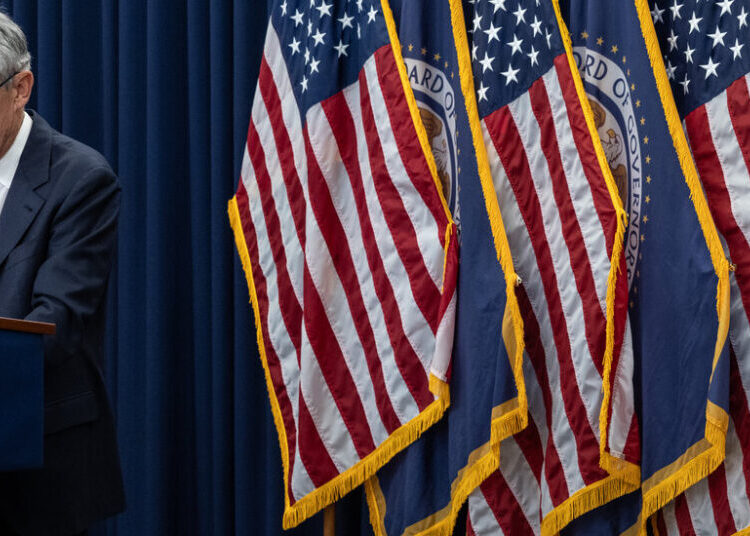
Cautionary quips are coming from many corners of the economic sphere: Fed chairman Jerome Powell wants policymakers to have an adult conversation about spending, while Bridgewater founder Ray Dalio has long warned of an economic “heart attack” where public investment is crowded out by service payments on the debt.
And Jamie Dimon, CEO of JPMorgan Chase, said only this week he expects a bond crisis to ensue at some point because the issue won’t be addressed in time by policymakers.
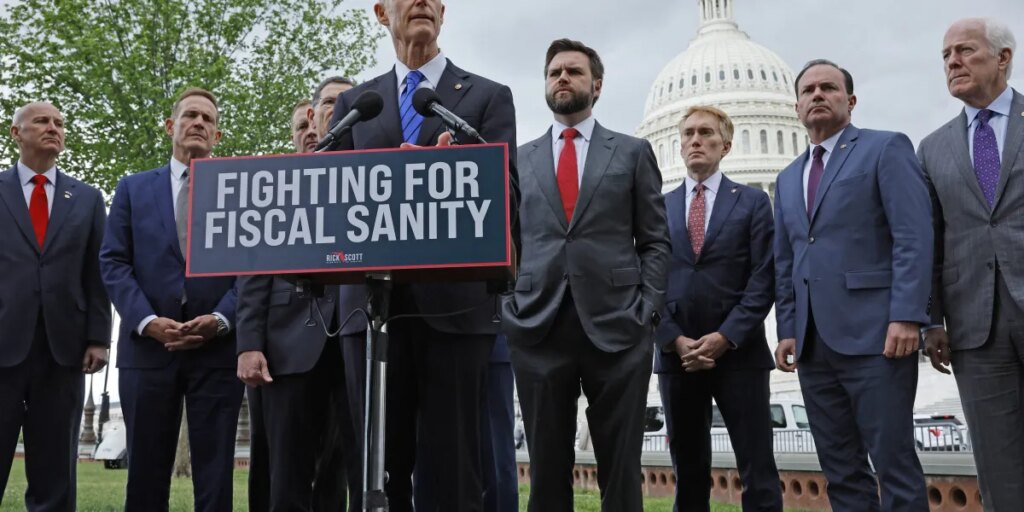
The news has reignited a conversation among policymakers about what needs to be done to manage the U.S. fiscal deficit. Following the news about the debt now overshadowing the size of the economy, Senator Rick Scott (R-Florida) took to X, saying it was “just embarrassing.”
“The consequences are all around us,” he added. The debt is a drag on the economy, he said, with American families “dealing with inflation, and higher costs of living because of Washington’s spending addiction. It’s only going to get worse until we cut up the credit cards and get serious.”
Meanwhile Nikki Haley, the former U.N. ambassador during Trump’s first presidency, wrote on X that America had crossed a “dangerous milestone.” She added: “When the bill comes due, expect higher taxes, a weaker dollar, fewer services, a weaker military—and our kids stuck paying for it.”
These statements echo the reality for many Americans. A study released yesterday by the Peter G. Peterson Foundation—an organization advocating for fiscal stability—found voters are increasingly concerned that national debt is driving up their cost of living: 92% of voters (including 94% of Democrats, 92% of independents and 89% of Republicans) said they were worried current debt levels are impacting prices of groceries, energy and housing.
On Wednesday, Senator Rand Paul (R-Kentucky) outlined why he opposed the war in Iran in favor of focusing on tasks at home. “I think that the biggest national security risk we face is our debt and that the further we go into debt the more we are at risk,” he told the Raging Moderates podcast.
“I really think that our greatest challenge and our greatest threat is from within, not from without,” he added. “I think defending our currency, affording our government, all of the costs that we have domestically, I think really argues against getting more involved in international conflict—particularly if it’s a war of choice.”
Similar calls are being made on the other side of the political spectrum. Senator Jeff Merkley (D), the ranking member of the Senate Budget Committee, told a Committee oversight hearing last month: “The countries who will win the 21st Century will be the countries who invest in education and infrastructure. Not the countries who drive themselves deep into debt trying to control the farthest reaches of the world.
“Robbing our domestic investments to pay for endless wars is a path to economic ruin that will open the door for China and other countries to dominate the future.”
A cause for optimism
Reaction to debt milestones—albeit negative—might actually be a cause for optimism among experts.
The Congressional Budget Office (CBO) is widely cited by debt hawks as evidence for why policymakers need to change course: It was the CBO that reported in March that $1 trillion was added to the federal deficit in the first five months of the year.
But CBO director Phil Swagel is incredibly optimistic that a crisis will be avoided entirely. He told Fortune in an exclusive interview: “Interacting with members of Congress makes me optimistic. I know you read about all the squabbles … I’m completely aware of this, but the policymakers that are thinking about these things are thoughtful and effective.”
The post ‘Cut up the credit cards:’ Congress is getting brutal about ‘embarrassing’ $31 trillion national debt appeared first on Fortune.