The immune system operates at a scale scientists are only just beginning to be able to see. That new view could change how diseases like cancer are tackled.
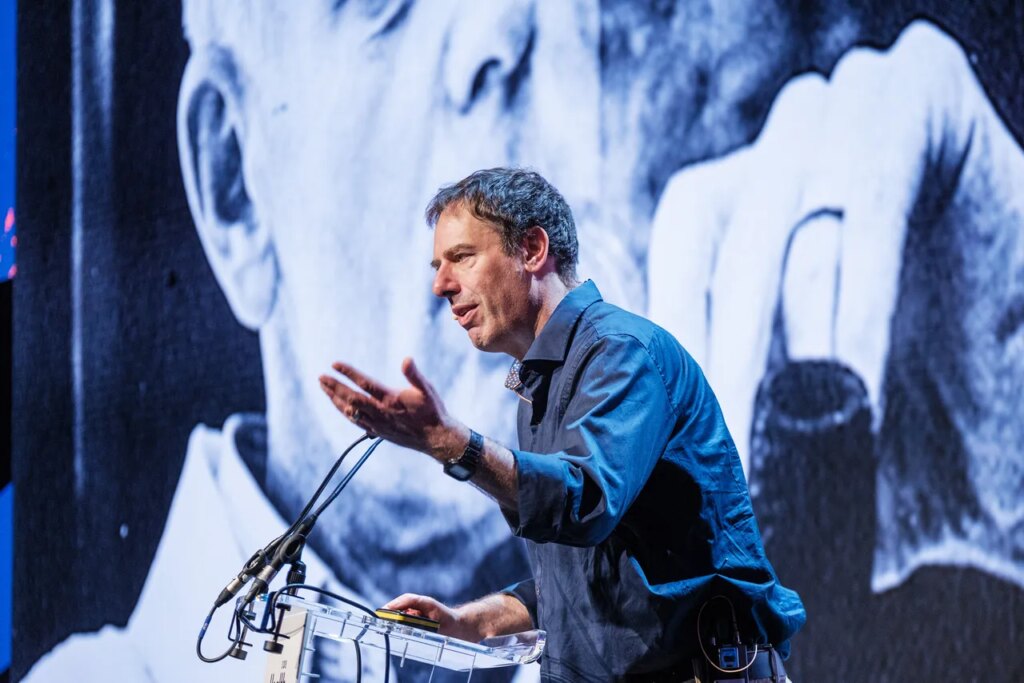
Speaking at WIRED Health on April 16, Daniel Davis, an immunologist at Imperial College London, detailed how researchers are using advanced microscopes to uncover previously invisible dynamics in the human immune system, showing that there are multiple processes happening on a “nanoscale” that was previously out of reach.
That new view is already reshaping how immunity is understood. “We have discovered something that’s known as the immunological synapse, which is that lots of different protein molecules are known to trigger the immune system,” Davis said.
Today’s microscopes reveal worlds that “we just had no idea that existed,” he explained. “There wasn’t really a hypothesis that led us to that,” he said. “It was watching things happen under a microscope.”
At this scale, even the first moments of contact between cells look different. “When an immune cell sticks to another cell, it’s got to decide if that other cell is healthy or diseased. Small, nanoscale protrusions come out from the immune cell to make that initial contact,” he said.
In collaboration with pharmaceutical company Bristol Myers Squibb, his lab is exploring how this level of detail can be used not just to observe immune responses, but influence them. After killing a diseased cell, for instance, an immune cell has to detach and move on to attack another, a process scientists have only recently been able to observe in detail.
Davis’s team is experimenting with reengineered antibodies—Y-shaped molecules that act as a bridge between immune cells and cancer cells—to strengthen the signals that activate those immune cells. By binding to the immune cell in this way and bringing key proteins closer together, these molecules can “send a really strong potent signal for the immune cell to switch on and kill the cancer.”
Conceptually, this suggests that arranging molecules on immune cells could make them more effective at killing target cells, potentially improving how the immune system attacks cancer or, in autoimmune disease, eliminates harmful cells. While the work is currently early stage, Davis says that “it might produce something in the end that could be tried in patients.”
There are many different kinds of molecules you could tweak the positioning of on the immune cell surface, he explains. “I don’t have any real idea about which ones would be good to target or not target. At the moment, the strategies place lots of bets.”
“Lots of different small startup companies are trying lots of different versions of that type of therapy” as they try to find out what would enable that powerful response, he said.
Alongside these advances, Davis emphasized that immune health is inherently individual. Of all a human’s genes, the ones that vary most between people are—perhaps surprisingly—not those that determine appearance, but those linked to the immune system, he explained.
“There’s a fundamental biological reason why humans are so diverse and that is because it’s how our species has evolved to survive all different kinds of diseases,” he said.
That means people respond differently to the same infection. “I might think I haven’t exercised enough, I haven’t eaten the right stuff, I’m too stressed,” he said. In reality, “you might have inherited a particular set of immune system genes that make you better at fighting off that kind of illness.”
“There’s no hierarchy in the system,” he added.
Right now, immune health practice is not at the point where it can tailor treatments to those differences. Davis added that though some companies are working toward personalized approaches, the ability to truly harness individual immune health remains a future goal.
In the meantime, Davis warned against blindly following simplistic health advice. “Any time you hear a sound bite” about improving immune health, he said, it is important to look more closely at the evidence behind it.
He pointed to the enduring belief that vitamin C can prevent or shorten colds, an idea popularized by chemist Linus Pauling, who won Nobel Prizes in 1954 and 1962. Despite the persistence of that advice, Davis said the effect is minimal: “[Pauling] cherry-picked the evidence.”
Similarly, there was Hans Selye, often described as the “father of stress research,” whose work showed that stress can produce physical effects in the body. While that insight remains important, Davis noted that eventually it was revealed that Selye had received funding from the tobacco industry, which sought to position smoking as a way to reduce stress.
The broader lesson, Davis said, is to be cautious of confident claims about immune health, regardless of their source.
“Please be wary of any one person’s view, even if they’ve won two Nobel Prizes,” he said.
The post Scientists Are Starting to Unlock the Nanoscale Secrets of the Immune System appeared first on Wired.